Quick Answer
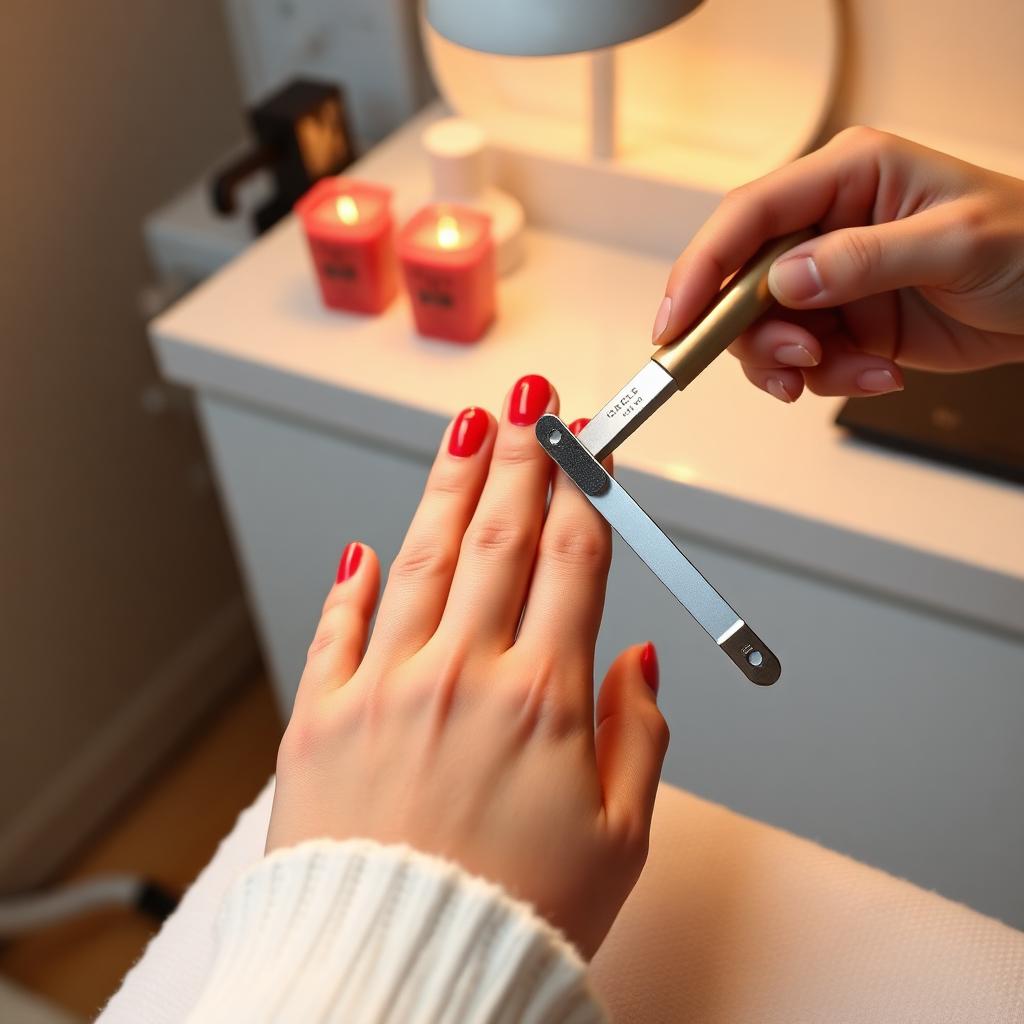
Gel polish is cured under a UV or LED lamp into a tough cross linked polymer that ordinary remover cannot touch. The damage free method is to gently buff the shiny top seal until each nail looks matte, soak a cotton piece in 100 percent pure acetone, wrap it on the finger with foil for 15 minutes, then slide the lifted polish off with a wooden stick.
If anything still sticks, rewrap for 5 more minutes. The single biggest cause of thin peeling nails after gel is impatient scraping, not the gel itself.
The whole job takes about 25 minutes for ten fingers.
The supply list
- 100 percent pure acetone, sold in beauty supply and pharmacies.
- A 180 grit nail buffer for breaking the top seal.
- Cotton balls, torn into halves.
- Pre cut aluminum foil squares, about 3 inches across.
- Wooden cuticle sticks for lifting.
- Nourishing cuticle oil for after.
Why the top coat matters
Cured gel is sealed with a non porous topcoat that acetone cannot penetrate. Buff just enough to remove the gloss across the whole nail. Stop the moment the surface looks chalky. The goal is to scratch the topcoat open, not to file into the colored layers beneath. Over filing here is what thins the natural nail before the soak even begins.
The 15 minute soak
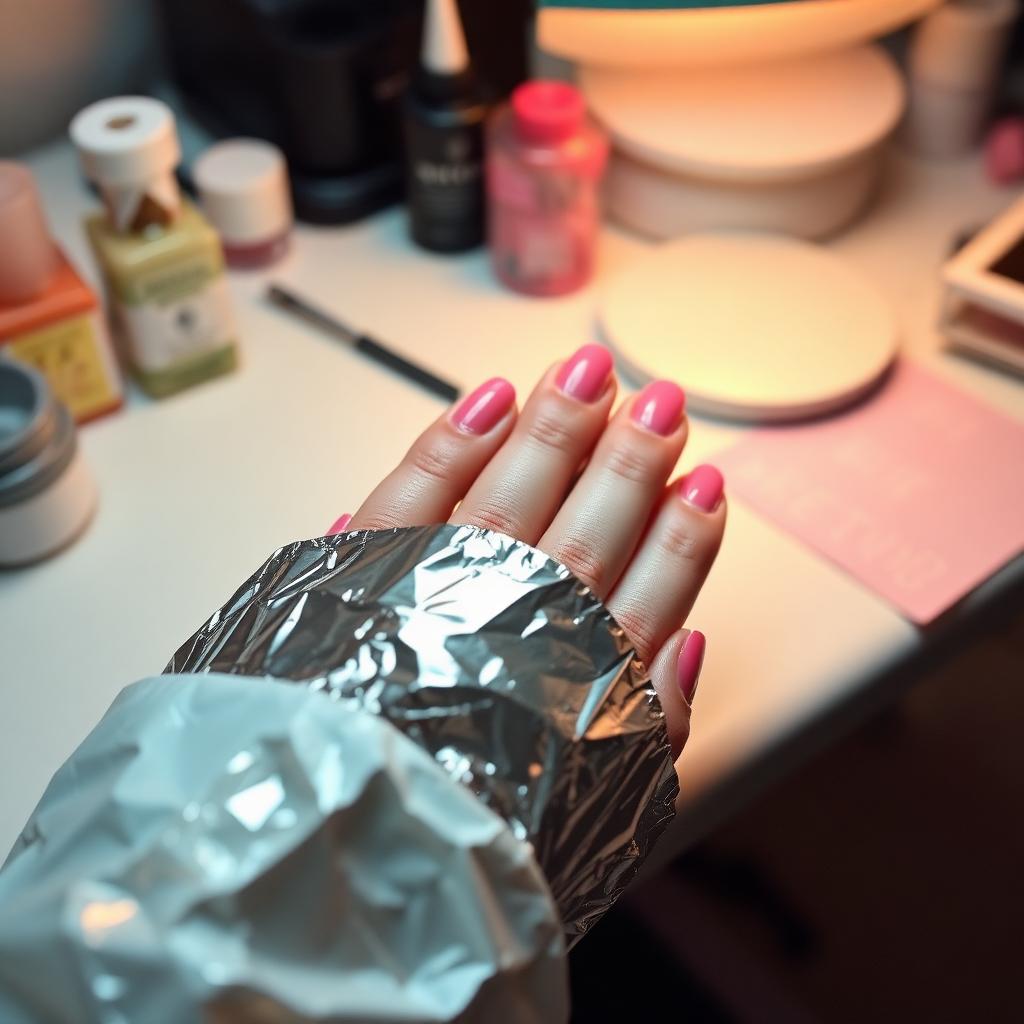
Saturate a half cotton ball in pure acetone, lay it directly across the buffed nail, and wrap a foil square snugly around the fingertip to trap your body heat. Repeat for all ten fingers, then sit still and let the chemistry do its work. Peeking every two minutes lets the acetone evaporate and slows the lift.
At the 15 minute mark, remove one wrap. A successful soak shows polish that has cracked, bubbled, or visibly lifted at the edges. Press the flat side of a wooden stick against the cuticle line and push gently toward the free edge. The gel should slide off in soft sheets.
What to do, what to avoid
- Do use pure acetone every time. Non acetone remover will not break the bond.
- Do buff only the shiny seal, not deeper layers.
- Do rewrap stubborn nails for an extra 5 minutes.
- Avoid peeling or picking, even when one corner lifts on its own.
- Avoid filing aggressively to speed things up.
- Avoid using metal cuticle pushers, which slice into the natural plate.
The post removal rehab
Once every trace of gel is off, wash your hands in warm soapy water to neutralize remaining acetone. The nail plate will look temporarily dehydrated and feel slightly rough. Apply cuticle oil generously into the nail fold and rub it across the plate to start rebuilding moisture. A nourishing hand cream sealed over the top locks the hydration in.
For the next 7 to 10 days, dab cuticle oil twice daily. If you plan another gel set right away, ask your tech to use a primer instead of buffing the nail again at the start of the new appointment.
Signs you actually went too far
If your nails feel tender to pressure, bend at odd angles, or show white horizontal lines, you likely peeled or scraped too aggressively at some point. Give them at least four to six weeks gel free, keep them filed short to reduce snagging, and use a hydrating base coat with keratin or biotin between regular polish applications.
How gel polish differs from regular polish
Regular nail polish dries by solvent evaporation, which is why a thin film of acetone can dissolve it back into liquid. Gel polish goes through a chemical change called photopolymerization when exposed to UV or LED light. Tiny molecules called monomers link together into long cross linked chains that no solvent can simply re dissolve. The chains have to be slowly broken apart by acetone soaking into the surface, which is why the buff step and the full 15 minute wait are non negotiable.
This is also why peeling is so destructive. Lifting a sheet of cured gel literally rips a layer of bonded natural nail off with it. The thinning you see weeks later is not from the polish itself, it is from that one impatient peel.
Common removal mistakes
- Skipping the buff seals the acetone out and leaves the polish untouched after 30 minutes.
- Reusing the same cotton after it dries out gives weaker chemical action on the second nail.
- Loose foil wraps let body heat escape, which slows the reaction.
- Skipping cuticle oil afterward leaves the nail plate brittle for days.
The takeaway
Gel polish does not damage nails, the removal does. Pure acetone, a gently buffed top seal, foil heat, and 15 minutes of patience get the polish off cleanly with no peeling, scraping, or prying. Follow up with cuticle oil for a week and your nails will be ready for the next set without thinning.
Frequently asked questions
Can I just peel the polish off when it starts lifting?
No. The lifted gel takes a layer of natural nail with it, which is exactly what causes long term thinning.
Will warming the foil with a hair dryer speed things up?
It can shave a few minutes off, but never hold the dryer closer than 6 inches and use the low setting. Excessive heat dries the surrounding skin and can warp the foil.
Does soaking in a bowl of acetone work as well?
Yes, but it dries the skin much more than foil. Coat your hand in petroleum jelly first and limit the dip to 15 minutes.
Is gel polish really worse for nails than regular polish?
Only when removed improperly. A clean acetone soak leaves the nail in roughly the same condition as regular polish removal.