Quick Answer
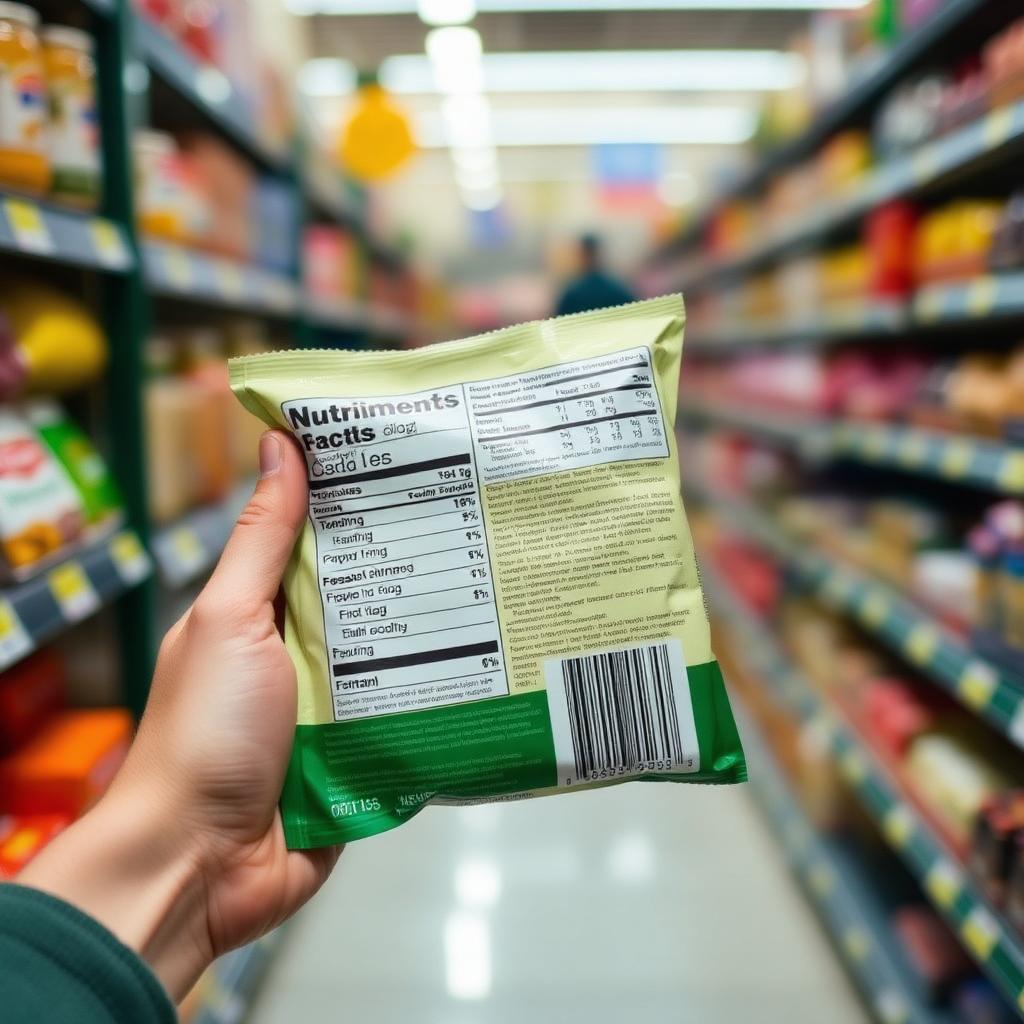
Read a Nutrition Facts label in four steps. First, anchor on the serving size and servings per container. Second, check total calories per serving. Third, scan the "limit" nutrients: saturated fat, sodium, and added sugars. Fourth, scan the "get more" nutrients: fiber, vitamin D, calcium, iron, and potassium.
Use the FDA's 5/20 Rule to interpret Percent Daily Value (%DV): 5 percent or less is low, 20 percent or more is high.
The single highest leverage line on the modern Nutrition Facts panel is "Added Sugars". The FDA pulled this out as a separate line in 2018 because added sugar drives the largest single difference between a healthy and an unhealthy version of nearly every packaged food.
Step 1: Anchor on serving size
Every number on the label is per serving, not per container. A bag of chips that says 150 calories per serving with three servings per container is 450 calories total. The serving size is set by the FDA's Reference Amounts Customarily Consumed (RACC) and updated in 2016 to better reflect modern eating habits.
The most common label traps:
- "Single" snack bags that contain 2 to 2.5 servings. Common in chips, pretzels, and trail mix.
- Beverages where one bottle equals 2 servings. Common in 20 ounce sodas, sports drinks, and bottled coffees.
- Frozen meals where the entree is 1.5 to 2 servings. Common in pizzas, lasagnas, and large frozen sides.
When in doubt, multiply every number by the actual amount you will eat.
Step 2: Evaluate total calories
Calories are the broadest signal of how energy dense a food is. The FDA's reference is 2,000 calories per day for an average adult. Use that as a sanity check rather than a hard rule, since real calorie needs vary from 1,400 to 3,500 depending on body size, sex, age, and activity.
A quick mental rule: 100 calories per serving is moderate, 400+ is high for a single food item, and any sauce or topping over 100 calories per serving deserves closer inspection.
Step 3: Scan the "limit" nutrients
The FDA highlights three nutrients to limit in most diets:
- Saturated fat. Daily value is 20 g. Aim for 5 percent DV or lower per serving for most foods, allowing some headroom for higher items you genuinely want.
- Sodium. Daily value is 2,300 mg. A single packaged food over 600 mg deserves scrutiny, and anything over 800 mg per serving is heavy.
- Added sugars. Daily value is 50 g. The American Heart Association recommends a stricter 25 g for women and 36 g for men. A single soft drink, candy bar, or sweetened yogurt can blow through this in one serving.
Step 4: Scan the "get more" nutrients
The FDA also calls out nutrients that most Americans underconsume:
- Dietary fiber. Daily value is 28 g. Look for foods at 10 percent DV or higher per serving, especially grain products, cereals, and legumes.
- Vitamin D. Daily value is 20 mcg. Listed on the label since 2016 because clinical deficiency is widespread.
- Calcium. Daily value is 1,300 mg.
- Iron. Daily value is 18 mg.
- Potassium. Daily value is 4,700 mg. This is the nutrient Americans miss most consistently, and the one with the strongest evidence base for blood pressure support.
The 5/20 Rule, in practice
The 5/20 Rule is the FDA's shorthand for using Percent Daily Value:
- 5 percent DV or less is low. Use this benchmark for saturated fat, sodium, and added sugars.
- 20 percent DV or more is high. Use this benchmark for fiber, vitamin D, calcium, iron, and potassium.
So a granola bar at 25 percent DV of sodium is genuinely a high sodium product even if 600 mg sounds modest. A cereal at 4 percent DV of fiber is a low fiber product even if 1 gram sounds like something.
Ingredients list: the underrated second label
The ingredient list is required to be in descending order by weight. Three quick reads:
- Look at the first three ingredients. They make up the bulk of what you are eating.
- Count the sugar synonyms. Cane juice, corn syrup, dextrose, fructose, maltose, and concentrate can be listed separately to push a single sweetener down the list while the food remains sugar dominant.
- Check for whole grain claims. "Multi grain" and "wheat" mean nothing nutritionally. "Whole grain" or "whole wheat" as the first ingredient is the real signal.
Health claims on the front of the package
Front of package claims are regulated by the FDA and FTC but allow more marketing latitude than the Nutrition Facts panel. Useful translations:
- "Low fat." 3 g of fat or less per serving. Often offset by added sugar.
- "Reduced sugar." At least 25 percent less sugar than the reference product. The reference may still be very sugary.
- "Made with whole grain." No minimum required. Could be 1 percent whole grain.
- "Natural." Has no FDA defined meaning for most foods.
The Nutrition Facts panel is the source of truth. The front of the box is advertising.
FAQs
What does %DV mean?
Percent Daily Value is the share of a 2,000 calorie reference diet that a single serving provides for a given nutrient.
Is total sugar or added sugar more important?
Added sugar. Naturally occurring sugar in milk and whole fruit comes packaged with fiber, protein, and micronutrients. Added sugar contributes calories and glycemic load without those companions.
Are calories the only thing that matters?
For weight management, total calories are the largest single lever. For long term health, nutrient density (fiber, micronutrients, lean protein) matters as much as the calorie count.
Are food labels in restaurants reliable?
Chain restaurants with 20 or more locations are required to post calorie counts under the FDA menu labeling rule. Independent restaurants are not, and homemade or hand portioned dishes can vary by 20 percent or more from posted figures.
The takeaway
Reading a Nutrition Facts label is a four step habit: serving size, calories, limit nutrients, get more nutrients. Layer in the 5/20 Rule, glance at the ingredient list, and treat front of pack claims as marketing. Done in under a minute at the shelf, this is the single most effective grocery skill for a healthier diet.