Quick Answer
Spray the appliance with a 1:1 mix of distilled white vinegar and warm water, wipe clean with a microfiber cloth, then apply two or three drops of mineral oil or olive oil to a fresh cloth and buff in the direction of the grain. Streaks disappear, fingerprints repel, and the surface shines.
The two step rule (clean first, polish second) is what separates a real shine from a smeary mess.
Why stainless steel smudges so easily
Stainless steel is not actually flat. Manufacturers brush a faint directional grain into the surface so the metal reflects light evenly. Every fingerprint deposits oil into those grooves, and most "cleaners" just rearrange the oil instead of removing it. The fix is to lift the oil with an acid wash, then add a thin protective oil layer of your own that resists future fingerprints.
Find the grain before you touch anything
Look closely at the appliance under a side light. You will see fine horizontal or vertical brush lines. That is the grain. Always wipe along it, never across it. Wiping against the grain pushes residue into the grooves and leaves visible streaks.
On most fridges and dishwashers the grain runs horizontally. On range hoods and oven trims it often runs vertically. Cabinet handles can go either way.
Two step polish method
Step 1: clean with vinegar water
- Mix equal parts distilled white vinegar and warm water in a spray bottle.
- Spray a section of the appliance lightly. Do not soak.
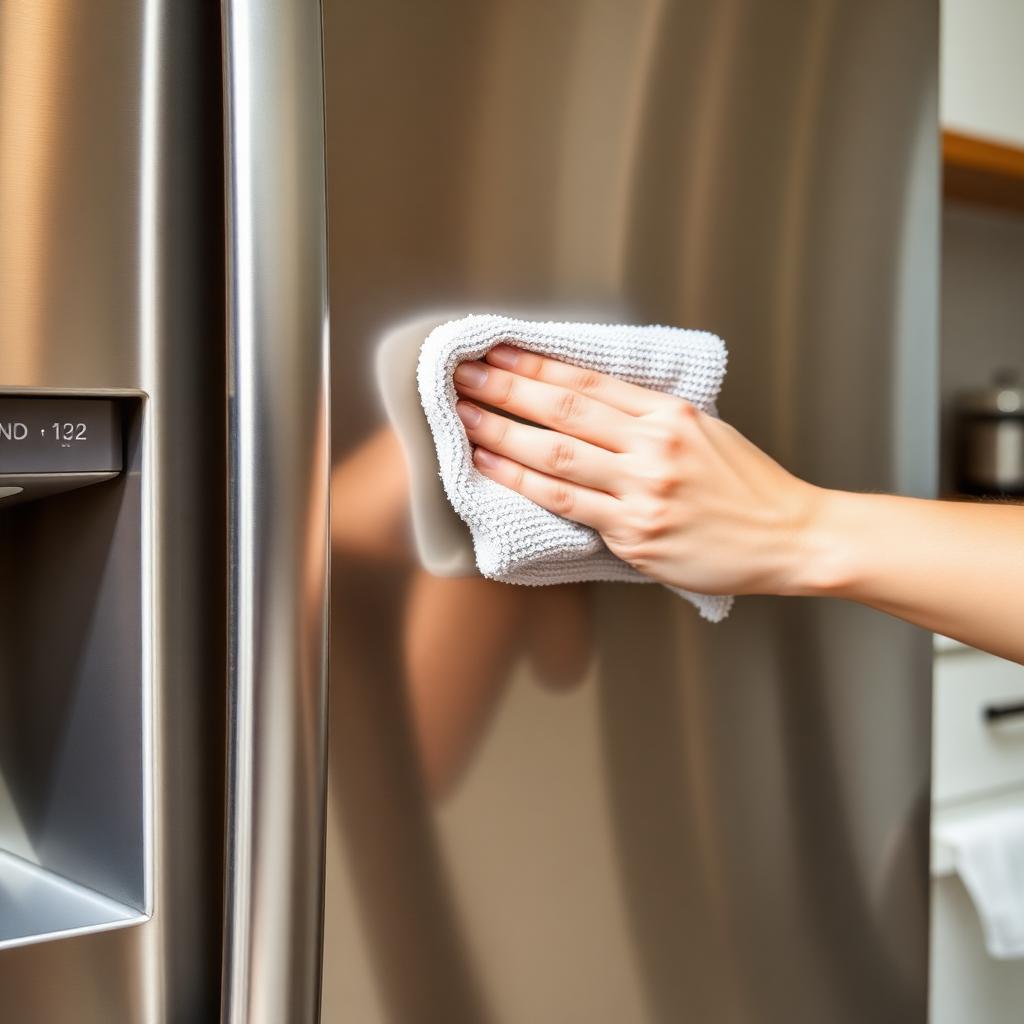
- Wipe along the grain with a clean microfiber cloth. The vinegar dissolves grease and removes mineral spots.
- If you find sticky residue (jam, sauce), spray, wait 30 seconds, then wipe.
- Dry the area with a second microfiber cloth before moving on.
Skip steel wool, baking soda paste, or any scouring powder. They scratch the grain permanently.
Step 2: polish with a drop of oil
- Put two or three drops of food grade mineral oil, olive oil, or baby oil on a fresh, dry microfiber cloth.
- Rub the cloth between your palms to spread the oil thinly.
- Buff the surface along the grain in long, even strokes.
- Flip the cloth to a clean section and buff again to remove any residue.
The oil layer is microscopic. It fills the brush lines, blocks future fingerprints from reaching the metal, and reflects light evenly so the appliance looks brand new.
How often to polish
- Daily quick wipe: dry microfiber along the grain to remove fresh fingerprints.
- Vinegar clean: once a week, or whenever you see grease or water spots.
- Full oil polish: every two to three weeks, or right before guests arrive.
The oil step lasts longer than commercial sprays because you are leaving a real protective film, not a slick of evaporating solvent.
Tackling specific problems
Water spots from a dishwasher leak or splashed sink
Spray straight white vinegar (not diluted) on a cloth, lay it over the spots for two minutes, then wipe. The acid dissolves the calcium carbonate left behind by hard water.
Heat stains on cookware
Rainbow or blue stains on stainless pots are oxidation from high heat. Apply a paste of equal parts cream of tartar and water, rub gently with a soft cloth in circles, rinse, and dry.
Rust spots
True stainless steel does not rust, but pieces left near cast iron or carbon steel can pick up "ghost rust." Make a paste of baking soda and water, apply with the grain, let sit 15 minutes, scrub gently with a soft toothbrush along the grain, rinse, dry, and polish.
Scratches
Shallow scratches can be blended with a Scotch Brite pad rubbed along the grain (never across it). Deep scratches need a professional refinish.
Products that work, ranked
- Best DIY: 1:1 white vinegar plus water, followed by mineral oil. Costs pennies per use.
- Best store bought wipe: Weiman Stainless Steel Wipes. Convenient for quick touch ups.
- Best deep polish: Bar Keepers Friend Liquid Cleanser, used sparingly along the grain, then rinsed and oiled. Removes stubborn stains.
Anything labelled as a wax polish builds up over time and dulls the metal. Stick to oil based finishes.
Common mistakes that ruin the finish
- Wiping in circles or across the grain.
- Using an abrasive sponge or steel wool.
- Leaving wet rags or sponges resting on the surface (they cause water spots and rust marks).
- Spraying glass cleaner with ammonia, which dulls stainless over time.
- Letting tomato, citrus, or vinegar dry on the surface (the acids can etch the steel if left too long).
FAQs
Can I use olive oil to polish stainless steel?
Yes. A few drops on a microfiber cloth buffed along the grain works beautifully. Use sparingly, because excess oil attracts dust.
Is WD-40 a good stainless steel polish?
It works in a pinch and is famous for it, but the food contact safety is debatable for kitchen appliances. Stick with food grade mineral oil or olive oil near food prep areas.
How do I remove magnets from a stainless fridge without scratching?
Slide the magnet sideways along the grain rather than pulling it straight off. If a scratch appears, polish along the grain to blend it.
Why are streaks always worse after I clean?
You skipped the drying step. Always finish with a dry cloth along the grain to remove the cleaning film before it air dries.
The takeaway
Find the grain, clean with vinegar water, dry, then buff a few drops of oil along the same direction. That two step routine takes ten minutes, costs almost nothing, and keeps stainless steel appliances showroom shiny for weeks.