Quick Answer
Plant tulip bulbs in autumn once soil temperatures stay below 15 degrees Celsius, usually 6 to 8 weeks before the ground freezes. Dig 6 to 8 inches deep, set the bulb point up, space 4 to 6 inches apart in tight clusters of 10 or more, and cover with chicken wire if squirrels are a problem.
Water once at planting, then leave them alone. The long cold winter is what triggers the bloom.
Why Autumn and Not Spring
Tulips evolved in the cold steppes of central Asia. The bulb contains a fully formed flower bud the day you buy it, but it only opens after a long stretch of cold temperatures. That winter chill, known as vernalisation, takes 12 to 14 weeks below 7 degrees Celsius.
Plant in spring and the bulb skips that chill, sending up weak grass like leaves and no flower. Plant in autumn and the bulb sleeps cold underground, then explodes in colour at the first hint of spring warmth.
When to Plant
Time it to soil temperature, not the calendar. The sweet spot is when soil at planting depth stays below 15 degrees Celsius for a full week.
- Cold climates (zones 3 to 5): Mid September to mid October.
- Temperate climates (zones 6 to 7): Mid October to mid November.
- Mild climates (zones 8 to 10): Late November or December, after pre chilling bulbs in a paper bag in the fridge for 12 weeks first.
Pick Healthy Bulbs
Squeeze each bulb before you buy. A firm, heavy bulb with intact papery skin is alive and ready. Skip anything soft, mouldy, or visibly bruised.
Bigger is better. The flower size is locked inside the bulb at the moment of sale, so a 12 cm bulb produces a larger bloom than an 8 cm bulb of the same variety.
Pick the Right Spot
Tulips want full sun in spring (at least 6 hours) and excellent drainage year round. Beds that sit soggy in winter rot the bulbs before they can bloom.
If your soil is heavy clay, dig a wider trench and amend the bottom four inches with coarse sand or fine gravel. Raised beds and the edges of stone paths drain naturally and grow some of the best tulips.
The Right Depth
The universal rule for any bulb is to plant three times as deep as the bulb is tall. For a standard 2 inch tulip bulb that means a hole 6 inches deep, measured from the top of the bulb to the soil surface. Larger 3 inch bulbs go 8 inches deep.
Deeper planting protects from freeze and thaw cycles, stops squirrels from digging the bulbs up, and helps the bulb come back year after year instead of splitting into weak offsets.
Pointy End Up
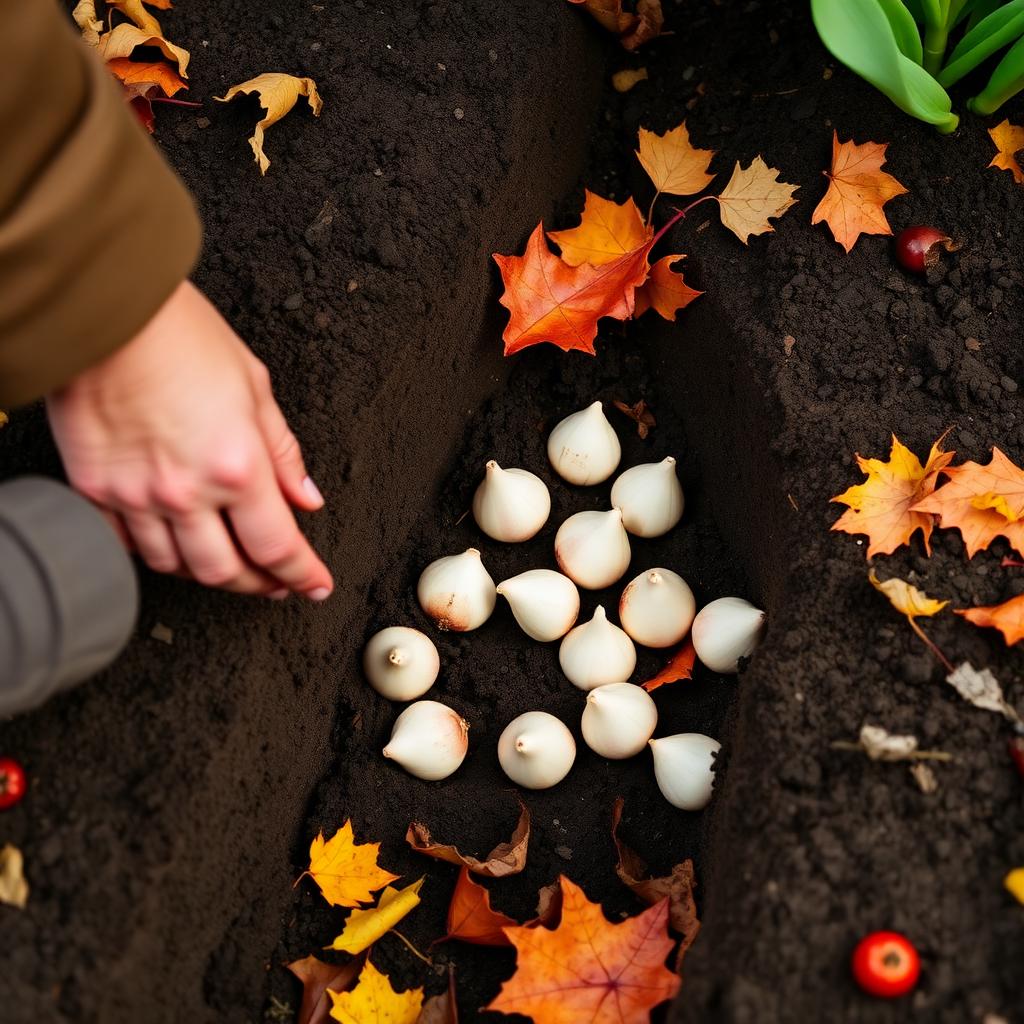
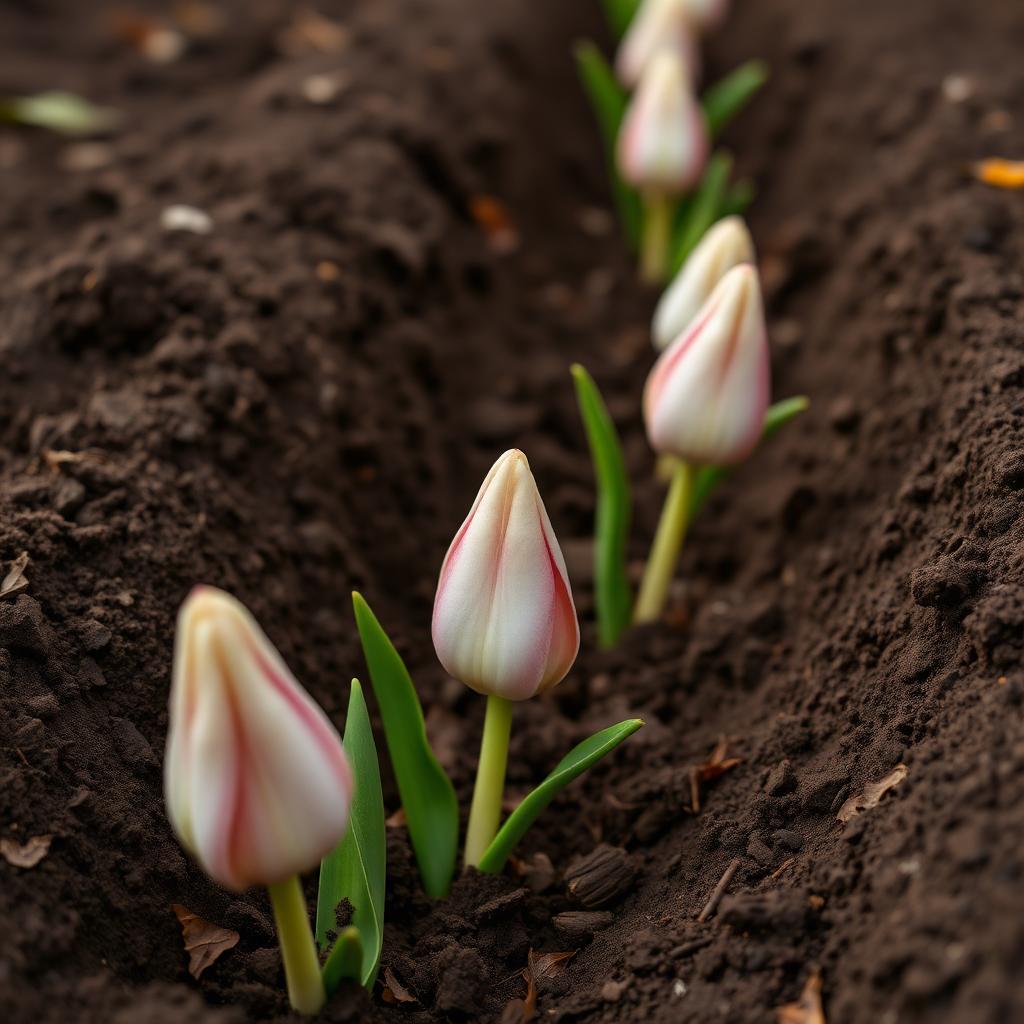
Inspect each bulb. One end has a clean pointed tip. The opposite end is flat and shows a small papery scar where roots will emerge. Always set the bulb pointy end up, flat end on the bottom of the hole.
Plant upside down and the shoot still finds its way up, but it wastes energy doing so and the bloom is smaller.
Plant in Clusters, Not Soldiers
A row of tulips marching single file along a walkway looks lonely and sparse in spring. Instead, dig a wide flat bottomed trench and drop 10 to 20 bulbs per cluster, spaced 4 to 6 inches apart in a roughly oval shape.
Several clusters across a bed reads as a confident drift of colour. For a more natural look, lightly toss the bulbs out of your hand and plant where each one lands.
Defend Against Squirrels and Voles
Tulip bulbs are sweet and squirrels know it. Defend the bed in three quick steps.
- Mix sharp gravel into the soil right above the bulbs. Burrowing animals avoid the texture.
- Lay chicken wire flat over the bed (just below the surface) and pin the edges. Shoots grow through the mesh in spring while bulbs stay safe below.
- Skip bone meal as a fertiliser. It smells like dinner to rodents.
After Planting
Water deeply once to settle the soil. Then walk away. Autumn rain handles the rest.
In spring, after the flowers fade, snip off the spent flower heads but leave the leaves in place until they yellow naturally. The leaves recharge the bulb for next year. Cut them too early and you starve the bulb.
Will They Come Back
Most modern hybrid tulips bloom magnificently the first spring and weaker each year after. If you want true perennial tulips that return reliably, look for species tulips like Tulipa tarda, Tulipa kaufmanniana, or Darwin hybrids. They naturalise and multiply.
The Takeaway
Tulips are foolproof if you respect the autumn calendar. Cool soil, deep planting, point up, tight clusters, wire over the top, and one good watering. Do that this autumn and next spring will erupt in colour while the rest of the yard is still grey.