Quick Answer
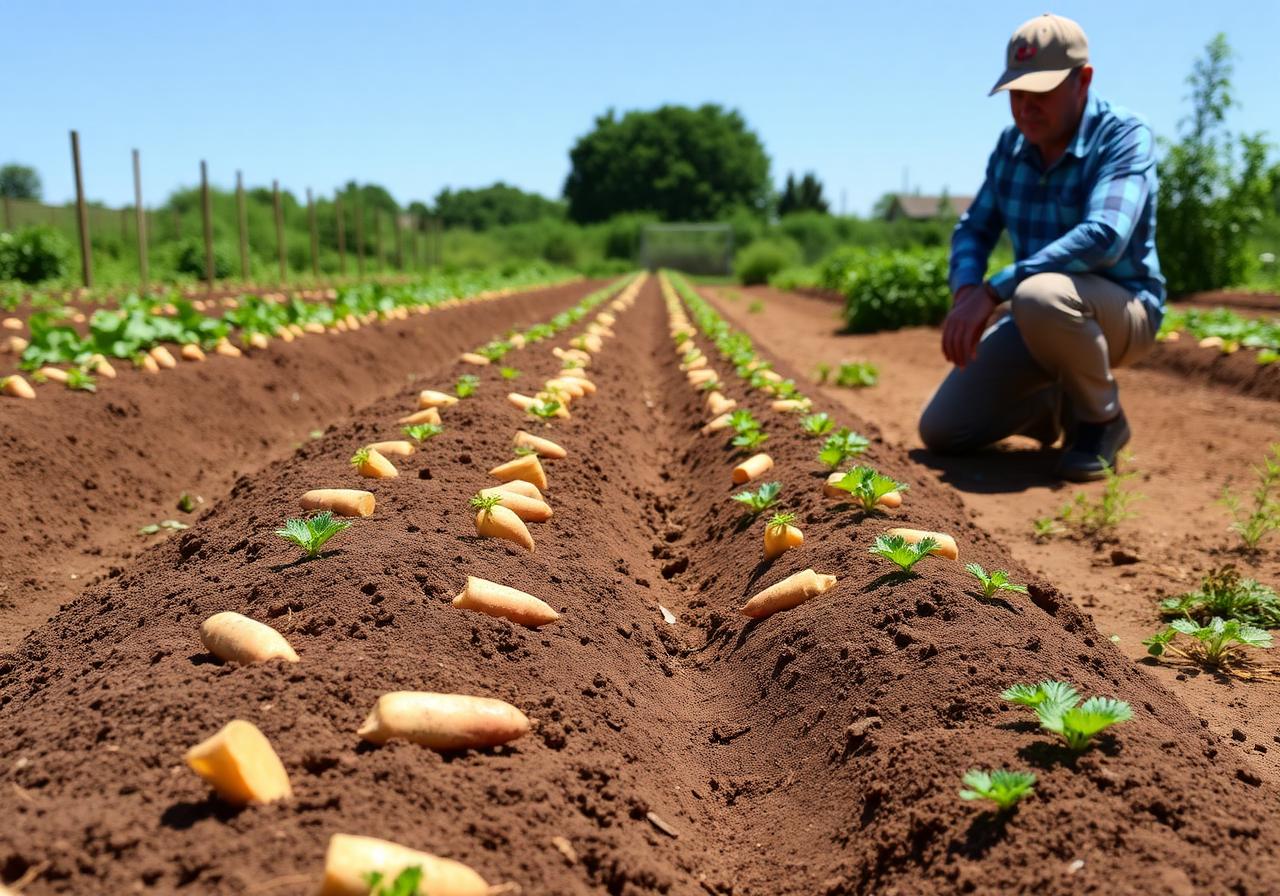
Plant sweet potato slips into 8 inch high ridges of loose soil once the ground is reliably above 18 C / 65 F, usually 2 weeks after the last frost. Bury each slip 4 to 6 inches deep so only the top 2 sets of leaves sit above the soil, and space slips 12 inches apart along the ridge.
Harvest 90 to 120 days later, before the first frost. Sweet potatoes are tropical perennials grown as annuals in cool climates, and they need warm soil more than anything else.
Skip high nitrogen fertilisers. They produce huge vines and pencil thin tubers.
What is a slip?
A slip is a rooted shoot grown from a mature sweet potato. Unlike standard potatoes (which are planted as chunks of tuber), sweet potatoes come from these leafy green sprouts. You can buy slips by mail order or grow your own by sitting half a sweet potato in water until shoots appear, then breaking off each shoot once it has its own roots.
A healthy slip is 6 to 8 inches long with 4 or more leaves and a small cluster of white roots at the base.
Wait for warm soil
Sweet potatoes evolved in tropical Central America and cannot tolerate cold soil. Planting too early stunts the slips permanently, even if a late frost does not kill them outright.
| Region | Typical planting window |
|---|---|
| US Deep South / Mediterranean | Late April to mid May |
| US Mid South / Southern Europe | Mid May to early June |
| UK / Northern Europe / US North | Late May to mid June, ideally under fleece |
Use a soil thermometer if you are unsure. 18 C / 65 F at 4 inches deep for 5 days running is the green light.
Build mounded ridges
Sweet potato tubers swell sideways. Flat or compacted soil produces small, knobby, misshapen roots. Build long ridges (also called hills) 8 inches high and 12 inches wide using a hoe or shovel. Space parallel ridges 3 feet apart so the vines have room to sprawl.
Soil should be loose, sandy, and slightly acidic (pH 5.5 to 6.5). Heavy clay needs amendment with compost and coarse sand before planting, or the tubers will rot in wet weather.
Plant the slips deep

- Use a dibber or your finger to poke an angled hole 4 to 6 inches deep into the top of the ridge.
- Slide the slip in so that 3 to 4 leaf nodes are buried in the soil and only the top 2 sets of leaves remain above ground.
- Firm the soil around the stem to remove air pockets.
- Space slips 12 inches apart along the ridge.
- Water the ridge deeply the moment all the slips are in.
Deep planting is what produces a big harvest. Every buried node forms its own cluster of tubers, so a slip with 4 buried nodes yields four times as many sweet potatoes as one barely seated in the soil.
Watering through the season
Keep the soil evenly moist for the first 14 days while the slips overcome transplant shock. Wilting on day one and two is normal as long as you watered well at planting.
Once established, sweet potatoes are exceptionally drought tolerant. Water deeply once a week in dry spells, then taper off completely during the final 3 to 4 weeks before harvest. Dry conditions at the end of the season concentrate sugars and toughen the skins for storage.
Feeding without overdoing nitrogen
Nitrogen forces the plant to grow vines at the expense of tubers. Use a low nitrogen, high potassium fertiliser (look for ratios like 5-10-15 or 3-5-10) once a month for the first 2 months only.
If the leaves start showing yellowing veins (a sign of magnesium deficiency in sandy soils), a single foliar spray of Epsom salt solution (1 tablespoon per gallon of water) fixes it within a week.
Vine management and pests
Sweet potato vines run aggressively, often reaching 6 to 10 feet by mid summer. The vines can root wherever a node touches soil, which steals energy from the main tubers. Lift the vines off the soil every few weeks to redirect that energy.
The main pest in most regions is the sweet potato weevil. Crop rotation (avoid planting in the same bed for 3 years) and quick harvest of mature tubers are the best defences. Deer and voles love the vines and tubers respectively, so fencing or hardware cloth may be necessary in heavy pressure areas.
Harvest timing
Sweet potatoes are ready 90 to 120 days after planting, depending on variety. Two reliable cues:
- The leaves start yellowing on their own.
- Test dig one plant. If the largest tubers are roughly the size of your fist, the whole bed is ready.
Always harvest before the first hard frost. Use a digging fork and lift from well outside the row to avoid spearing tubers. Cure in a warm humid spot (29 C / 85 F, 85 percent humidity) for 7 to 10 days to heal nicks and convert starches to sugars, then store at 13 to 16 C / 55 to 60 F for 6 months or longer.
Frequently asked questions
How many sweet potatoes does one slip produce?
A well planted slip yields 3 to 8 marketable tubers depending on variety, soil, and season length.
Can I plant sweet potatoes in containers?
Yes. Use a container at least 16 inches deep and 18 inches wide, filled with loose sandy mix. Yields are lower than in ground but still worthwhile.
Do sweet potatoes need full sun?
Yes. At least 8 hours of direct sun per day. Less light produces vines but no tubers.
How deep should sweet potato slips be planted?
4 to 6 inches, with only the top 2 sets of leaves above the soil. Every buried node becomes a future tuber.