Quick Answer
Pumpkins need warm soil above 21 degrees Celsius, a sunny spot, and lots of room to sprawl. Build a small mound of compost rich soil, plant 4 to 5 seeds an inch deep in the top, and thin to the two strongest seedlings.
Space your mounds at least 6 feet apart in every direction. Water deeply, feed monthly with a balanced fertilizer, and switch to a high potassium feed once you see the first yellow flowers.
When to Plant Pumpkins
Pumpkins are warm season vines that hate any hint of frost. Wait until at least two weeks after the last spring frost and the soil temperature is reliably above 21 degrees Celsius.
In most temperate climates that means late May through mid June. Standard varieties need 90 to 120 frost free days to mature, so count back from your first expected autumn frost to choose your planting date.
Choose the Right Spot and Build a Mound
Pumpkin vines sprawl up to 20 feet across, so pick an open patch of garden that gets at least 8 hours of direct sun. The plant also needs deep, fertile, well drained soil.
Professional growers never plant flat. They build mounds, sometimes called hills, that warm faster in spring and drain heavy rain away from the crown.
- Dig a hole 2 feet across and a foot deep.
- Pack it with aged compost or rotted cow manure.
- Cover with native soil to form a mound 12 inches high and 3 feet wide.
How to Plant the Seeds
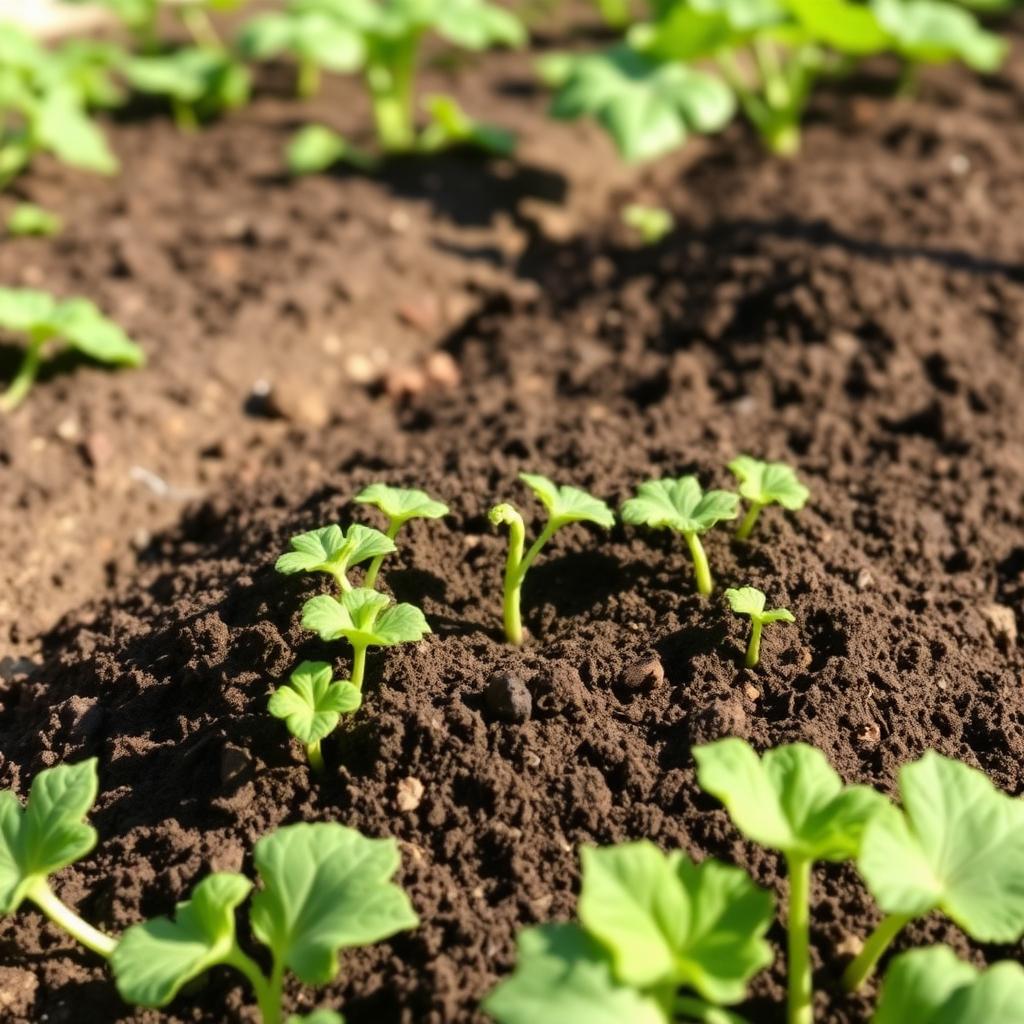
Press 4 to 5 pumpkin seeds into the flat top of each mound, exactly 1 inch deep. Space the seeds about 4 inches apart around the center.
Water gently with a fine spray so the seeds stay in place. Germination usually takes 7 to 10 days in warm soil. Once the seedlings have two true leaves, snip the weakest sprouts at soil level with scissors and leave only the two strongest plants per mound.
Spacing Pumpkin Mounds
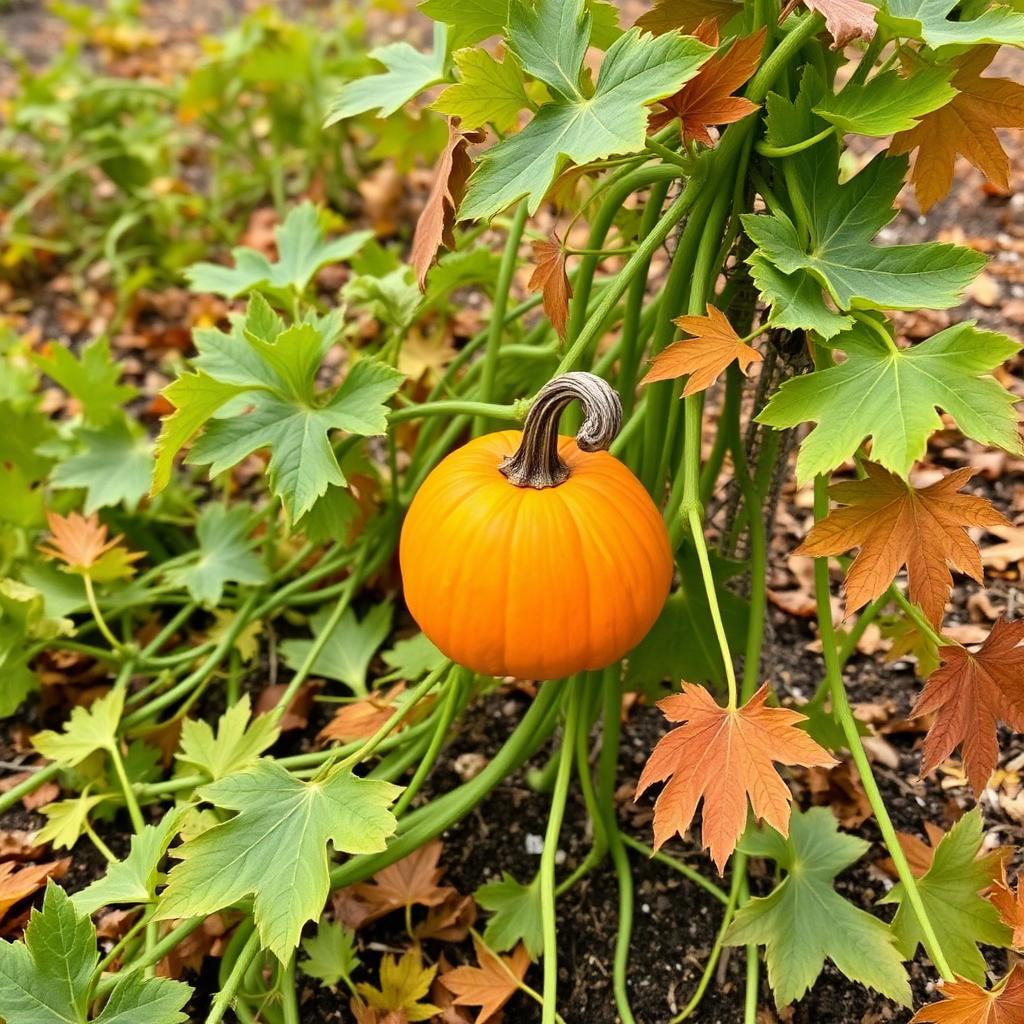
Each mound supports two huge vines that easily run 15 to 20 feet long. Crowding causes powdery mildew and shrinks fruit size.
- Space mounds at least 6 feet apart in every direction.
- Allow 10 feet between rows if you grow more than one row.
- For mini pumpkin varieties you can shrink the spacing to 4 feet.
Watering Without Causing Rot
Pumpkins are thirsty. Give each mound a deep soaking of 1 to 2 inches of water per week, more during hot summer dry spells. Soaker hoses or drip irrigation are ideal because they keep water off the big sail like leaves.
Avoid splashing water on the foliage in the evening. Wet leaves overnight invite powdery mildew, which coats the leaves in a white film and stops photosynthesis. If you must water from above, do it early in the morning so leaves can dry by noon.
Feeding for Big Fruit
Pumpkins are heavy feeders that pull a huge amount of nutrition from the soil. Start with compost rich mounds, then follow this simple schedule:
- Weeks 1 to 4: feed every 2 weeks with a balanced 10 10 10 fertilizer to push leaf growth.
- Once the first yellow flowers appear: switch to a fertilizer higher in potassium and phosphorus, like 5 10 10, to fuel fruit set.
- Side dress each mound with another scoop of compost when fruits reach softball size.
Pollination, Pruning, and Pest Watch
Pumpkins produce separate male and female flowers. The female blossom has a tiny baby pumpkin behind the petals. Bees do most of the work, but if you see flowers dropping without fruit, hand pollinate by brushing a male flower against the center of a female bloom in the morning.
Once two healthy fruits set on a vine, pinch off the growing tip about 10 leaves past the last fruit. This redirects energy into the existing pumpkins instead of more leafy growth.
Watch for squash vine borers, cucumber beetles, and powdery mildew. A weekly inspection and quick action with neem oil or row covers usually keeps a backyard patch healthy.
The Takeaway
Pumpkins reward patience and space. Build warm fertile mounds, plant 4 to 5 seeds deep enough to anchor, thin to the strongest two, and feed and water generously. By October those tiny seeds will be heavy orange globes ready for the front porch or the pie pan.