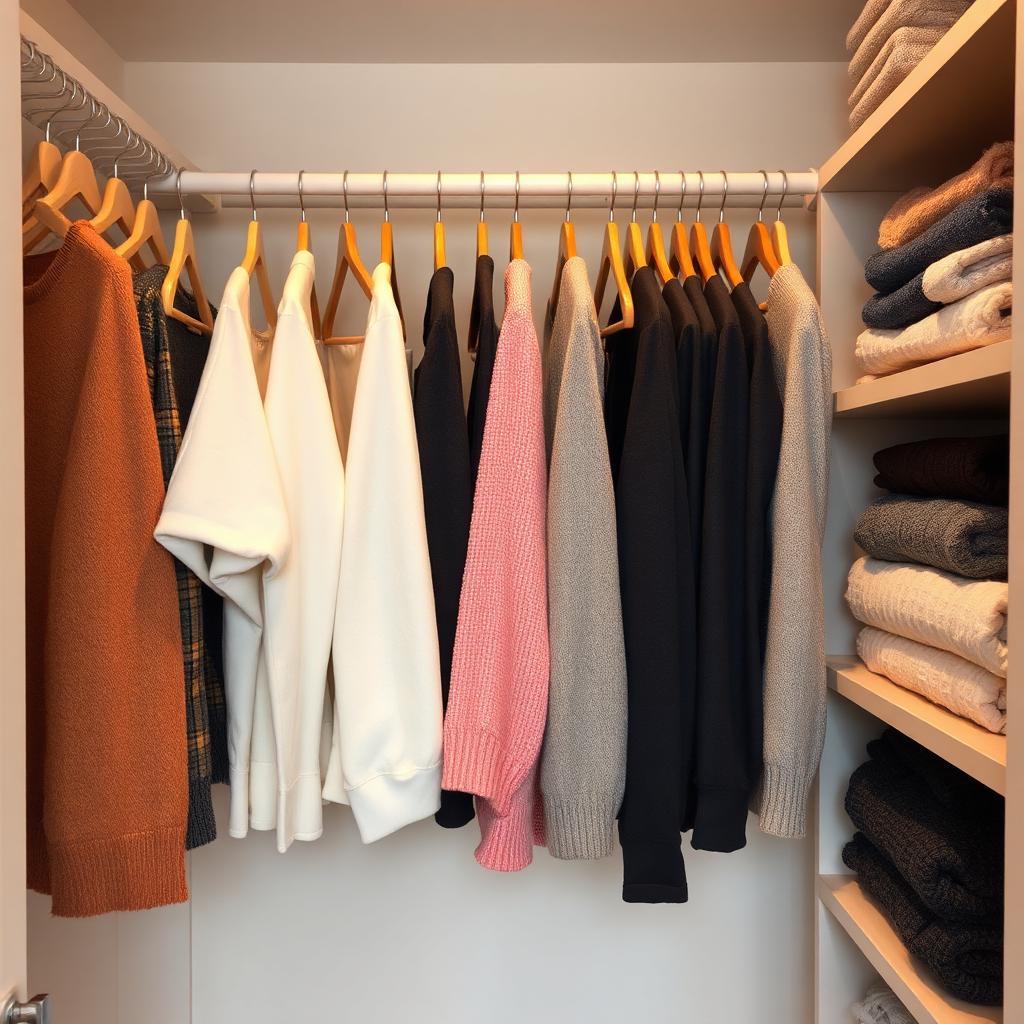
Quick Answer
Empty the closet completely, sort everything into Keep, Donate, and Repair piles, then rebuild with three space saving moves: swap bulky hangers for slim velvet ones, install a second hanging rod underneath the first, and use clear bins to vertical stack folded items on the shelf.
Three to four hours of work typically reclaims 30 to 50 percent more usable space without any renovation.
If you only do one thing, replace the hangers. Slim velvet hangers free up several inches across an average rod and stop clothes from slipping off.
Phase 1: Empty everything out
You cannot reorganise around clutter. Pull every item out of the closet and pile it on the bed. Vacuum the closet floor, wipe the shelves, and inspect for any peeling paint or damaged drywall to repair while it is empty.
Take a photo of the empty closet. You will use it to plan the layout before putting anything back.
Phase 2: The three pile sort
- Keep: wear regularly, fits now, in good repair, suits your current life.
- Donate or sell: ill fitting, unworn for 12 months, or duplicates of something you already have.
- Repair: missing buttons, broken zippers, loose hems. Set a one week deadline. If the repair is not done by then, the item moves to donate.
The honest test for the donate pile: would you buy this today if you saw it in a store? If not, let it go.
Phase 3: Maximise vertical space
Most small closets waste the top two feet of wall and the bottom two feet of floor. Recover both.
- Top shelf: use stackable clear bins for off season items, sweaters, hats, and extra bedding. Clear sides let you see contents without pulling everything down.
- Second hanging rod: add a tension hung or screw mounted lower rod about 36 inches below the upper rod. Use the upper for shirts and the lower for pants folded over hangers. This roughly doubles your hanging capacity.
- Closet floor: install a slim shoe rack or two stacked clear bins for footwear. Avoid floor piles; they collect dust and make the closet look chaotic.
- Back of the door: mount an over the door rack for belts, scarves, handbags, or a 24 pocket shoe organiser repurposed for socks, accessories, or cleaning supplies.
Phase 4: Hanger upgrade
- Velvet hangers: the single best ROI in any closet. They are roughly one third the thickness of plastic, grip clothes so nothing slips, and look uniform.
- Wooden hangers: reserve for suits, blazers, and heavy coats that need shape support.
- Specialty multi tier hangers: useful for pants and scarves, but only one or two; more than that and you lose the visibility advantage.
- Throw out wire hangers. They warp shoulders, leave bumps, and rust over time.
Phase 5: Group like with like
Sort hanging clothes by category first, then by colour within each category. The categories that work for most wardrobes:
- Sleeveless tops
- Short sleeve tops
- Long sleeve tops
- Sweaters and cardigans
- Dresses
- Trousers and jeans
- Blazers and outerwear
Within each category, run light colours to dark, left to right. Visual order makes getting dressed faster and exposes duplicates you should let go.
Phase 6: Folded zones and accessories
- Drawer dividers turn one chaotic drawer into four neat lanes for socks, underwear, workout clothes, and pyjamas.
- File fold sweaters and t shirts vertically inside drawers or bins (the Marie Kondo method) so you see every item at a glance.
- Jewellery: a small velvet lined tray on the top shelf beats tangled boxes.
- Hats: stack on the shelf or hang on a row of small hooks inside the closet wall.
Maintain the system without becoming a slave to it
- One in, one out. For every new piece of clothing that enters, one piece leaves.
- The reverse hanger trick. Turn every hanger backwards. After three months, anything still backwards is something you have not worn. Re evaluate.
- Quarterly mini reset. 30 minutes every three months catches small drift before it becomes another full overhaul.
FAQs
What if I rent and cannot drill holes?
Tension rods, over the door racks, and freestanding shelf units give you the same gains without putting a single hole in the wall. Most tension rods hold 20 to 30 pounds, which is enough for shirts and dresses.
Should I get a custom closet system?
Custom systems pay off only if you plan to stay in the home for five or more years. For most renters and short term owners, modular components from IKEA, The Container Store, or Amazon deliver 80 percent of the benefit at 20 percent of the cost.
How do I store seasonal clothing?
Vacuum sealed bags on the top shelf or under the bed. Wash everything before storing to prevent moth damage, and add a cedar block to repel pests.
What is the fastest single upgrade?
Slim velvet hangers and one second rod. Together they take an hour to install and instantly create the look of a closet twice the size.
The takeaway
A small closet feels big when you ruthlessly edit what is inside, use the entire vertical wall, and standardise the hangers. Spend one weekend on the reset and ten minutes a quarter on maintenance, and you will never feel cramped getting dressed again.