Quick Answer
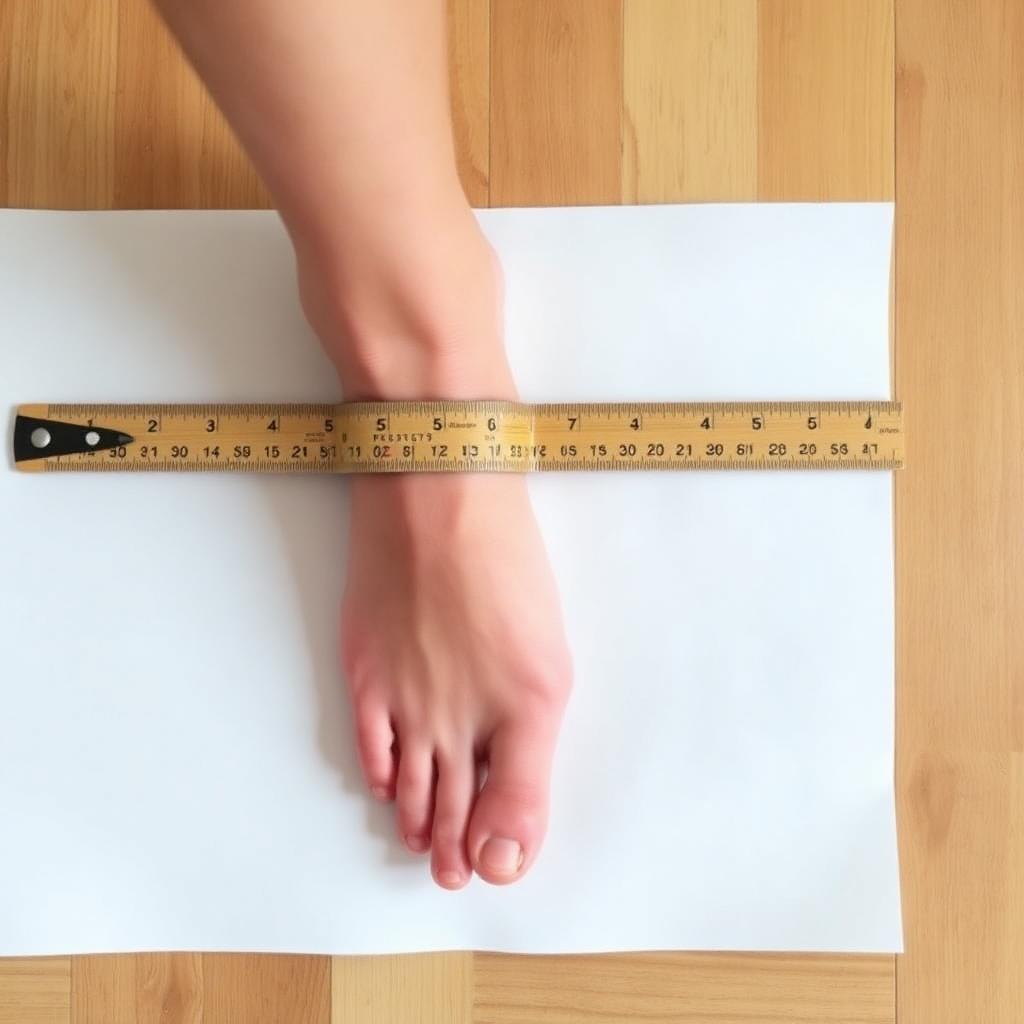
Tape a sheet of paper to a hard floor. Stand on it with the socks you plan to wear. Trace your foot with a pencil held straight up. Measure the longest distance from heel to toe in centimetres or inches. Compare to a size chart.
Measure both feet at the end of the day (feet swell up to 5 percent), and always size to your larger foot.
For width, measure the widest part of your foot across the ball. Most online charts pair length and width to give you the right shoe size and width (B, D, EE for example).
Why home measuring beats guessing
- Shoe sizes are not universal. A US 9 in Nike fits differently than a US 9 in Adidas, Vans, or New Balance. Knowing your foot length in centimetres lets you cross reference any brand chart.
- Feet change. Adult feet grow longer and wider with age, weight changes, and pregnancy. The size you wore at 25 may be wrong at 40.
- Online buying without returns: a five minute home measurement avoids the hassle and cost of return shipping.
- Width matters as much as length. A right length but wrong width shoe causes blisters, bunions, and toe deformity over time.
What you need
- One sheet of paper larger than your foot (printer paper works; tape two sheets together for very long feet).
- Painter s tape or masking tape.
- A sharp pencil.
- A ruler or tape measure marked in centimetres.
- The socks you plan to wear with the shoes.
- A friend (optional, but helpful for tracing accurately).
Step by step measurement
- Tape the paper to a hard floor. Carpet softens the trace and gives a falsely small reading.
- Put on your socks. Thick winter socks make a real difference; use what you will actually wear.
- Stand on the paper with your full body weight on the foot you are tracing. Sitting traces give a falsely small result because the foot is not loaded.
- Hold the pencil perfectly vertical (90 degrees to the floor) and trace around the foot. Tilting the pencil inward gives a smaller outline than your actual foot.
- Measure the longest length: from the back of the heel to the tip of the longest toe (often the second toe, not the big toe).
- Measure the widest width: across the ball of the foot, where it is widest.
- Repeat on the other foot. Use whichever measurement is larger.
Length to size conversion
The numbers below are approximate. Always check the brand specific chart when possible.
- 22.0 cm: US Women 5 / US Men 3.5 / UK 3 / EU 35
- 23.0 cm: US Women 6.5 / US Men 5 / UK 4.5 / EU 37
- 24.0 cm: US Women 7.5 / US Men 6 / UK 5.5 / EU 38.5
- 25.0 cm: US Women 8.5 / US Men 7 / UK 6.5 / EU 40
- 26.0 cm: US Women 10 / US Men 8.5 / UK 8 / EU 41.5
- 27.0 cm: US Women 11 / US Men 9.5 / UK 9 / EU 43
- 28.0 cm: US Women 12 / US Men 10.5 / UK 10 / EU 44
- 29.0 cm: US Men 11.5 / UK 11 / EU 45
- 30.0 cm: US Men 12.5 / UK 12 / EU 46
Width sizing decoded
Width designations vary by region. In the US:
- Narrow: AA (women), B (men)
- Standard: B (women), D (men)
- Wide: D (women), 2E (men)
- Extra wide: 2E (women), 4E (men)
If your ball width is more than the standard for your length, size up half a size or look for a wide width version. Many running shoe brands (New Balance, Brooks, Saucony, Altra) offer multiple widths in the same model.
Special cases
- One foot bigger than the other: nearly everyone has this. Always fit to the larger foot.
- High instep: measure the circumference over the highest point of the arch. Choose shoes with lace adjustability or a stretchy upper.
- Bunions or hammertoes: measure including the bunion width, and shop for shoes with a wide or rounded toe box.
- Kids: measure every two to three months during growth spurts. Leave a thumb width of room in front of the longest toe.
- Diabetic or neuropathy: work with a podiatrist and avoid pressure points. DIY measurement is a starting point only.
Common sizing mistakes
- Measuring in the morning. Feet swell during the day. Measure in the late afternoon or evening for the most accurate fit.
- Trusting the size you wore as a teenager. Adult feet keep changing.
- Ignoring the second toe. If your second toe is longer than your big toe (Morton s toe, very common), measure to that one.
- Buying online without a brand chart. Always click through to the specific brand s sizing page; do not assume the universal chart matches.
- Sizing down to look smaller. Too small shoes cause hammertoes, bunions, and ingrown nails over time.
FAQs
Should there be empty space at the front of a new shoe?
Yes. Aim for a thumb width (about 1 cm) between your longest toe and the end of the shoe to allow for natural foot swelling and forward slide when walking.
Do running shoes fit differently?
Yes. Most runners size up a half size from their walking shoe size to allow for foot swelling during long runs and prevent black toenails on descents.
What is a Brannock device?
The metal foot measuring tool you have seen at shoe stores. It measures heel to toe length, heel to ball length, and width simultaneously. Stores will measure for free; the home method is a close substitute.
Why do European sizes vary by brand?
EU sizes are based on Paris points (each point is 6.67 mm), but the rounding rules differ slightly between manufacturers. Always measure your foot in centimetres and cross reference.
The takeaway
Paper, pencil, ruler, the right socks, and a vertical pencil tip. Measure both feet at the end of the day, size to the larger one, and always compare your centimetre measurement to the brand specific chart rather than guessing by your last pair.