Quick Answer
Three habits keep almost any plant alive: match the plant to the natural light it evolved in, use the finger test instead of a watering calendar, and only grow in pots with real drainage holes.
The so called black thumb is almost always overwatering plus the wrong light. Fix those two and most plants forgive you for the rest.
Why Plants Die in Your Care
I used to lose at least one houseplant a month until I realised plants do not respond to good intentions. They respond to physics. Photons drive photosynthesis. Soil moisture controls root oxygen. Drainage controls whether roots breathe or drown.
Once you treat plant care as a system with three inputs, the guesswork goes away.
Rule 1: Match the Light Before Anything Else
Light is food. Put a desert succulent in a dark hallway and it starves. Put a deep shade fern next to a sunny south window and it scorches.
- Full sun: 6 or more hours of direct sunlight. Right against a south facing window indoors. Succulents, citrus, tomatoes, rosemary.
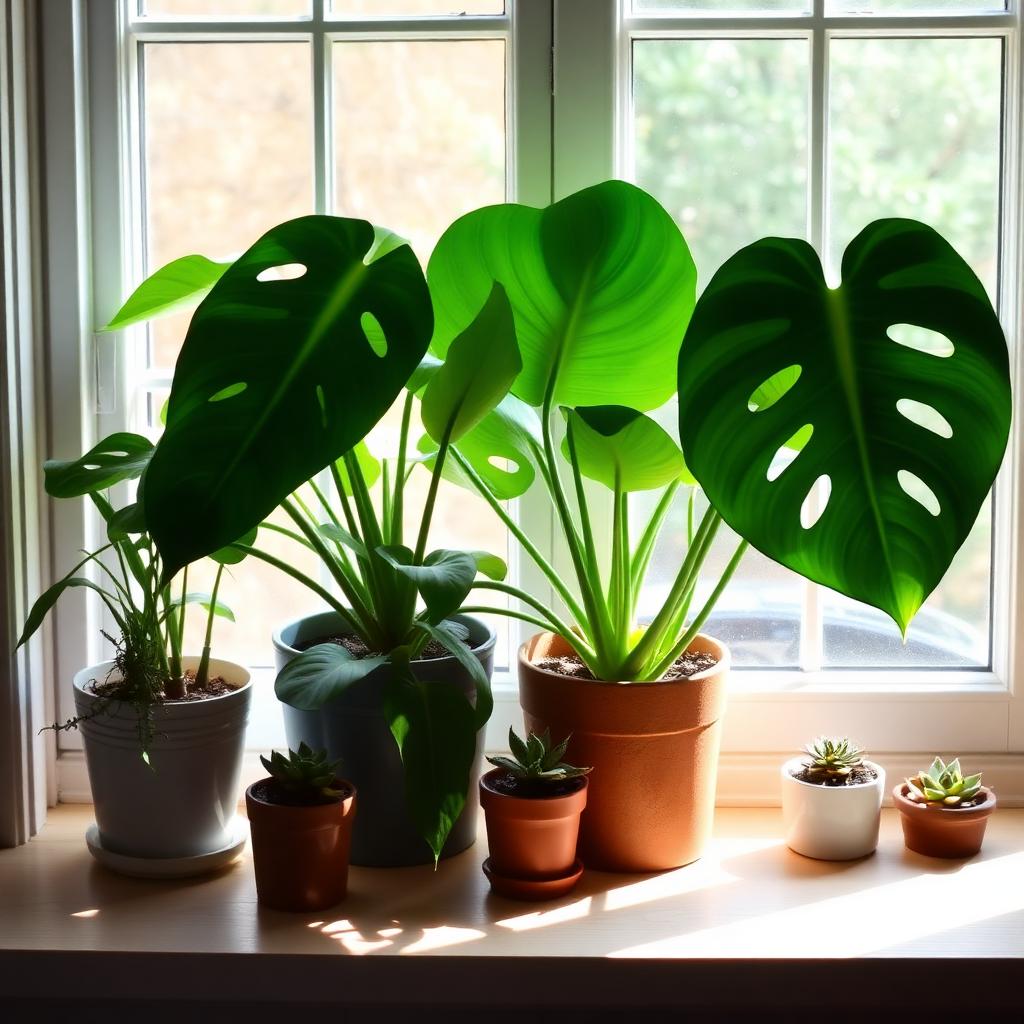
- Bright indirect light: A spot where you can see open sky but direct rays just miss the leaves. Fiddle leaf fig, rubber plant, monstera.
- Medium light: A few feet back from a window or near an east facing window. Pothos, philodendron, spider plant.
- Low light: Far from any window or in a north facing room. Snake plant, ZZ plant, cast iron plant, pothos.
Before you buy a plant, decide which spot it will live in, then choose a plant that already thrives in that light. Trying to bend the plant to your room is how plants die.
Rule 2: Throw Away the Watering Schedule
The single biggest killer of houseplants is watering on a calendar. Plants do not drink on Tuesdays. They drink when the soil dries enough that roots can finally breathe in oxygen between drinks.
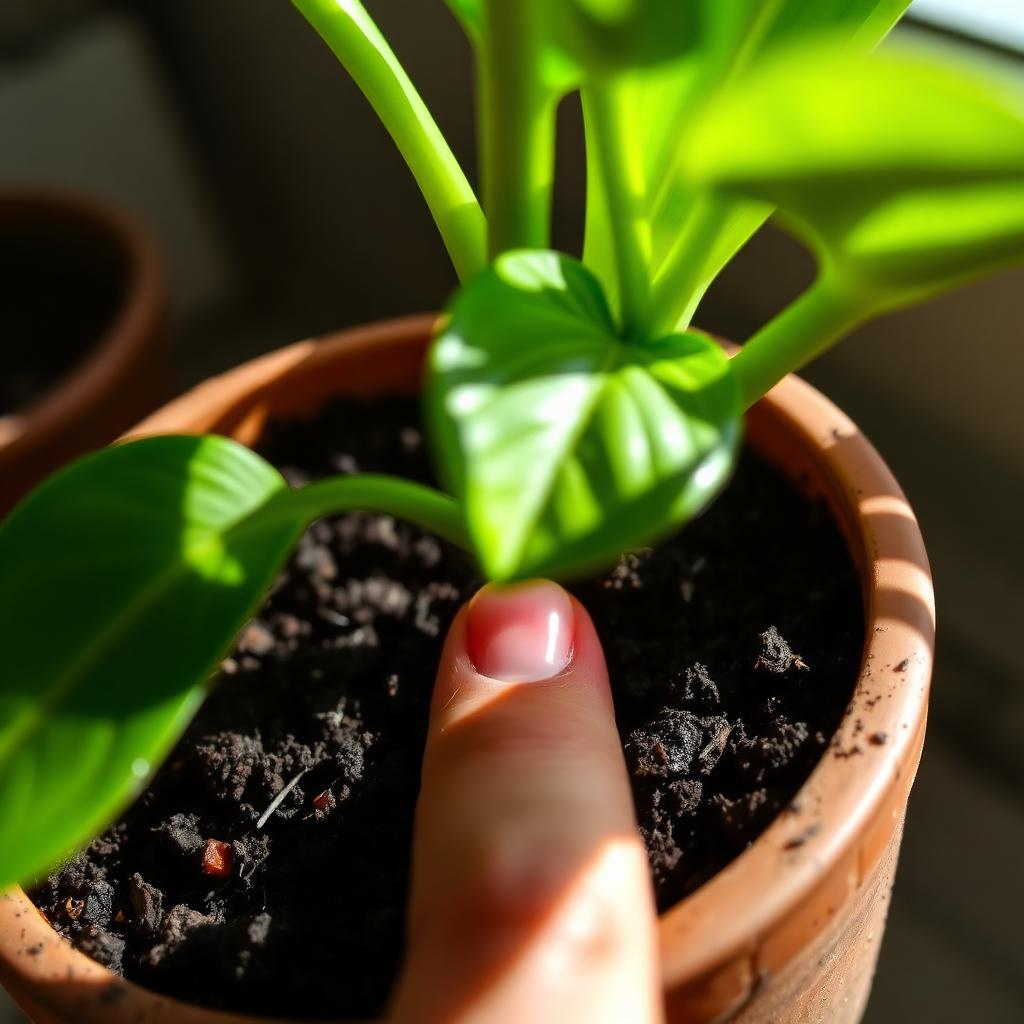
The finger test:
- Push your index finger two inches into the soil.
- If you feel any moisture, walk away.
- If it is bone dry, water deeply until liquid runs from the drainage hole.
- Empty the saucer 10 minutes later so the pot is not sitting in standing water.
Most houseplants need this check every 5 to 14 days. Succulents and cacti can stretch to 14 to 30 days. Big tropicals in bright light may need it twice a week in summer.
Rule 3: Drainage Is Non Negotiable
Roots breathe. Standing water in a pot suffocates them within days and triggers root rot, which is irreversible by the time you see the wilting and yellowing.
Three rules:
- Every pot must have a real drainage hole.
- Use a chunky potting mix amended with perlite or pumice so water moves through fast.
- If you love a decorative ceramic pot with no hole, treat it as a cachepot. Keep the plant in a plain plastic nursery pot inside the decorative one and lift it out to water.
Reading the Plant
Plants tell you what is wrong if you learn the signals.
- Yellow lower leaves dropping: Usually overwatering.
- Crispy brown leaf edges: Underwatering or low humidity.
- Pale stretched stems: Not enough light, plant is reaching for it.
- White crusty top soil: Hard water mineral buildup. Flush the pot through.
- Wilting despite damp soil: Root rot. Unpot, trim black roots, repot in fresh dry mix.
Feed Less Than You Think
A new plant comes loaded with fertiliser in its nursery mix and does not need feeding for the first 6 to 8 weeks. After that, a balanced liquid fertiliser at half the label strength once a month from spring to early autumn is plenty.
Skip feeding entirely in winter when most houseplants slow down. Overfertilising burns roots faster than underfertilising starves them.
Outdoor Garden Version
The same three rules apply outside.
- Match each plant to the light at the chosen spot (full sun, part shade, shade).
- Water deep and infrequently rather than shallow and often. Deep roots make drought tough plants.
- Plant in raised beds or amended soil so heavy clay never holds standing water around the crown.
The First 30 Day Plan for a New Plant
- Day 1: Place in the matched light spot. Do not water.
- Day 3 to 5: Finger test. Water if dry.
- Week 2: Wipe leaves with a damp cloth, rotate the pot a quarter turn.
- Week 3: Continue the finger test routine.
- Week 4: Skip fertiliser this month. Just observe.
By week four you will know exactly how often that specific plant in that specific spot needs water.
The Takeaway
The black thumb is a myth. Plants live or die by light, water, and drainage. Pick the right plant for the light you have, use the finger test, and only grow in pots with holes. Master those three things and you will never lose a plant to mystery again.