Quick Answer
Walk early or late, never midday. Always test pavement temperature with the back of your hand for seven seconds before stepping out. Provide constant shade, fresh cool water, and indoor airflow. Use a wet towel under the dog (not draped over), or a cooling mat. Do not shave double-coated breeds, and never leave a dog in a parked car.
Heavy drooling, frantic panting, bright red gums, vomiting, or collapse means stop everything and get to a vet immediately. Canine heatstroke can kill within an hour.
How Dogs Actually Cool Down
Dogs do not sweat the way humans do. They have a small number of sweat glands on the pads of their feet, which contribute almost nothing to thermal regulation. Their real cooling system is panting.
When a dog pants, it draws air rapidly over the wet surfaces of the tongue, mouth, and upper airway. Saliva evaporates, pulling heat out of the dense network of blood vessels in the head. The cooler blood then circulates back to the body core. It works well in moderate heat, but it has limits, especially in high humidity, when evaporation slows down.
That is why a humid 28 C day can be more dangerous to a dog than a dry 33 C day. The temperature reading alone is not the full picture.
Warning Signs of Heatstroke
Mild signs include slowing down on a walk, looking for shade, and panting more than usual. The dangerous signs come on fast.
- Frantic, non-stop panting that does not slow when the dog rests.
- Thick, ropey drool.
- Bright red, dark red, or pale gums.
- Wobbling, weakness, or collapse.
- Vomiting, diarrhea, or blood in either.
- Body temperature above 40 C (104 F).
If you see those signs, move the dog to shade, wet the belly, paws, and armpits with cool (not ice cold) water, offer small sips, and drive to the nearest emergency vet. Do not waste time trying to cool the dog at home past the first few minutes.
Step 1: Pass the Seven-Second Pavement Test
Asphalt absorbs solar radiation all day. On a 30 C afternoon, pavement can reach 55 to 60 C, hot enough to blister paw pads within seconds. Concrete is cooler but still risky. The hand test is the simplest check there is.
Press the back of your bare hand flat against the pavement for seven full seconds. If you cannot hold it there comfortably, it is too hot for your dog to walk on. Stick to grass, wait until the sun is low, or skip the walk that day. Indoor play and food puzzles are perfectly good substitutes when conditions are dangerous.
Step 2: Do Not Shave a Double-Coated Dog
This is the single most common mistake well-meaning owners make. The American Kennel Club is clear on it: shaving a double-coated breed like a Husky, Golden Retriever, Border Collie, German Shepherd, or Bernese does more harm than good.
A double coat has two layers. The dense undercoat insulates against both cold and heat, and it sheds out seasonally. The coarser top coat blocks UV and repels moisture. Shaving the coat down removes that insulation, exposes the skin to sunburn, and often grows back patchy or with a different texture. The dog ends up hotter, not cooler.
The right move is regular brushing during shedding season to clear the loose undercoat so air can move through the coat. A deshedding tool used outdoors once or twice a week through spring and early summer makes a noticeable difference.
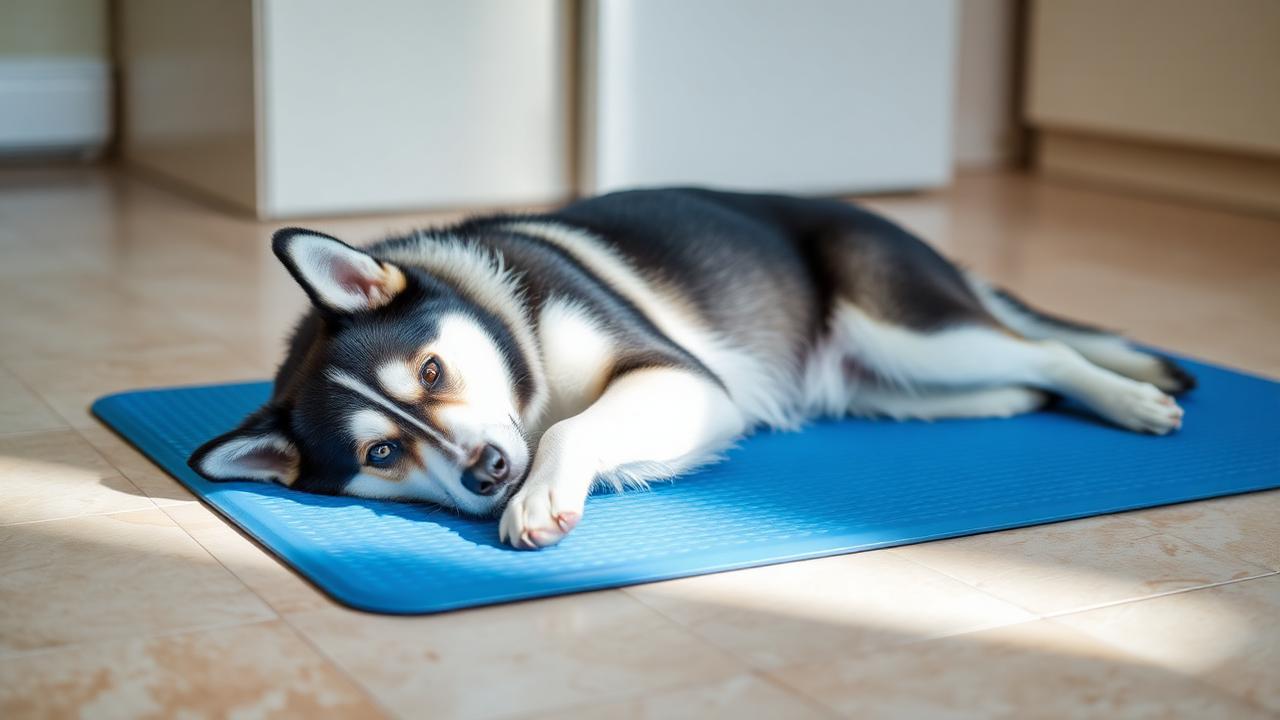
Step 3: Use Conduction, Not Insulation
If your dog comes in hot from a walk or play session, the goal is to pull heat out of the body, not trap it in. Draping a heavy wet towel over a dog's back is a common reflex and it is the wrong move. Wet fabric on top of dense fur acts like a greenhouse, sealing heat against the skin.
Instead, set up cool surfaces the dog can lie on.
- A gel-filled or pressure-activated cooling mat on tile is a strong option. The dog presses its hairless belly and groin against the mat and dumps heat through direct contact.
- A wet towel laid flat under the dog (not draped over) achieves the same thing, with evaporation from the belly side.
- A shallow paddling pool in a shaded yard gives most dogs a way to self-regulate. Many will stand in a few inches of water for ten minutes and then walk out.
- Wetting the paws, ear flaps, and groin with cool water targets the regions where blood vessels are close to the surface.
Use cool water, not ice water. Very cold water on a hot dog can constrict surface blood vessels and slow heat release, the opposite of what you want.
Step 4: Hydration and Shade
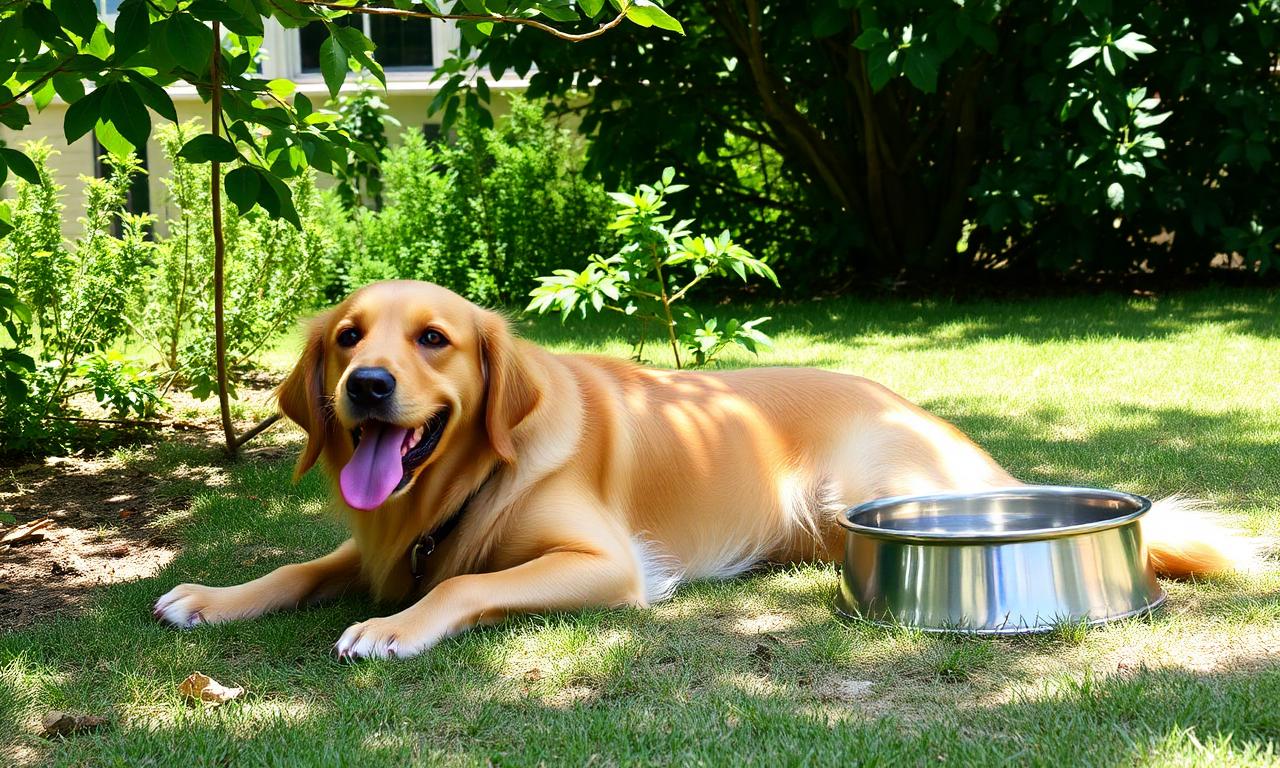
Water needs to be available everywhere the dog spends time, including outdoors, in the car for short transit, and on long walks. A collapsible silicone bowl in your bag costs almost nothing and saves trouble.
Add a few ice cubes to the water bowl if your dog is fine with them. (Ice cubes are different from a full ice bath. A few cubes in a big bowl just keep the water cool over the afternoon.) For dogs that do not drink enough, mixing a spoonful of low-sodium broth into the water bowl encourages intake.
Shade should be constant, not just whatever the dog can find. A pop-up canopy, a covered porch, or a permanent shade sail over the run area is much safer than relying on a tree shadow that moves with the sun.
Step 5: Never the Parked Car
This rule has no exceptions, even with the windows cracked, even for five minutes, even on a cloudy 24 C day. A parked car becomes a sealed oven. Interior temperatures climb roughly 5 C every five minutes for the first half hour, and that is enough to kill a healthy dog. If you cannot bring the dog inside the destination with you, leave the dog at home.
High-Risk Dogs Need Extra Care
Some dogs overheat much faster than the average and need a lower threshold for caution.
- Brachycephalic breeds like Bulldogs, Pugs, Boxers, Frenchies, and Shih Tzus have compressed airways that cannot move enough air to pant efficiently. They should stay indoors with AC during heat advisories.
- Puppies, senior dogs, overweight dogs, and dogs with heart or respiratory conditions dehydrate and overheat fast. Halve their normal exercise on hot days.
- Black-coated dogs absorb significantly more solar radiation and need more shade than lighter-coated dogs.
The Takeaway
Walk in the cool hours, test the ground with your hand, provide multiple shade and water stations, cool from underneath with mats or wet towels under the belly, and never shave a double coat or leave a dog in a car. Treat heavy panting that does not settle as a vet visit, not a wait-and-see.