Quick Answer
Give your cat shade, steady airflow, a few cool flat surfaces to lie on, and multiple bowls of fresh room-temperature water. Skip the ice bath and the ice cubes in the bowl. Cats sweat only through their paw pads, so they cool down mainly by grooming, panting at the extreme end, and pressing their belly against something cooler than they are.
Open-mouth panting, drooling, or lethargy is a veterinary emergency. Call your vet right away if you see any of those.
How a Cat Actually Cools Down
Cats are descended from desert-dwelling ancestors and they are good at handling heat, but they do it differently from us. They do not have sweat glands across their skin. The only working sweat glands are on the hairless pads of their paws, which is why you sometimes see faint damp paw prints on a tile floor on a hot day.
Their main cooling system is grooming. When a cat licks its coat, it spreads a thin film of saliva that evaporates and pulls heat off the skin, much like sweat does on us. A 2018 study by Georgia Tech engineers showed the hollow, spoon-shaped papillae on a cat's tongue are designed to wick saliva deep into the fur, which is part of why grooming is so effective at moving heat.
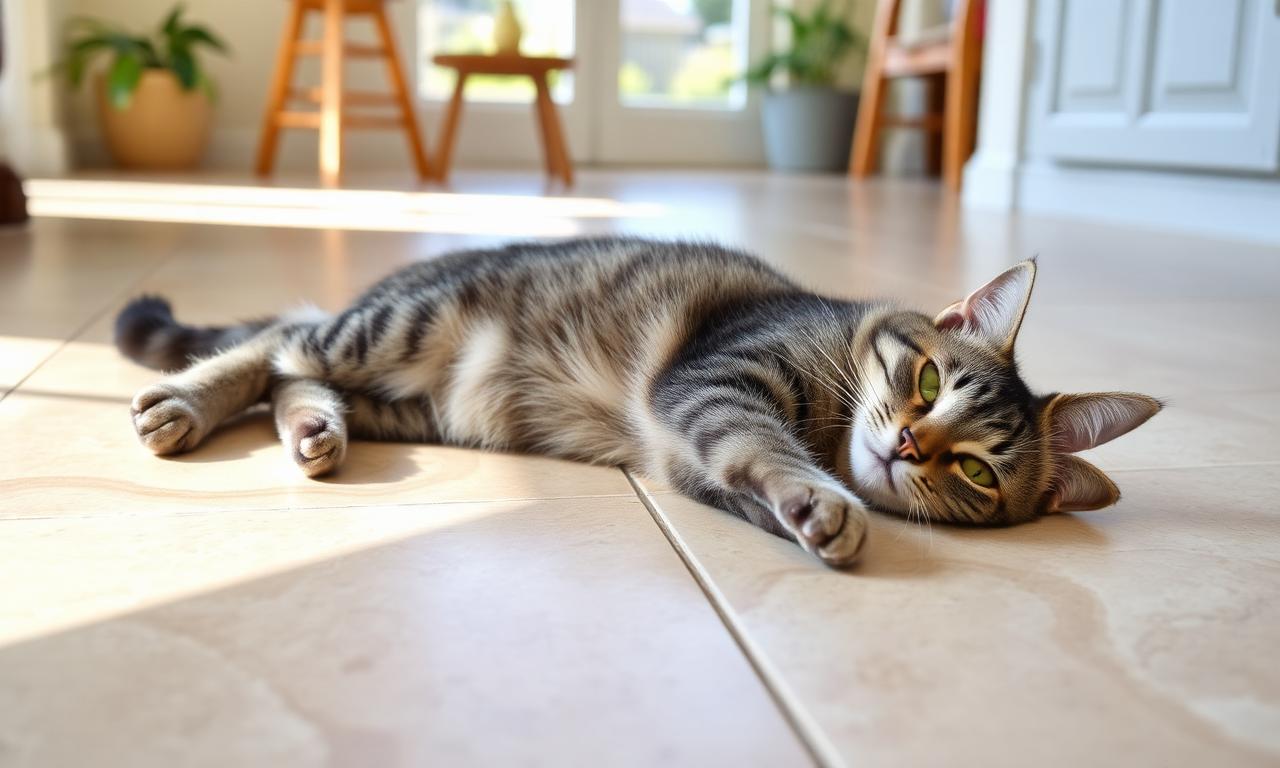
Behavior matters too. Cats stretch out long and flat on cool surfaces to dump core heat through direct contact, a process called conduction. A cat sprawled belly-down on bathroom tile is not being lazy. It is using physics.
Warning Signs of Overheating
Mild signs of heat stress include sleeping more than usual, picking the coolest floor in the house, and grooming heavily. Those need a cooler room and more water, not a panic.
The signs that mean stop and act now:
- Open-mouth panting or rapid, shallow breathing.
- Drooling or thick, sticky saliva.
- Bright red or very pale gums.
- Vomiting, stumbling, or unusual disorientation.
- Body temperature above 39.4 C (103 F) measured rectally.
If you see any of those, move the cat to a cool room, offer water, and call your vet or an emergency clinic immediately. Heatstroke in cats can damage organs within minutes.
Step 1: Build Cool Zones Around the House
The single highest-impact change on a hot day is giving your cat a few options for cool, hard surfaces to lie on.
- Roll back rugs from tile or stone floors in the bathroom, kitchen, or hallway. Those floors stay several degrees cooler than ambient air.
- Open closet doors so cats can press up against drywall or wardrobe interiors, which stay cool to the touch.
- Move their bed to the lowest level of the house. Heat rises, so the basement or ground floor is naturally cooler.
- Pull blinds and curtains shut on sun-facing windows to block solar gain during the hottest hours.
Step 2: Get Hydration Right
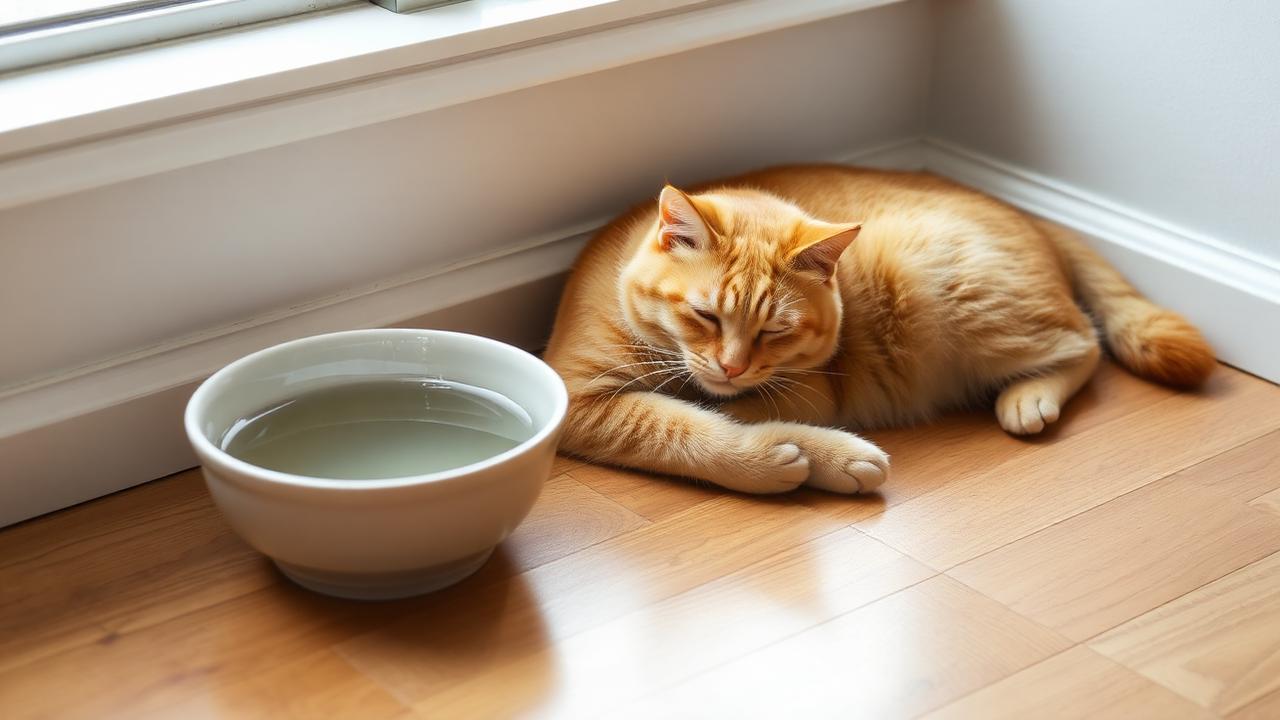
Cats are notoriously bad drinkers, partly because they evolved to get most of their water from prey. Heat changes the math fast. Aim for at least two clean water stations in different rooms, refilled with cool tap water at least twice a day.
A few tricks that genuinely help:
- Use wide, shallow ceramic or stainless bowls. Many cats dislike narrow plastic bowls because their whiskers brush the sides.
- Keep the water bowl away from the food bowl. In the wild, cats avoid drinking near their kill to prevent contamination.
- Try a pet water fountain. Moving water is more interesting to cats and they often drink noticeably more.
- Mix a tablespoon of water or unsalted bone broth into wet food once a day during a heatwave.
Skip the ice cubes. Ice-cold water can cause stomach cramping, and shocking the gut with cold liquid triggers blood vessels to constrict, which slows heat dumping.
Step 3: Move Air, Do Not Just Cool It
Air conditioning is great if you have it, but a regular fan does a lot of work too because it speeds up evaporation from the cat's groomed coat. Place a fan low, pointed across the room rather than directly at the cat, so they can choose to lie in the airflow or step out of it. Never leave a cat trapped in a sun-warmed room without ventilation, even briefly.
If your home does not have AC, a frozen water bottle wrapped in a thin towel and placed near (not under) the cat's bed gives them a cool object to lean against on their own terms.
Step 4: The Damp-Cloth Mock-Groom
If your cat is clearly hot but not in distress, you can support the natural evaporative system with a damp cloth.
- Wet a soft washcloth in cool, not cold, tap water.
- Wring it out hard so it is just damp.
- Stroke the cat gently from head to tail, with the lay of the fur, working the moisture into the coat.
- Pay attention to the head, ears, paw pads, and belly, where blood vessels run close to the surface.
This mimics a heavy grooming session and lets evaporation do its job without the trauma of a full bath. Most cats tolerate it well if you keep it short.
Step 5: Manage Outdoor Cats
If your cat goes outside, restrict access to early morning and late evening on heatwave days. Provide a shaded shelter with airflow and a heavy water bowl that will not tip. Never leave a cat in a parked car, a garage, or a greenhouse. Indoor temperatures inside a parked car can climb past 50 C within fifteen minutes on a 30 C day, which is rapidly fatal.
Special Considerations
Some cats are at much higher risk and need extra care.
- Flat-faced breeds like Persians, Himalayans, and Exotic Shorthairs cannot pant efficiently and overheat faster.
- Long-haired cats benefit from regular brushing to thin the undercoat, but do not shave them. The coat helps insulate against heat as well as cold.
- Kittens, senior cats, and cats with kidney disease, heart conditions, or obesity dehydrate faster and need the AC or a fan, not a maybe.
The Takeaway
Cool zones, fresh water in more than one spot, moving air, and a damp cloth wipe-down when needed will carry most cats through the hottest stretch of summer comfortably. Watch for panting and lethargy as your tripwires, and treat any open-mouth breathing or stumbling as a same-hour vet call.