Quick Answer
Basil dies in about a week when you treat it like a regular houseplant. Give it 6 to 8 hours of bright direct sun, water deeply only when the top inch of soil feels dry, and never splash the leaves.
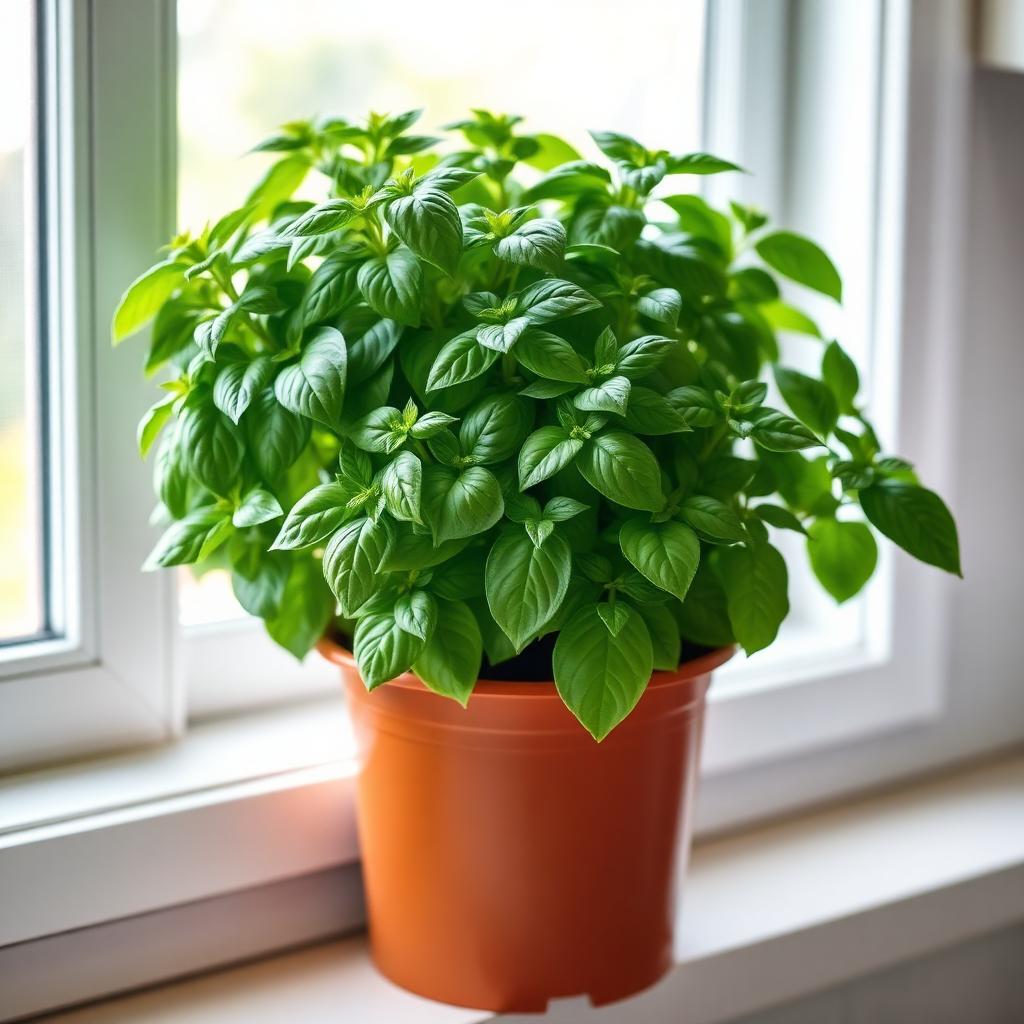
The single biggest fix is to divide the dense grocery store clump into 3 or 4 smaller pots the day you bring it home. Pinch the stems above a pair of leaves every two weeks and one plant will feed your kitchen all summer.
Why Grocery Store Basil Always Dies
Commercial growers cram up to 30 seedlings into one tiny plastic pot to make the display look bushy. Within a few days at home those roots run out of oxygen, the inner stems collapse, and the whole clump turns black.
The plant is not weak. The pot is the problem. Slide the entire root ball out, gently tease the soil apart, and split the clump into 3 or 4 smaller groups of stems. Replant each one in its own 6 inch pot with fresh, loose potting mix.
How Much Light Basil Actually Needs
Basil is a sun loving tropical herb from India. It needs a minimum of 6 to 8 hours of direct sunlight every day to keep producing fragrant new leaves.
- A south or west facing window is ideal indoors.
- A sunny patio or balcony in summer gives the best growth.
- If natural light is short, a basic LED grow light on for 12 hours per day works well.
Plants that get less than 4 hours of strong light stretch tall and floppy, produce thin pale leaves, and stop yielding within a few weeks.
The Right Way to Water Basil
Basil hates two things in equal measure: bone dry roots and waterlogged soil. The goal is a moist, well drained pot, never a soggy one.
Push a finger one inch into the soil. If it feels dry, water until liquid runs out the drainage hole, then empty the saucer. In a hot bright spot that often means watering every other day. In winter or a cool kitchen it may be once a week.
Always pour water at the soil surface and avoid wetting the leaves. Water sitting on the foliage invites downy mildew, the most common basil disease, which shows up as fuzzy gray patches underneath the leaves.
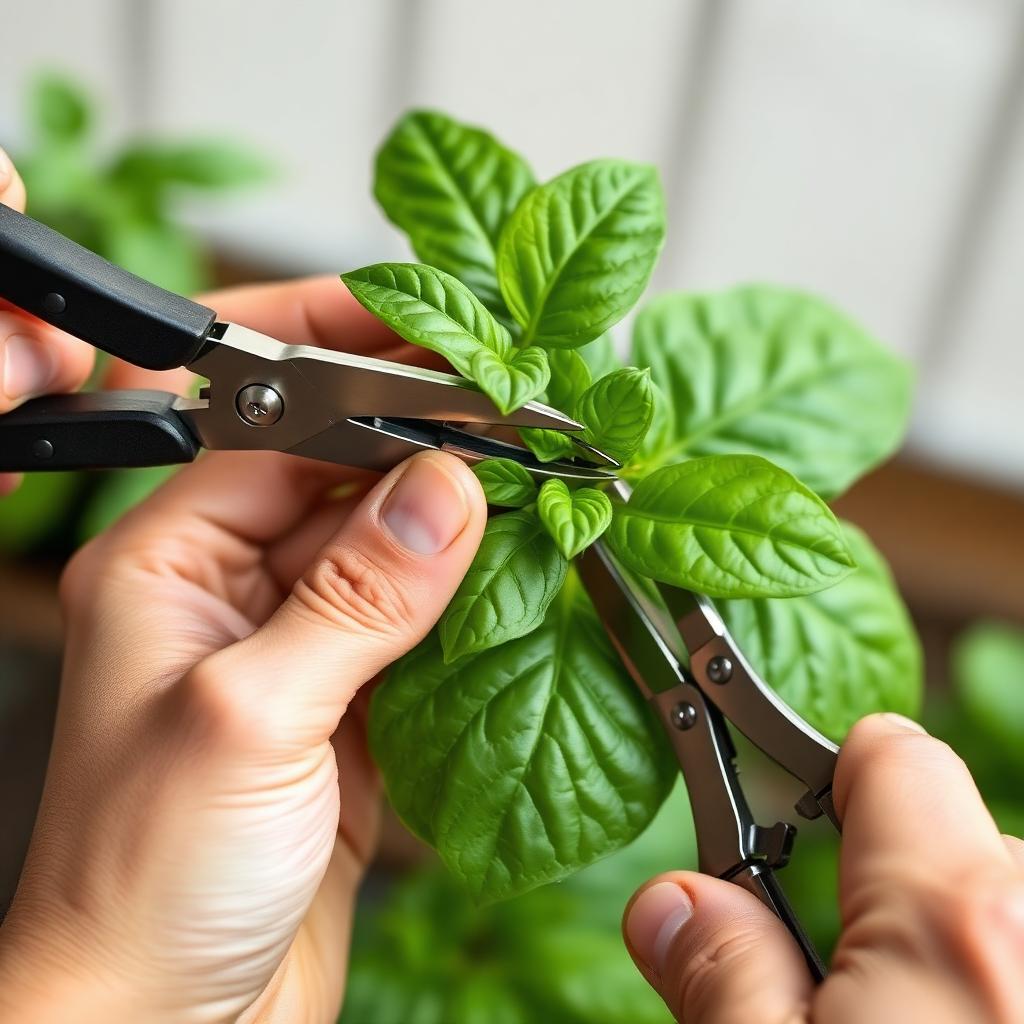
The Pinching Trick That Doubles Your Harvest
If you let basil grow straight up like a single stalk, it quickly flowers, turns bitter, and dies in one season. The fix is the simplest pruning technique in the garden.
Find the spot where two large leaves meet the main stem. Look carefully and you will see two tiny leaf buds tucked into that junction. Use sharp scissors to snip the main stem about a quarter inch above the junction.
Within a week those two tiny buds explode into two new branches. Repeat every two weeks across the whole plant and a single basil seedling can grow into a bushy, branching plant 18 inches wide.
Soil, Pots, and Feeding
Choose a 6 inch terracotta or plastic pot with at least one drainage hole. Terracotta breathes and dries faster, which is forgiving for over watering. Plastic holds moisture longer and suits hot patios.
Use a light, fluffy potting mix with added perlite. Heavy garden soil or moisture control mixes stay too wet and rot the roots within days. Feed every two weeks during the growing season with a diluted balanced liquid fertilizer or fish emulsion to keep leaf production strong.
What to Do When You See Flowers
The second a basil plant starts forming small white or purple flower spikes at the tips of its branches, leaf flavor drops and the plant shifts its energy to making seeds.
Pinch every flower spike off as soon as you see it, snipping back to the next pair of healthy leaves. This single habit can extend a basil plant from a 6 week sprint to a 5 month harvest.
Common Basil Problems at a Glance
- Yellow lower leaves usually mean over watering or a pot with no drainage.
- Black mushy stems are root rot, almost always from soggy soil.
- Tiny holes in leaves point to slugs at night or flea beetles in the day.
- Pale washed out color signals too little light or a hungry plant that needs feeding.
The Takeaway
Treat basil like the sun loving Mediterranean herb it really is. Divide that crowded grocery pot, find the brightest window in the house, water deeply when the top inch feels dry, and pinch every two weeks. One cheap clump of supermarket basil will reward you with months of pesto, caprese, and pizza toppings.