Quick Answer
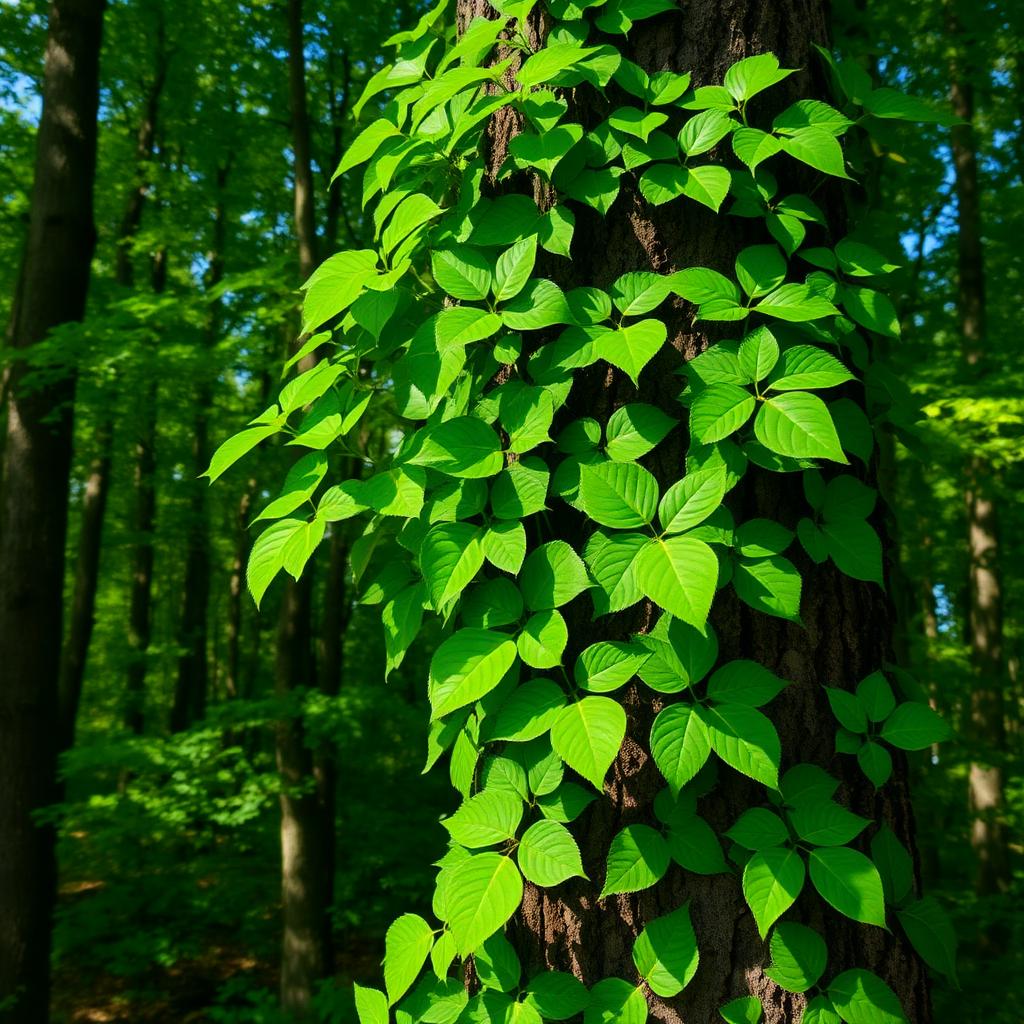
Poison ivy (Toxicodendron radicans) always shows three leaflets per stem with the middle leaflet on a longer stalk than the two side leaflets. Leaves grow alternately along the stem, not in opposing pairs, and the surface is often glossy with reddish new growth.
In winter, leafless plants are identified by hairy, fibrous aerial roots clinging to tree trunks. The urushiol oil that causes the rash stays active on bare vines, roots, and dead leaves for up to 5 years.
Why It Matters
About 85 percent of people are allergic to urushiol, the clear oily resin in every part of poison ivy. A single brush against a leaf, root, or smoke from a burning vine can trigger blistering, itching contact dermatitis that lingers for two to three weeks.
The good news is that poison ivy is genuinely easy to identify once you learn four reliable markers. The bad news is that it changes appearance dramatically with the seasons, which is why so many people get caught out.
The Four Markers That Never Change
- Three leaflets per stem. Always three, never five or seven. The old rhyme "leaves of three, let it be" is the foundation.
- A longer middle stem. The centre leaflet sits on a noticeably longer petiole than the two side leaflets, which attach almost directly to the main stem.
- Alternate leaf arrangement. Leaf sets alternate along the main vine, never appearing in mirror image pairs across from each other.
- Asymmetric leaflets. The edges can be smooth, notched, or jagged, but they are never a perfect mirror image left and right.
Spring: The Red Glow
New spring growth is one of the most dangerous phases because the leaves are tender, glossy, and often a striking reddish orange or bronze. The colour catches the eye and makes the plant easy to mistake for a young ornamental seedling.
Spring oil concentration is at its highest. A single brush from a tender new leaf delivers more urushiol than mature summer foliage.
Summer: The Classic Green
Mature summer foliage is the textbook image: deep glossy green leaflets in groups of three, often with a slightly waxy surface. Small clusters of greenish white flowers appear in late spring and develop into pale waxy berries by late summer.
This is also when ground vines, freestanding shrubs, and climbing vines all look most distinct. Watch for ground hugging carpets at the edge of lawns and woodland trails.
Autumn: The Brilliant Trap
Autumn is the most beautiful and the most underestimated phase. Leaves turn brilliant red, orange, and yellow, often more vivid than the nearby maple trees. Hikers and photographers reach for them constantly.
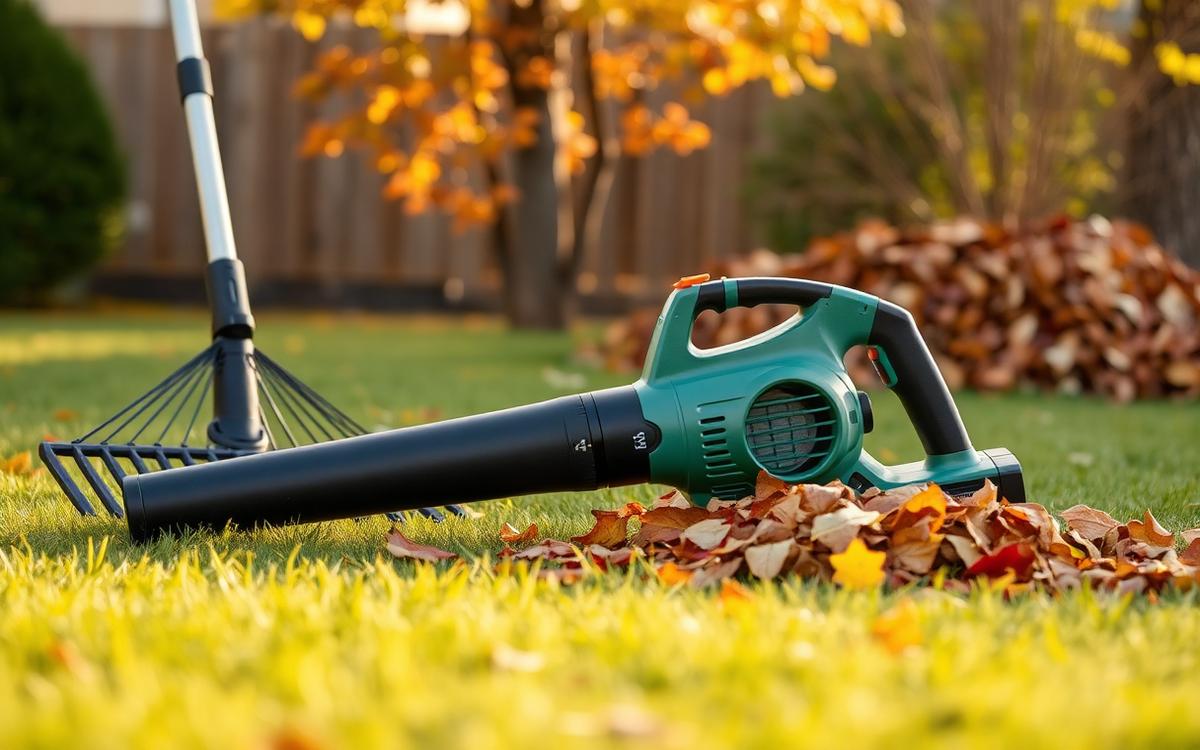
Dropped autumn leaves still carry full urushiol oil. Raking, bagging, or stepping on them with bare ankles will transfer the oil to skin or clothes.
Winter: The Hairy Rope
This is the season most people get caught. With no leaves, only the woody vines and roots remain, and the oil is still fully active.
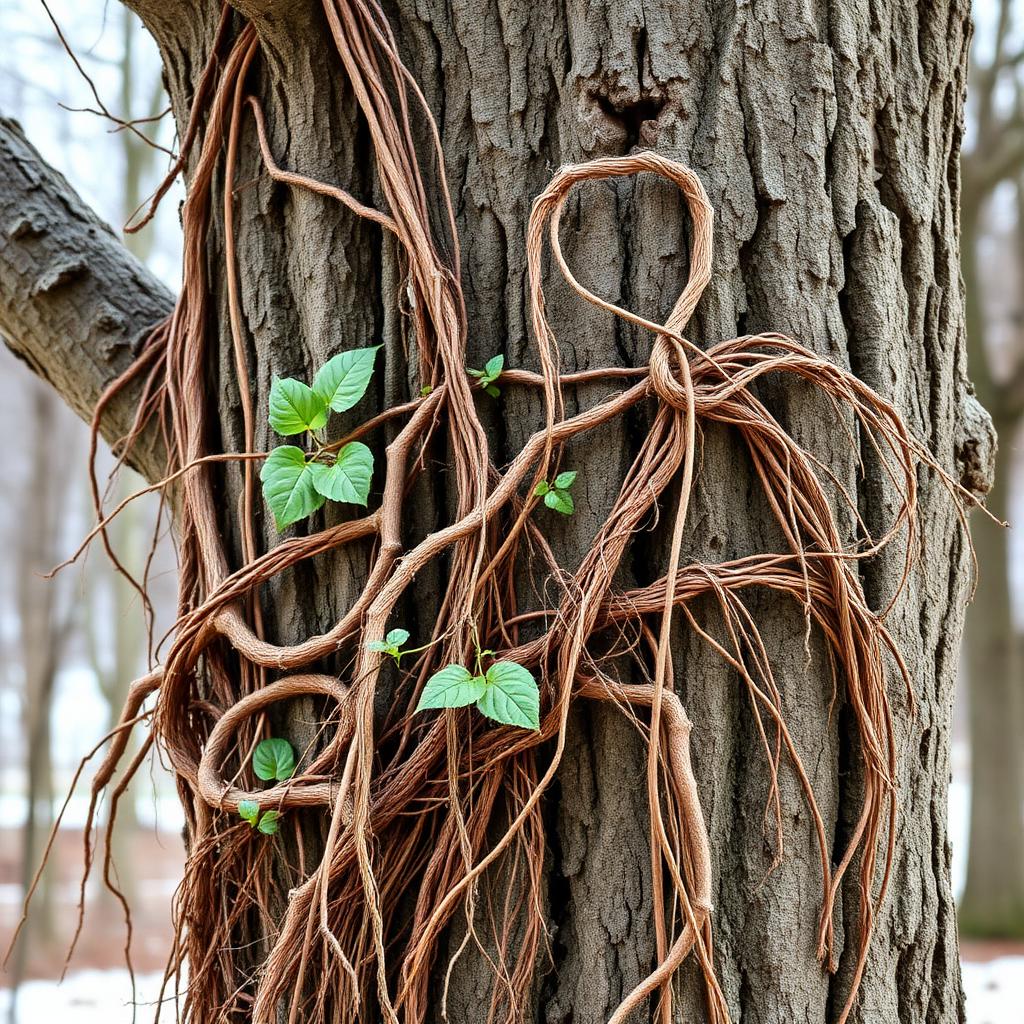
Look for thick vines climbing tree trunks covered in thousands of short dark hair like aerial roots. The vine appears to wear a fuzzy sleeve. Never grab one, never cut one with a bare chainsaw, and never burn the cuttings. Burning poison ivy releases urushiol into smoke that can damage lungs.
Lookalikes to Know
- Virginia creeper: Five leaflets, not three. Safe to touch.
- Box elder seedlings: Three leaflets but opposite, perfectly symmetric, and matte. Safe.
- Wild raspberry: Three leaflets but a thorny stem and white undersides. Safe.
- Fragrant sumac: Three leaflets but the middle stem is the same length as the side stems. Safe.
If You Touch It
Urushiol bonds to skin within 15 to 30 minutes. Act fast.
- Skip hot water. It opens pores and spreads the oil.
- Flush the area with cold water and a strong degreasing dish soap (like the original blue Dawn) or a dedicated product like Tecnu.
- Scrub with a washcloth for two full minutes to physically break the oil from the skin.
- Wash everything that touched the plant: clothes, boots, garden tools, pet fur. The oil stays active on surfaces for years.
If a rash develops, calamine lotion, oatmeal baths, and over the counter hydrocortisone usually manage it. See a doctor if the rash covers a large area, the face, or the eyes.
Removing It Safely
If you need to remove poison ivy from your yard, wait for a calm overcast day. Wear long sleeves, gloves, eye protection, and a disposable outer layer. Cut climbing vines at ground level and paint the fresh stump with concentrated triclopyr or glyphosate. Bag everything and put it in the trash, never the compost or a fire pit.
The Takeaway
Learn the four markers and the four seasonal disguises and poison ivy becomes hard to miss. Three leaflets, longer middle stem, alternate arrangement, asymmetric leaves in summer, and a hairy rope on tree trunks in winter. Spot any of those and walk around it.