Quick Answer
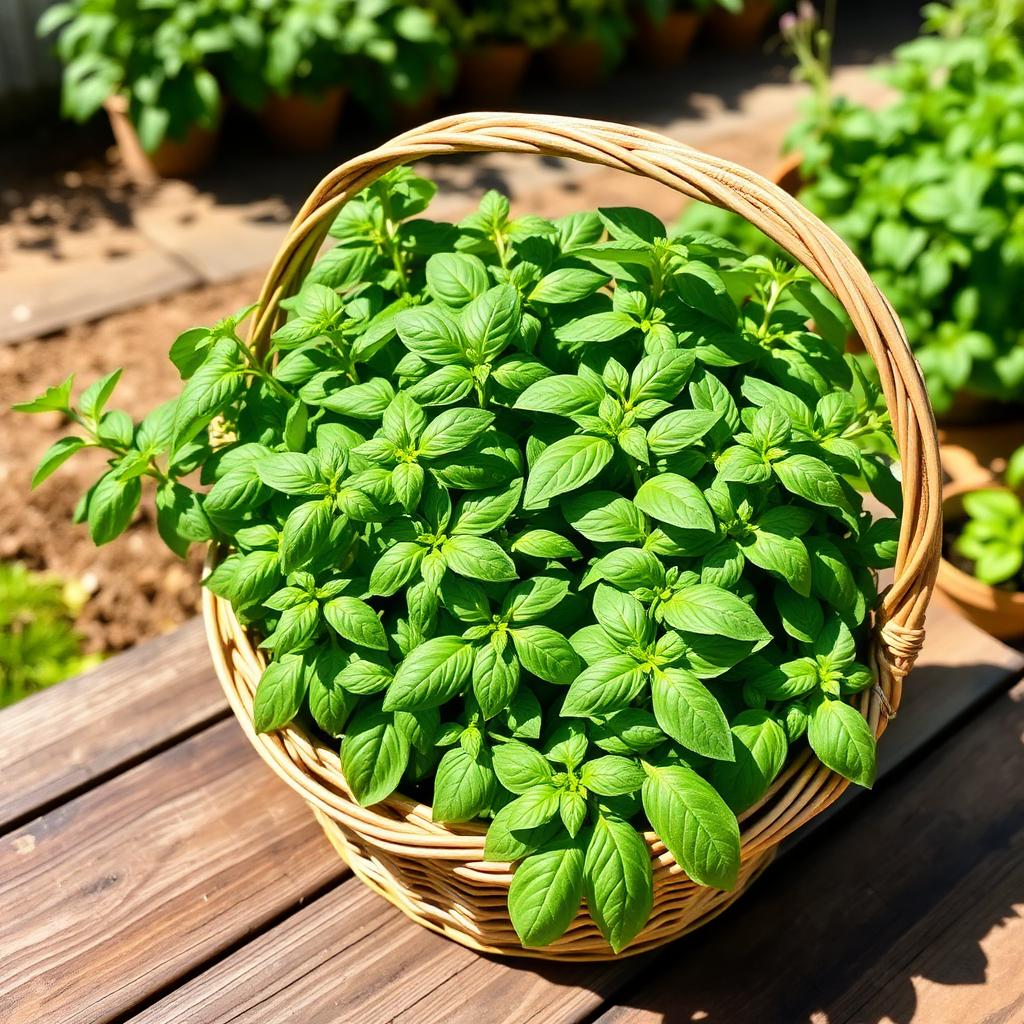
Harvest basil by cutting no more than one third of the plant at a time, always a quarter inch above a leaf node. Leave the larger lower leaves intact so the plant keeps photosynthesising, and pinch out any flower spikes the moment they appear.
Done weekly, this turns one plant into a thick productive bush that keeps producing sweet leaves from late spring through to the first autumn frost.
1. The one third rule
Basil tolerates aggressive harvesting only up to a point. Cut more than a third of the canopy at once and the plant goes into stress, drops lower leaves, and slows new growth for weeks.
Stick to the one third rule. If a plant has nine stems, harvest the top of three. If a plant has six stems, harvest two. The remaining two thirds of leaves keep the photosynthesis engine running at full speed, and the plant rebuilds in seven to ten days.
For continuous harvest, walk around your plant and cut from a different section each time so no area is exhausted.
2. Always cut above a node
The node rule is the single most important harvesting technique. A node is where two leaves meet the stem opposite each other. Inside that V are two dormant buds.
Cut the stem cleanly with sharp scissors a quarter inch above a node. The plant redirects auxin (the growth hormone) sideways into the two buds, and they swell into two new branches. One cut, two branches. Repeat the cut on those branches when they mature and you get four. The plant doubles its productive surface area roughly every two weeks during peak season.
Never strip individual leaves and never cut in the middle of a bare stem. Both leave wounds that rot or never branch.
3. Harvest top down
The top of every stem holds the youngest, most aromatic, oil rich leaves. The big mature leaves at the bottom act as the engine. They are tougher in flavour and essential for the plant's energy.
Always harvest the top third of a stem. Leave the lower two thirds untouched. This keeps the plant fed and concentrates the cooking value of your harvest in the leaves you actually want.
4. Pinch flowers on sight
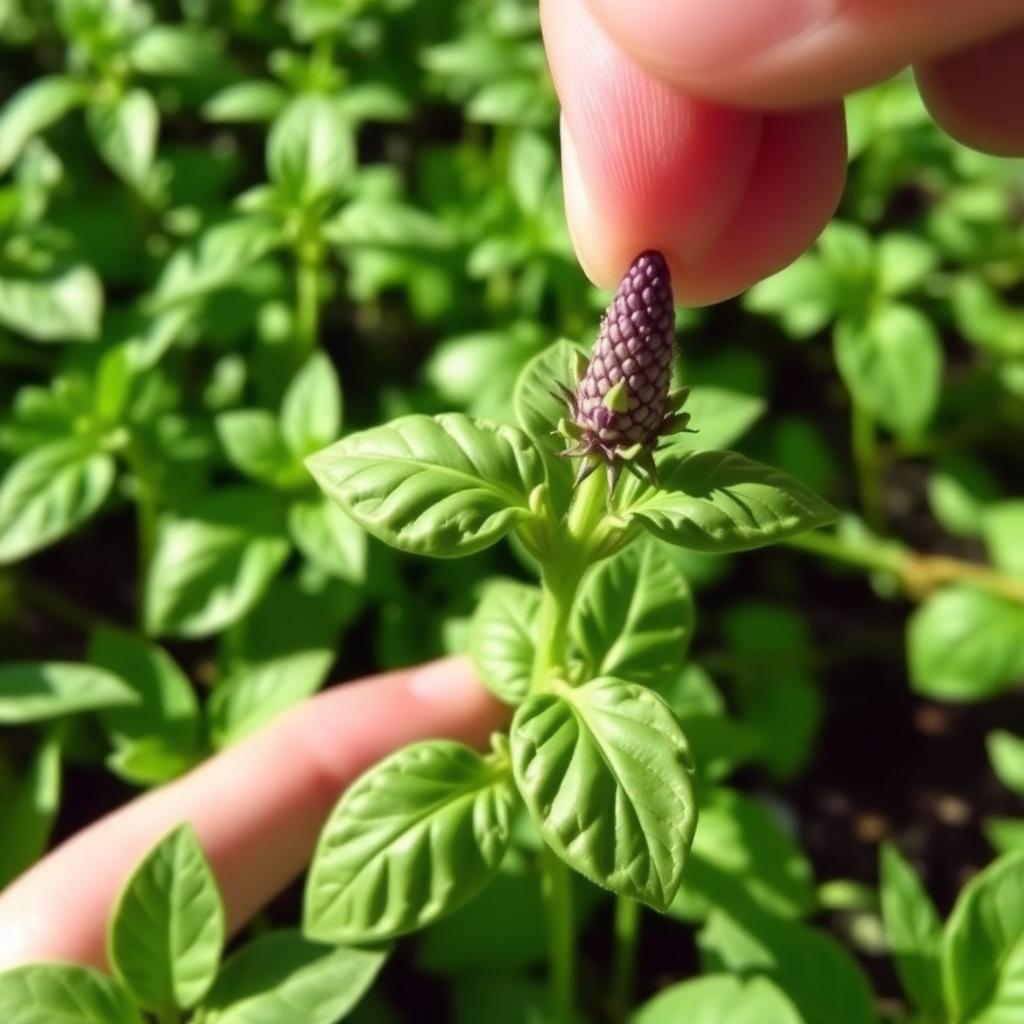
Basil is an annual that wants to flower, set seed, and die. The moment a flower spike appears at the top of a stem, the plant diverts energy from leaf production into seed making. Three things happen fast: leaf growth slows, leaves shrink, and the remaining leaves turn bitter as essential oil production stops.
Walk your plants every few days during midsummer. As soon as you see the small pointed flower cluster forming, pinch it off with your fingernails, cutting back to the next leaf node below. This forces the plant to put out two new branches instead of seeds.
Done diligently, you can keep a basil plant in vegetative mode for an extra two months past its natural cycle.
5. Timing during the day
Harvest in the morning, after dew has dried but before the heat of the day. Morning leaves are crisp, full of moisture, and at peak essential oil content. Afternoon leaves are limp and bruise easily.
Never harvest a plant that is wilting from heat. Water deeply, wait two hours, then harvest.
6. Storing the harvest
Fresh basil hates the fridge. Cold turns the leaves black within a day. Treat cut basil like a bouquet: trim the stems and stand them in a glass of water on the kitchen counter at room temperature, lightly covered with a plastic bag. The leaves stay fresh for up to a week.
For longer storage, blend whole leaves with olive oil, freeze in ice cube trays, then bag the cubes. Each cube is a ready made pesto base. Dried basil loses most of its flavour and is rarely worth the effort.
7. Sequential cutting strategy
To keep a continuous supply, plant three basil plants and rotate harvests. Cut plant one this week, plant two next week, plant three the week after. By the time you return to plant one, it has fully regrown and is ready for another cut. This staggered approach keeps the kitchen supplied without exhausting any single plant.
The takeaway
Harvest one third at a time, cut above the node, work top down, pinch every flower on sight, and rotate between plants. Follow those five habits and a basil plant will out produce your kitchen demand from June through to October.