Quick Answer
Sow basil seeds a quarter inch deep in a moist seed starting mix, six to eight weeks before the last spring frost. Keep the tray at 70 to 75 degrees Fahrenheit (21 to 24 Celsius) on a heat mat and seedlings appear in five to ten days. Transplant after night temperatures stay above 60 degrees Fahrenheit (15 Celsius), give the plants at least six hours of direct sun, and water when the top inch of soil is dry.
The trick to a full bushy plant is pinching. As soon as the seedling has its third set of true leaves, snip off the top growing tip just above a leaf node. The plant then splits into two stems, and every time you pinch you double the branches.
What basil needs to thrive
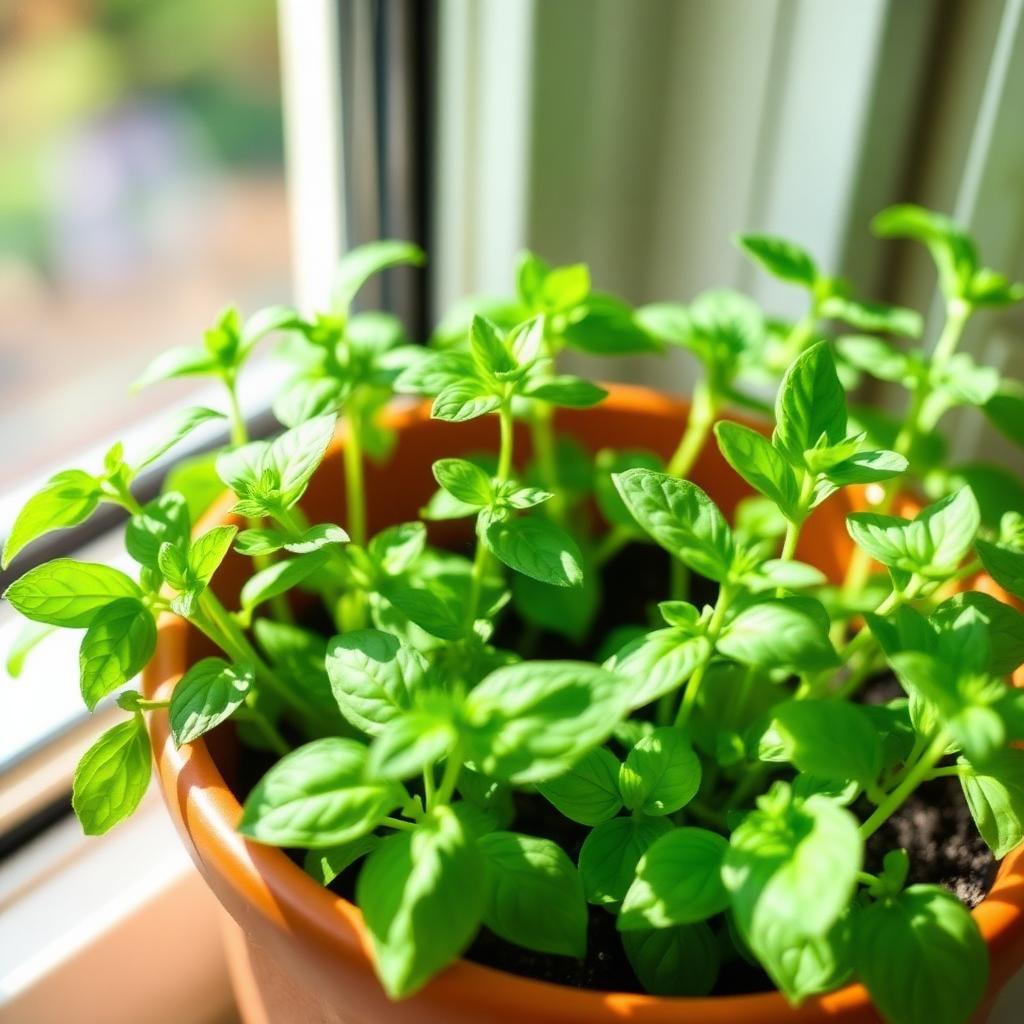
Basil (Ocimum basilicum) is a warm season annual from tropical Asia and Africa. Cold soil, cold nights, and weak light are the three reasons most home grown basil sulks.
- Light: at least 6 hours of direct sun outside, or 12 to 16 hours under a full spectrum LED grow light indoors.
- Soil temperature: 70 to 75 degrees Fahrenheit (21 to 24 Celsius) for germination, 65 degrees minimum once growing.
- Soil: loose, well drained, slightly rich. A mix of two parts seed starting mix to one part compost is ideal.
- pH: 6.0 to 7.0, neutral to slightly acidic.
- Water: consistent moisture, never soggy. Let the top inch dry between waterings.
Starting seeds indoors
- Fill cell trays or 3 inch pots with pre moistened seed starting mix.
- Drop two or three seeds in each cell and cover with a quarter inch of mix. Press lightly so the seeds make contact with the soil.
- Mist the surface, cover the tray with a humidity dome, and place it on a seedling heat mat under a grow light or in the sunniest window.
- Seeds germinate in 5 to 10 days. As soon as green shoots appear, remove the dome to prevent damping off.
- Once each seedling has two sets of true leaves, snip the weakest sprout in each cell at the soil line so only the strongest one keeps growing.
Hardening off and transplanting
Basil is a tender annual and one cold night below 50 degrees Fahrenheit (10 Celsius) will stunt or kill it. Wait until daytime temperatures sit reliably in the 70s and nights stay above 60 Fahrenheit (15 Celsius).
- For seven days, set the tray outdoors for a few hours in the shade, adding more time and sun each day.
- On planting day, dig holes 10 to 12 inches apart and the same depth as the root ball.
- Slip the plant out without disturbing the roots, set it in the hole, and firm soil around the stem.
- Water deeply right after planting and again every two or three days for the first week.
Pinching: the most important habit
If you only follow one rule from this guide, follow this one. Once your plant has three sets of true leaves and is about 6 inches tall, locate the topmost growing tip. Pinch (or snip with clean scissors) the stem off just above a pair of leaves.
The plant responds by sending out two new branches from the node below the cut. Two weeks later, do the same on each new branch. After three rounds of pinching you have eight stems instead of one, and the plant doubles in volume every cycle.
Never let your basil flower if you want leaves. Flower buds tell the plant its life is ending, leaves turn bitter, and growth slows. Pinch off any flower spike the moment you see it.
Watering, feeding, and mulch
| Task | How often | Notes |
|---|---|---|
| Watering | Every 2 to 3 days outdoors, when top inch is dry | Water at soil level, not on leaves, to prevent fungal spots |
| Liquid feed | Every 2 weeks | Half strength balanced fertilizer or fish emulsion |
| Mulch | Once after planting | 1 inch of straw or shredded leaves to keep soil moist and cool |
| Pinching | Every 2 weeks | Top inch of every stem, above a leaf pair |
Common problems and fast fixes
- Yellow lower leaves: usually overwatering or poor drainage. Let the soil dry, add perlite to the mix.
- Leggy seedlings: not enough light. Move closer to the lamp (2 inches above the leaves) or to a brighter window.
- Black spots on leaves: downy mildew or cold damage. Improve air flow, water only at the base, remove infected leaves.
- Tiny holes in leaves: flea beetles or slugs. Hand pick at night, or set a small saucer of beer near the plant.
- Wilting in full sun: drought stress. Water deeply in the morning and mulch around the base.
Harvesting for the kitchen
Harvest in the morning when the essential oils are strongest. Snip whole stems above a leaf pair (the same pinch you have been doing) rather than picking individual leaves, because cutting a stem triggers two new branches and picking single leaves does not.
Use fresh basil within two days. To store longer, freeze chopped leaves in olive oil in an ice cube tray, or dry stems upside down in a dark dry spot for two weeks.
FAQs
Can I grow basil indoors year round?
Yes, with 12 to 16 hours of grow light per day. Window light alone is rarely enough in winter, even on a south facing sill.
How long does a basil plant live?
Basil is an annual. It lives one growing season, usually four to six months from seed to flowering. Pinching extends productive life by a few weeks.
Can I grow basil from a grocery store sprig?
Yes. Place a 4 inch stem in a glass of water, change water every two days, and roots appear in a week. Pot in soil once roots are 2 inches long.
Why does my basil taste bitter?
Bitter leaves usually mean the plant has flowered. Pinch flower buds immediately and harvest leaves from below the flowering stem.
The takeaway
Warm soil, strong light, even moisture, and ruthless pinching. Get those four right and a single seedling will hand you fresh basil from late spring straight through to the first cold snap of autumn.