Quick Answer
Unplug the humidifier, empty the tank, and pour two cups of undiluted distilled white vinegar into the base. Add vinegar to the tank too, let everything soak for 30 to 45 minutes, then scrub the softened limescale away with a soft brush.
Rinse every part with clean water until the vinegar smell is gone, dry the outside with a microfiber cloth, and refill with distilled water to slow future buildup. Do a full descale at least once a week if you use the humidifier daily.
Why descaling matters more than basic rinsing
Tap water carries dissolved minerals, mostly calcium and magnesium. Every time your humidifier evaporates or atomizes water, those minerals stay behind and slowly build into a hard chalky layer called limescale.
That layer is more than cosmetic. The CDC and the EPA both warn that uncleaned humidifiers grow mold and bacteria inside the wet mineral crust, and the machine then misted those microbes straight into the air you breathe. People with asthma, allergies, or weakened immune systems are most at risk.
Limescale also wrecks the machine. On ultrasonic models, it coats the high frequency plate and kills mist output. On warm mist models, it insulates the heating element and burns it out.
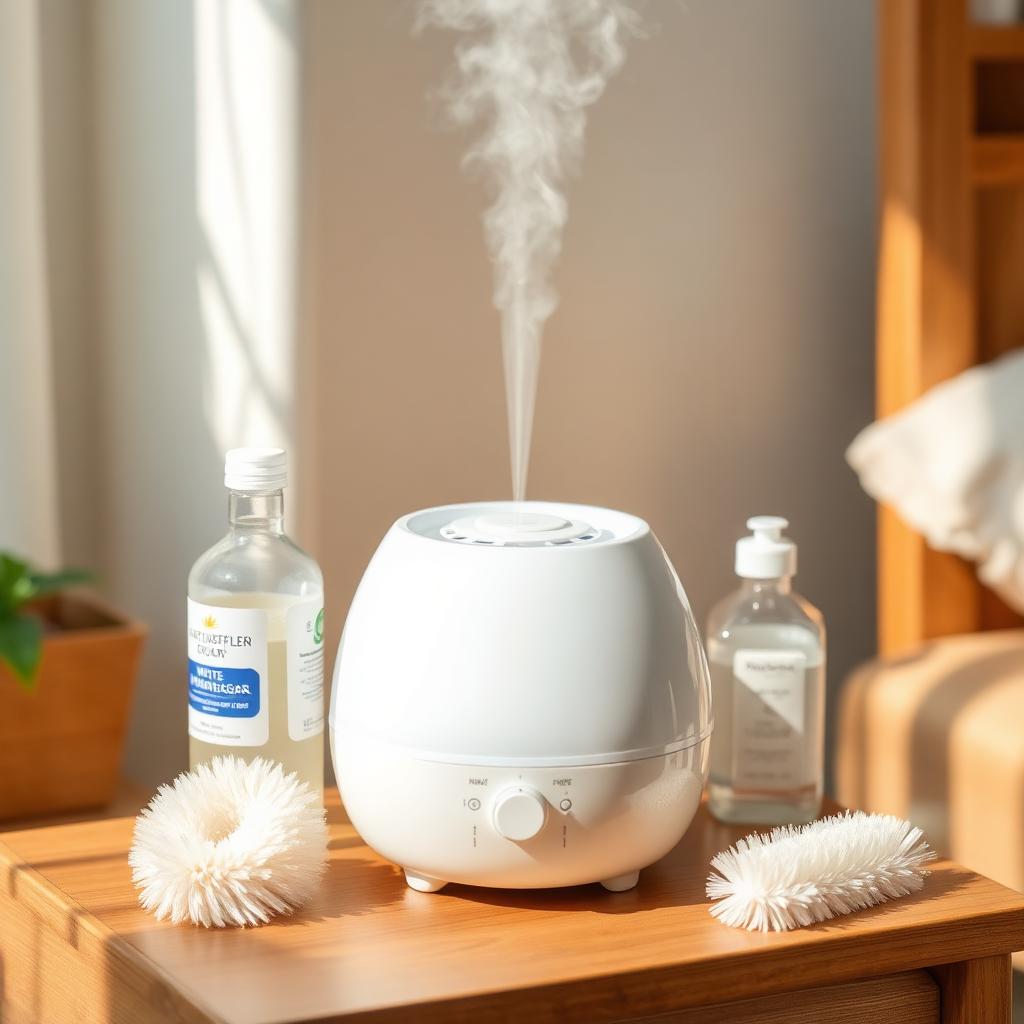
What you need
- Distilled white vinegar (5 percent acidity, the standard grocery store bottle).
- A soft bristle brush or an old toothbrush.
- Two clean microfiber cloths.
- A bowl big enough to soak small removable parts.
- Distilled water for the next fill (optional but recommended).
Do not use bleach unless the manufacturer specifically tells you to, and never mix bleach with vinegar. Skip wire brushes, steel wool, and abrasive powders because they scratch the plastic and damage the ultrasonic plate.
Step by step descale
Step 1: unplug and disassemble
- Unplug the humidifier from the wall. Never clean a powered device.
- Lift the water tank off the base.
- Pour any remaining water down the sink.
- Remove the mist nozzle, tank cap, and any filters or wicks. Set replaceable wicks aside, they will be discarded.
Step 2: soak with vinegar
- Pour about two cups of undiluted distilled white vinegar into the base reservoir, enough to fully cover the heating element or ultrasonic disc.
- Fill the tank halfway with vinegar, screw the cap back on, shake well to coat the inside walls, then set it down and let the vinegar sit.
- Drop small parts (cap, nozzle) into a bowl of vinegar.
- Wait 30 to 45 minutes. Stubborn scale needs the full 45.
Step 3: scrub the loosened scale
- Empty the vinegar from the base.
- Use a soft brush or toothbrush to gently scrub the heating element, ultrasonic plate, corners, and air channels. The scale should lift off easily after the soak.
- For tight spots, dip the brush in fresh vinegar and scrub again.
- Empty and rinse the tank, then scrub any film on the inside walls.
Step 4: rinse thoroughly
- Rinse every component under running water at least three times.
- Keep rinsing until you cannot smell vinegar. Residue left behind will mist into the room.
- Wipe the outside of the unit with a microfiber cloth.
- Let everything air dry on a clean towel before reassembling.
Step 5: refill and restart
- Reassemble the humidifier.
- Fill with distilled water if possible. It contains almost no minerals, so scale forms far more slowly.
- Run the unit for a minute with the windows open before settling in for a long session, in case any traces of vinegar remain.
How often to clean each part
| Task | How often | Why |
|---|---|---|
| Empty and refill with fresh water | Every day | Standing water grows bacteria within 24 hours |
| Rinse tank and wipe base | Every 2 to 3 days | Prevents slime film |
| Full vinegar descale | Once a week | Stops limescale before it hardens |
| Replace wick or filter | Every 1 to 3 months | Wicks trap minerals and mold |
Common mistakes
- Diluting the vinegar. For descaling, undiluted vinegar works faster and is still gentle on plastic.
- Leaving water in the tank between uses. This is the number one cause of pink and black biofilm.
- Using essential oils in a non oil safe humidifier. Oils break down plastic seals over time and trap minerals.
- Skipping the rinse. Trace vinegar in the tank releases acidic mist that can irritate eyes and lungs.
- Using bleach on a regular schedule. Once a month maximum, well rinsed, only if the manual approves it.
Hard water? Switch to distilled
If you live in a hard water area you will see scale return within days no matter how well you clean. Using distilled water cuts limescale buildup by more than 90 percent. It costs about a dollar a gallon at any grocery store and a typical bedroom humidifier uses one to two gallons a day.
FAQs
Can I use apple cider vinegar instead of white vinegar?
You can, but it leaves a tannic residue that is harder to rinse out and the smell lingers. Plain distilled white vinegar is the standard for a reason.
Is citric acid better than vinegar?
Citric acid (one tablespoon per cup of warm water) works well and is odorless. It is a great option if you cannot stand the vinegar smell, but the rinse step is still essential.
How do I know if my humidifier already has mold?
Look for pink, black, or slimy patches inside the tank or around the nozzle. If you see them, descale with vinegar, then do a one time disinfect with a teaspoon of bleach in a gallon of water, soak 30 minutes, rinse extremely well, and refill.
Should I clean a brand new humidifier before first use?
Yes. A quick vinegar rinse removes manufacturing residue and gives you a clean baseline for tracking buildup over time.
The takeaway
Vinegar soak for 30 to 45 minutes, gentle scrub, then a thorough rinse. Do it weekly, swap to distilled water, and your humidifier will last for years and never mist anything you would not want to breathe.