Quick Answer
Let any mud dry fully, then brush it off with a stiff suede brush in one direction. Lift scuffs with a suede eraser, treat oily spots by blotting with a tiny amount of isopropyl alcohol on a cotton pad, and finish by spraying a fluoropolymer suede protector. Never use soap, water, or standard leather polish.
Suede is split leather with an exposed nap. Water collapses those fibers and leaves cloudy rings, so the entire routine has to stay dry and mechanical.
Why Soap and Water Wreck Suede
Smooth, top-grain leather is sealed with waxes and finishes that shrug off splashes. Suede is the opposite. It is the soft inside of the hide, sanded to raise millions of tiny protein fibers that catch light and feel velvety.
The moment those fibers get soaked, they flatten and clump. The native oils in the skin dissolve, the surface stiffens, and a hard tide-line forms where the wet patch meets the dry suede. That is why the first rule is simple: keep liquid water away from suede whenever you can.
What you actually need
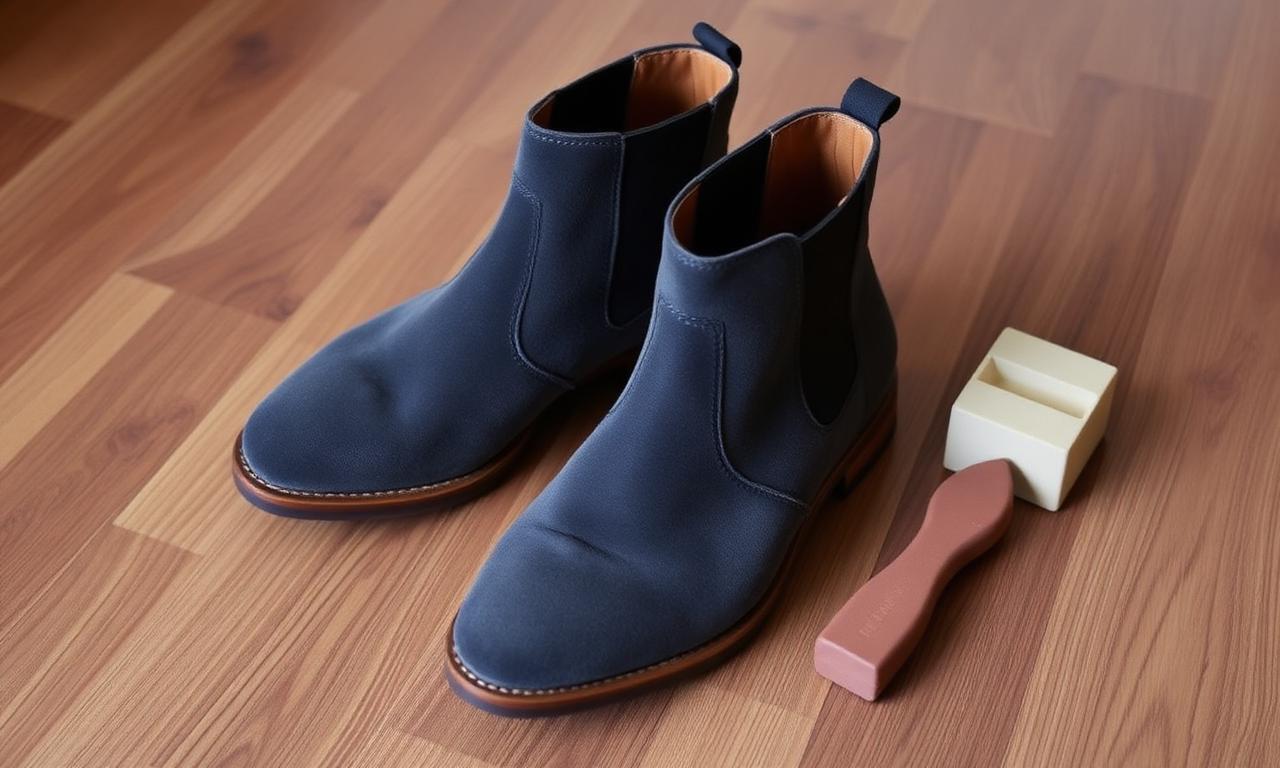
- A dedicated suede brush with brass or nylon bristles on one side and softer boar bristles on the other.
- A vulcanized rubber suede eraser block.
- A small bottle of 99 percent isopropyl alcohol for oily emergencies.
- A fluoropolymer or silicone based suede protector spray.
- Cotton pads, a microfiber cloth, and shoe trees (cedar is ideal because it absorbs moisture).
Step 1: Let the Mud Dry Completely
If your shoes are caked in fresh mud, resist the urge to wipe them. Stuff them with paper or shoe trees to hold their shape and leave them in a ventilated room for several hours, away from direct heat. Heat hardens the leather and can crack the panels.
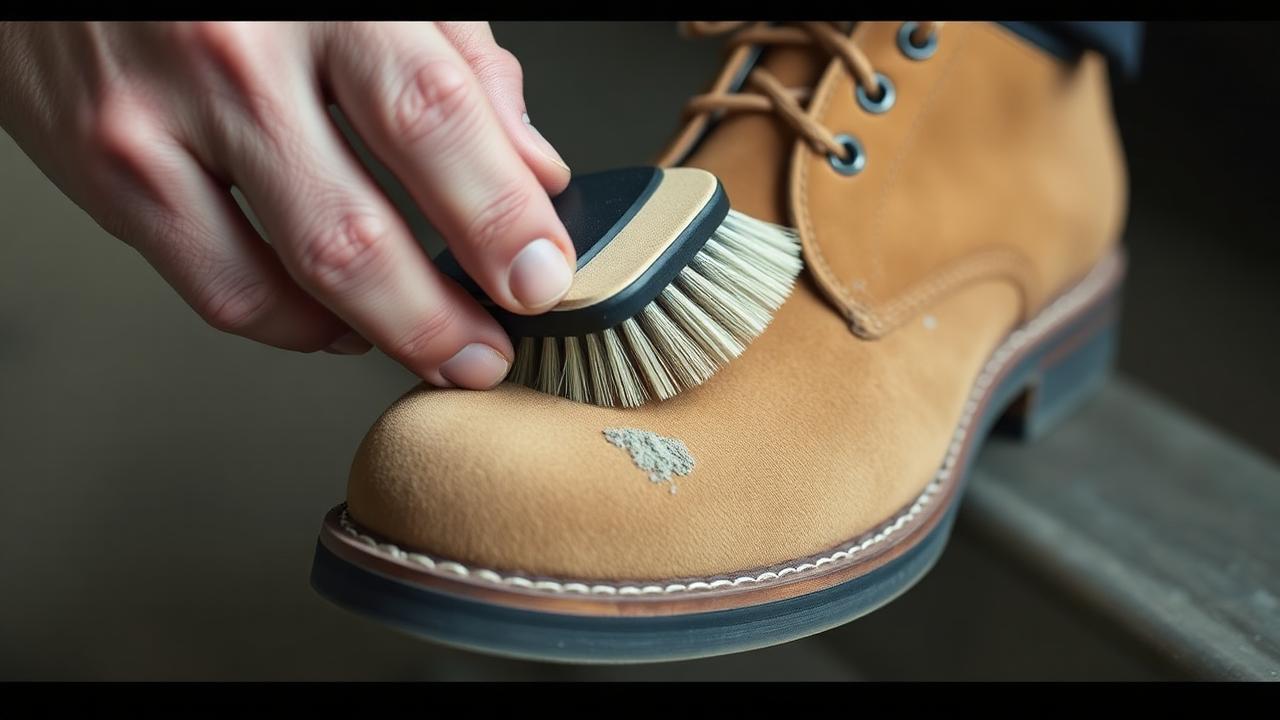
Once the mud is dry and brittle, take the shoes outside and tap the soles together gently to knock off the big chunks. Then take your suede brush and, using the stiff side, sweep across the affected area in short, one-direction strokes pushing away from your body. The bristles shatter the dried mud and lift the crushed nap back upright at the same time.
Step 2: Erase Scuffs With a Rubber Block
Dark friction marks from denim, subway floors, or curb scuffs sit on the surface of the nap rather than soaking in. A suede eraser, which is essentially a dense crepe rubber block, removes them through friction.
Press the eraser firmly onto the scuff and rub back and forth with real pressure. You will see small rubber crumbs forming. Those crumbs are doing the work, picking up trapped particles like a magnet. When the scuff fades, sweep the crumbs away with the soft side of your suede brush.
For very stubborn marks, work in small sections, brush between passes, and stop the moment you see clean nap. Over-erasing can polish a shiny patch into the suede that is hard to reverse.
Step 3: Handle Oily Spills With Isopropyl Alcohol
Oil and grease are the exception to the no-liquid rule, because no amount of brushing pulls them out. Isopropyl alcohol works because it is a non-polar solvent that dissolves fats and evaporates in under a minute without leaving a water ring.
- Dampen a clean cotton pad with 99 percent isopropyl alcohol. The pad should be moist, not dripping.
- Blot the oil spot from the outside edge in toward the center. Do not scrub.
- Use a fresh section of the pad for each blot so you are lifting the oil away rather than pushing it deeper.
- Once the spot looks even, let the area air dry for ten minutes, then brush the nap back up with the soft side of your suede brush.
For grease that has sat for a while, an overnight dusting of cornstarch or talc before the alcohol pass can pull the bulk of the oil out of the fibers first.
Step 4: Tackle Salt Stains and Water Rings
Winter salt is the second most common reason people throw out perfectly good suede. The fix is patient, not aggressive. Mix a few drops of white vinegar into a teaspoon of cold water, dampen a soft cloth, and dab only the white salt edges. Then dab the whole panel lightly with a separate cloth that is just barely damp so the wet line blends into the rest of the shoe. Stuff with paper and let it dry slowly at room temperature.
For an existing tide-line from a puddle, the same trick applies: lightly mist the entire upper with a fine spray bottle so the whole panel dries as one tone, then brush.
Step 5: Protect Before You Wear Them Again
A quality suede protector is the difference between a five-year shoe and a one-season shoe. Most are fluoropolymer or silicone based and create a hydrophobic shield without changing the color or feel of the nap.
Spray outdoors or in a well-ventilated room, holding the can six to eight inches away. Apply two light, even coats with a few minutes between them. Let the shoes dry for a full twenty-four hours before wearing. Reapply every four to six weeks if you wear the shoes regularly, more often in winter.
Storage habits that pay off
- Use cedar shoe trees to hold the shape and pull moisture out after wear.
- Keep suede out of direct sunlight, which fades dyes unevenly.
- Store in a breathable cotton dust bag, not a plastic box that traps humidity.
- Rotate pairs so each set gets at least a day to dry out between wears.
What Not to Do
A few common mistakes turn a small problem into a permanent one.
- Do not wipe wet mud. It smears pigment deep into the nap.
- Do not use leather conditioner, mink oil, or wax polish. They darken suede and seal the nap closed.
- Do not put suede in the washing machine, even on a delicate cycle.
- Do not blow-dry. Heat dries the skin out and cracks the panels.
- Do not use baby wipes. The surfactants leave residue that attracts dirt later.
The Takeaway
Cleaning suede is a habit, not a single deep clean. Brush after every wear, erase scuffs the moment you spot them, blot oil with alcohol, and reapply protector every month or so. Do that, and a decent pair of suede chelseas or sneakers will look better in year three than it did the day you brought them home.