Quick Answer
To deep clean a washing machine, run an empty hot cycle with 2 cups of white vinegar or half a cup of liquid chlorine bleach. Never combine the two. Then wipe down the detergent drawer, scrub the rubber door gasket with a diluted bleach solution, and leave the door open afterwards so the drum can air dry.
Front loaders need this treatment every 4 to 6 weeks because their door seals trap moisture and grow mould. Top loaders are more forgiving but still benefit from a monthly cleaning cycle.
If your machine has a dedicated Tub Clean or Drum Clean cycle, use it. It runs hotter and longer than a standard hot wash and reaches the bearing pocket where biofilm usually builds up.
Why washing machines get smelly
Three things combine to create that musty laundry smell. Modern cold wash cycles do not kill bacteria. Liquid detergent leaves a soap residue that feeds biofilm. Front loader door seals trap water against rubber, which becomes a mould factory. The deep clean below tackles all three.
What you need
- 2 cups white vinegar, or half a cup of chlorine bleach.
- An old toothbrush.
- A microfibre cloth.
- Warm soapy water.
Step 1: Empty the drum
The machine has to be completely empty. Even a stray sock disrupts the cleaning cycle.
Step 2: Add the cleaning agent
Pour your chosen cleaner directly into the drum. Vinegar is gentler on rubber seals and safer for septic systems. Bleach is more aggressive on mould but should not be mixed with anything else.
Critical safety point: never mix vinegar and bleach. The reaction releases chlorine gas, which is dangerous in a small enclosed laundry room.
Step 3: Run the hottest cycle
Select the hottest water setting and the largest load capacity. If your machine has a Tub Clean or Drum Clean mode, use it. The cycle usually runs for 60 to 90 minutes.
Step 4: Clean the detergent drawer
Pull the detergent drawer fully out (most slide out with a small release tab). Scrub the corners with an old toothbrush and warm soapy water. Pay attention to the fabric softener compartment, where the sticky residue likes to hide. Rinse and slot it back in.
Step 5: Wipe the rubber door gasket
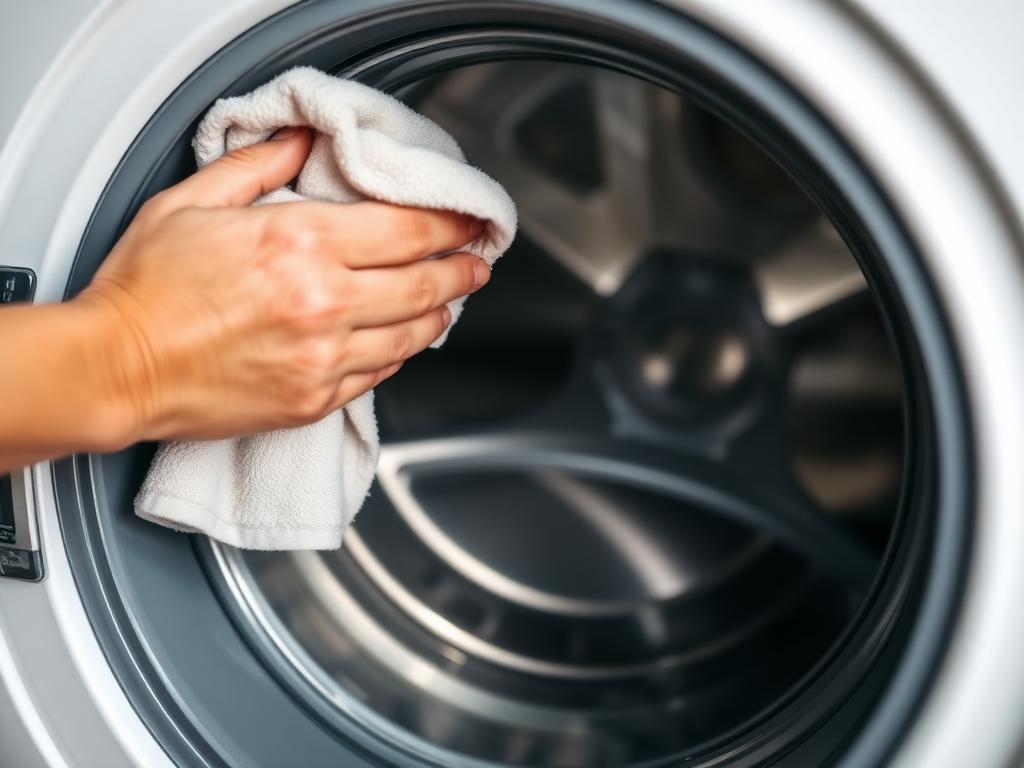
On front loaders, fold back the flexible rubber seal around the door. Inside the fold you will typically find trapped hair, lint, and sometimes black mould spots. Wipe the area with a cloth dipped in a mild bleach solution (about one tablespoon of bleach per cup of water). Get into every fold.
Step 6: Wipe the door glass and exterior
Use the same microfibre cloth to wipe the inside of the glass, the door rim, and the exterior. A streak free glass cleaner works on the door.
Step 7: Leave the door open
This is the single habit that prevents the smell coming back. After every wash, leave the door slightly ajar for a few hours so the drum and gasket can dry. On front loaders this is non negotiable.
The monthly maintenance routine
- Wipe the gasket after every wash.
- Run a hot cycle with vinegar every 4 weeks.
- Clean the detergent drawer once a month.
- Check the filter on the bottom front of front loaders every 3 months for stuck coins and lint.
- Use less detergent than the bottle suggests. Most loads need about half the printed amount.
Powder vs liquid detergent
If you constantly fight musty smells, switch to powder detergent for a few cycles. Liquid detergents leave more residue, which feeds biofilm. Powder rinses out more cleanly and reduces the food source for the bacteria that cause the smell.
What about washing machine cleaner tablets?
Tablets like Affresh and Tide Washing Machine Cleaner work and are convenient. They are not magic. A monthly hot cycle with vinegar costs less and does the same job. Use tablets if you find them easier to remember and use.
Cleaning the drain filter
Most front loaders have a small access door on the bottom front of the machine that hides the drain pump filter. Open it every 3 months. Lay a towel underneath, unscrew the filter cap, and let any trapped water drain into a shallow bowl. Pull out the filter, rinse off the lint, hair, and the inevitable coin or hairgrip, then screw it back in. Skipping this step is one of the most common causes of slow drainage and persistent smell.
Treating black mould spots on the gasket
If the gasket already has visible black spots, soak a paper towel in a 1 part bleach to 4 parts water solution. Press the towel into the affected fold and leave it for 30 to 60 minutes. Wipe clean with fresh water afterwards. Repeat weekly until the spots fade. If the rubber itself has cracked or warped, the gasket needs replacing.
Frequently asked questions
How often should I clean my washing machine?
Front loaders: every 4 to 6 weeks. Top loaders: once a month. Both: wipe the gasket and leave the door open after every wash.
Is vinegar safe for the rubber seal?
Yes when diluted by the wash water in a normal cleaning cycle. Avoid leaving undiluted vinegar in contact with rubber for long periods.
Why does my front loader still smell after cleaning?
Check the filter at the bottom of the machine. Trapped lint and small items often hold pockets of mouldy water.
Can I use baking soda?
Yes. Half a cup of baking soda added to a hot vinegar cycle helps loosen scale and neutralise odours without the harshness of bleach.