Quick Answer
Turn off the breaker that powers the heater, remove the front cover, vacuum the fins with a brush attachment, straighten any bent fins with a fin comb, wipe the cover and casing with a damp microfibre cloth, let everything dry, and reinstall.
Total time per heater: 15 to 30 minutes. Total cost: zero if you already own a vacuum.
The burning smell when you first turn on heat in autumn is dust on the fins. A 30 minute clean kills the smell, restores heat output, and shaves a measurable amount off your winter heating bill.
Safety disclaimer: hydronic (hot water) and electric baseboard heaters are different systems. Hydronic units can be cleaned without shutting off water; electric units must have power cut at the breaker. If unsure which type you have, call a licensed HVAC technician.
Why clean baseboard heaters at all
- Restore heat output. A layer of dust insulates the fins and drops thermal transfer efficiency by 10 to 20 percent.
- Kill the burning smell. Dust scorches as the heater fires up and produces an acrid smell that lingers for days.
- Cut allergens. Dust and pet dander trapped in fins recirculate every time the heat runs.
- Extend equipment life. Bent or matted fins force the element to work harder, shortening lifespan.
- Look better. Dingy baseboard covers age a room visually more than most people realise.
Identify your heater type
Electric baseboard
Common in apartments, additions, and homes without central heat. Features a thick power cable, a thermostat on the wall or built into the unit, and metal fins surrounding a resistance heating element. Each unit has its own circuit at the breaker panel.
Hydronic baseboard
Connected to a boiler via copper pipes. Features small copper pipes entering and leaving the heater, a quieter operation (no clicking), and softer, more even heat. Powered by the boiler, not by a local power line.
If you have a hot water boiler in the basement, your baseboards are almost certainly hydronic. If you have heat pump or forced air ductwork elsewhere and only a few baseboards as supplemental heat, they are probably electric.
Tools and supplies
- Vacuum cleaner with brush attachment and crevice tool.
- Fin comb (a few dollars at any hardware store) or an old toothbrush.
- Microfibre cloth.
- Bucket of warm water with a few drops of dish soap.
- Phillips screwdriver (some covers screw on, others snap off).
- Optional: shop vac for heavy buildup.
- Optional: dust mask if you have allergies or asthma.
Step 1: shut off the power (electric units only)
- Go to the breaker panel and switch off the breaker labelled for the room or heater.
- If unlabelled, switch off the main breaker.
- Confirm at the heater by trying to raise the thermostat. The element should not warm.
For hydronic units, you can simply turn off the boiler s call for heat by lowering the thermostat. The pipes will cool within 30 minutes.
Step 2: remove the front cover
- Look for screws along the top or front of the cover. Remove them.
- If there are no screws, the cover snaps off. Pry gently upward from the bottom.
- Set the cover aside on a drop cloth.
- Lift off the end caps if they unclip.
Step 3: vacuum the fins
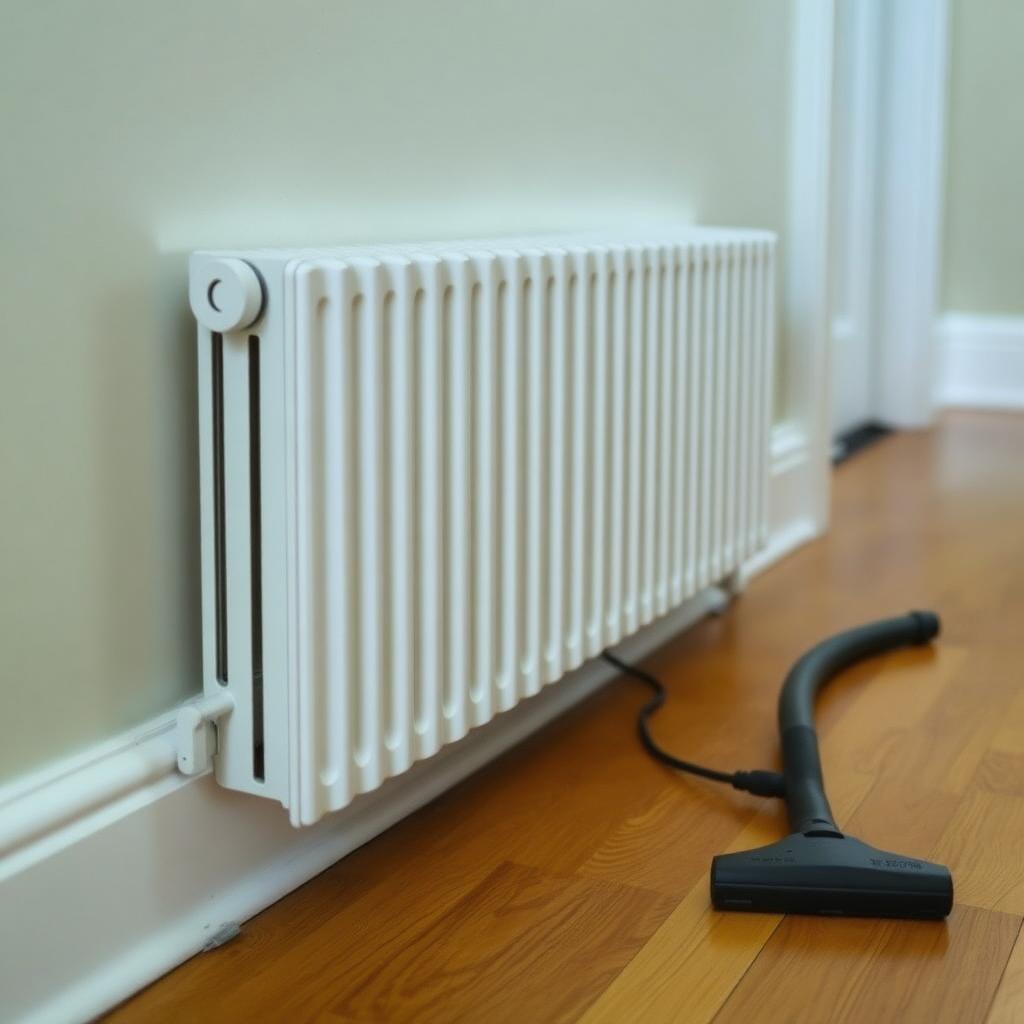
- Attach the soft brush head to your vacuum hose.
- Run the brush slowly along the top and front of the fin stack.
- For stubborn dust, switch to the crevice tool and work between fins.
- Vacuum the floor and wall behind the heater while you have access.
Step 4: straighten bent fins
Bent or crushed fins (often from furniture bumps or vacuum impacts) block airflow and reduce efficiency.
- Slide a fin comb (the same tool used for window AC fins) through any bent sections.
- Push gently; aluminium tears easily.
- For one or two bent fins, an old toothbrush works as well.
Step 5: wipe the housing
- Wipe the front cover with a damp microfibre cloth. Use the soapy water mix for stuck on grime.
- Wipe the end caps and any exposed inner casing.
- Dry every surface thoroughly with a clean cloth. Water on electric heating elements is dangerous.
Step 6: reinstall and test
- Snap or screw the cover back into place.
- Reinstall end caps.
- Flip the breaker back on (electric) or raise the thermostat (hydronic).
- Set the thermostat to call for heat and stand back. The first few minutes may produce a faint warming smell as any remaining dust burns off, but it should clear within 15 minutes.
How often to clean
- Before each heating season: mandatory. Late September or early October in most climates.
- Mid winter quick vacuum: a five minute pass with the brush attachment every two months if you have pets or heavy dust.
- After renovation or sanding: immediately. Construction dust clogs fins fast.
Troubleshooting
- Burning smell persists more than 30 minutes: shut the heater off and inspect for paper or fabric trapped between fins.
- Cold spots after cleaning: a hydronic heater may need bleeding to release trapped air. Turn the bleeder valve at the end of the unit with a key or screwdriver until water dribbles out, then close.
- Unit does not heat at all: for electric, check the breaker. For hydronic, confirm the boiler is on and the zone valve is opening.
- Excessive noise: ticking is normal as metal expands. Banging usually signals air in hydronic pipes; bleed them.
FAQs
Can I paint baseboard heater covers?
Yes, with high heat appliance paint rated for at least 200 degrees Fahrenheit. Remove the cover, sand lightly, prime, and paint outside or in a well ventilated area. Never paint the fins themselves; paint insulates and reduces heat transfer.
What if my cover is rusted?
Light surface rust sands off and accepts paint. Heavy rust through the metal is best replaced; universal replacement covers cost 30 to 80 dollars at most hardware stores.
Is it safe to put furniture near baseboard heaters?
Leave at least 12 inches between any furniture or curtains and the heater. Blocked airflow is the most common cause of efficiency loss and a real fire risk for fabric items.
Do baseboard heaters use a lot of electricity?
Electric baseboards are 100 percent efficient at converting electricity to heat, but electricity costs more per BTU than gas or oil. Programmable thermostats and zoning by closing doors are the biggest savings levers.
The takeaway
Cut the power, pop the cover, vacuum the fins, straighten any bends, wipe the casing, dry, and reinstall. Half an hour per heater each autumn restores heat output, ends the burning dust smell, and protects the equipment for years.