Quick Answer
Soak natural loofahs once a week in a 1 part bleach to 9 parts water solution for 5 minutes, then rinse and air dry outside the shower. Plastic mesh puffs go on the top rack of the dishwasher on a hot cycle.
Replace natural loofahs every 3 to 4 weeks and plastic puffs every 2 months at the latest. The single most important habit is drying: hang the loofah somewhere with airflow, never inside the humid shower stall.
Skipping cleaning turns a loofah into a perfect incubator for bacteria like Pseudomonas and fungi like Aspergillus, both of which dermatologists routinely find on neglected sponges.
Why loofahs need cleaning at all
A loofah pulls dead skin cells off your body, and those cells lodge in every fibre. Add a warm, humid bathroom, and you have a small biology experiment hanging on the shower head. Studies in dermatology journals consistently find heavy bacterial colonisation on used loofahs within a week of regular use.
Cleaning will not make a loofah immortal, but it slows colonisation enough that you can keep using it safely until its normal replacement date.
Natural loofahs: bleach soak
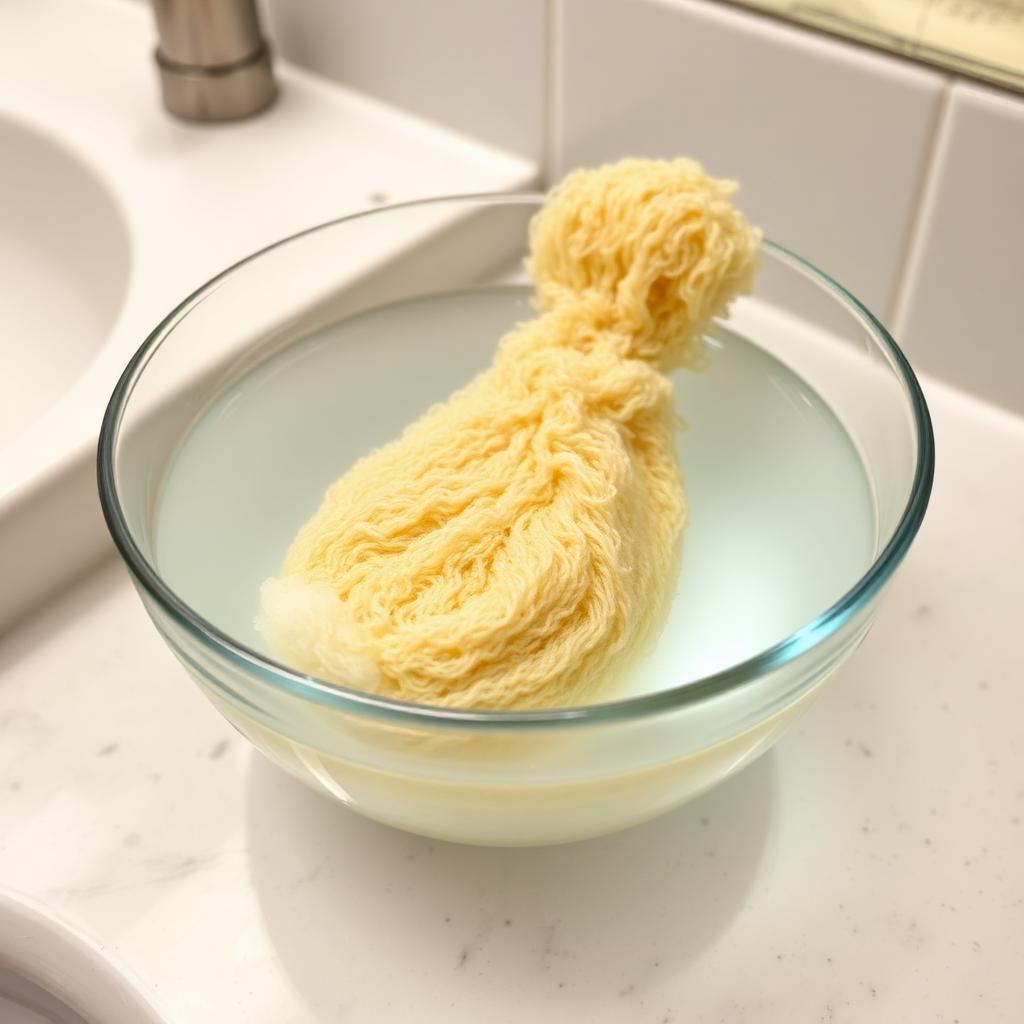
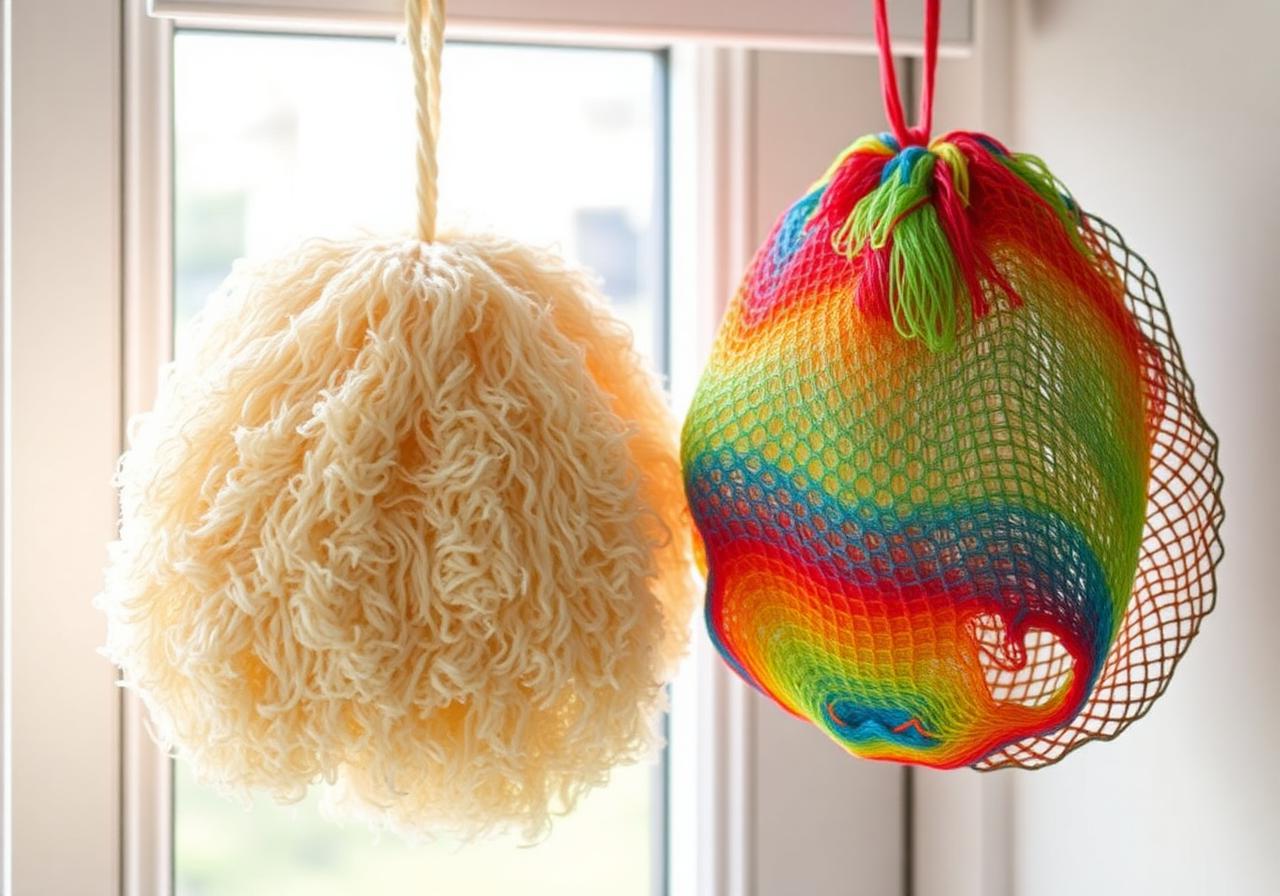
Natural loofahs are dried fibres from the luffa gourd. They soak up moisture deeply and degrade faster than synthetic puffs, which is why they need a chemical reset rather than a heat reset.
- Mix 1 cup of water with about 2 teaspoons of regular household bleach in a glass or ceramic bowl. That is roughly a 1:9 ratio.
- Submerge the loofah fully and weigh it down with a spoon if it floats.
- Wait 5 minutes. Longer is not better and starts to break down the fibres.
- Rinse the loofah under cold running water for at least 30 seconds, squeezing until the water runs clear and odourless.
- Shake out excess water and hang somewhere airy.
Do this once a week, more often if you live somewhere very humid.
Plastic mesh puffs: dishwasher cycle
Synthetic puffs are polyethylene netting. Bleach degrades the plastic and makes them unravel, but they handle heat very well. The easiest cleaning method is also the laziest.
- Drop the puff into the cutlery basket or clip it to the top rack of the dishwasher.
- Run a normal cycle with a heated dry phase.
- Pull it out and squeeze excess water before hanging.
If you do not have a dishwasher, microwave a wet puff on high for 60 seconds inside a glass bowl. The steam sanitises the fibres. Let it cool before touching.
The drying rule that actually matters
Cleaning weekly helps, but the dominant variable is how the loofah dries between showers. A wet loofah hanging inside the shower stall never gets below 70 percent humidity and stays warm for hours, which is exactly what bacteria need.
After every shower, wring the loofah out hard and move it outside the cubicle. A hook near a window, on a towel rail in an open bathroom, or in front of a fan all work. The goal is dry to the touch within 2 hours.
When to replace
| Type | Replace every | Sooner if |
|---|---|---|
| Natural plant loofah | 3 to 4 weeks | It smells musty or feels slimy |
| Plastic mesh puff | 8 weeks | The netting starts unraveling |
| Silicone scrubber | 1 year | Bristles flatten or tear |
If you have just recovered from a skin infection or a cold sore, replace the loofah immediately rather than trying to disinfect it.
Signs your loofah has gone bad
- Sour, musty, or earthy smell that does not fade after rinsing.
- Slimy film on the fibres.
- Visible mould spots, usually pink, green, or black.
- Skin breakouts in areas you scrub most.
- The fibres feel collapsed and limp instead of springy.
Any one of these means bin it, not bleach it.
Skip the loofah on broken skin
Even a clean loofah is too rough for shaving cuts, eczema flares, or freshly waxed skin. Switch to your bare hand and a gentle cleanser for a few days, then go back to the puff once the skin is intact.
Frequently asked questions
Can I put a loofah in the washing machine?
You can put a synthetic puff in a mesh laundry bag on a hot wash, but it is harsher than the dishwasher and shortens the puff's life. Natural loofahs should not go in the washing machine.
Is it bad to share a loofah?
Yes. Loofahs transfer skin cells and bacteria between users. Each person in the household should have their own.
Can I use vinegar instead of bleach?
White vinegar reduces some bacteria but does not match bleach for thorough disinfection. Use it between bleach soaks if you prefer, not instead of them.
How do I clean a loofah that smells bad?
If it still smells after a full bleach soak and rinse, the fibres have broken down. Replace it.