Quick Answer
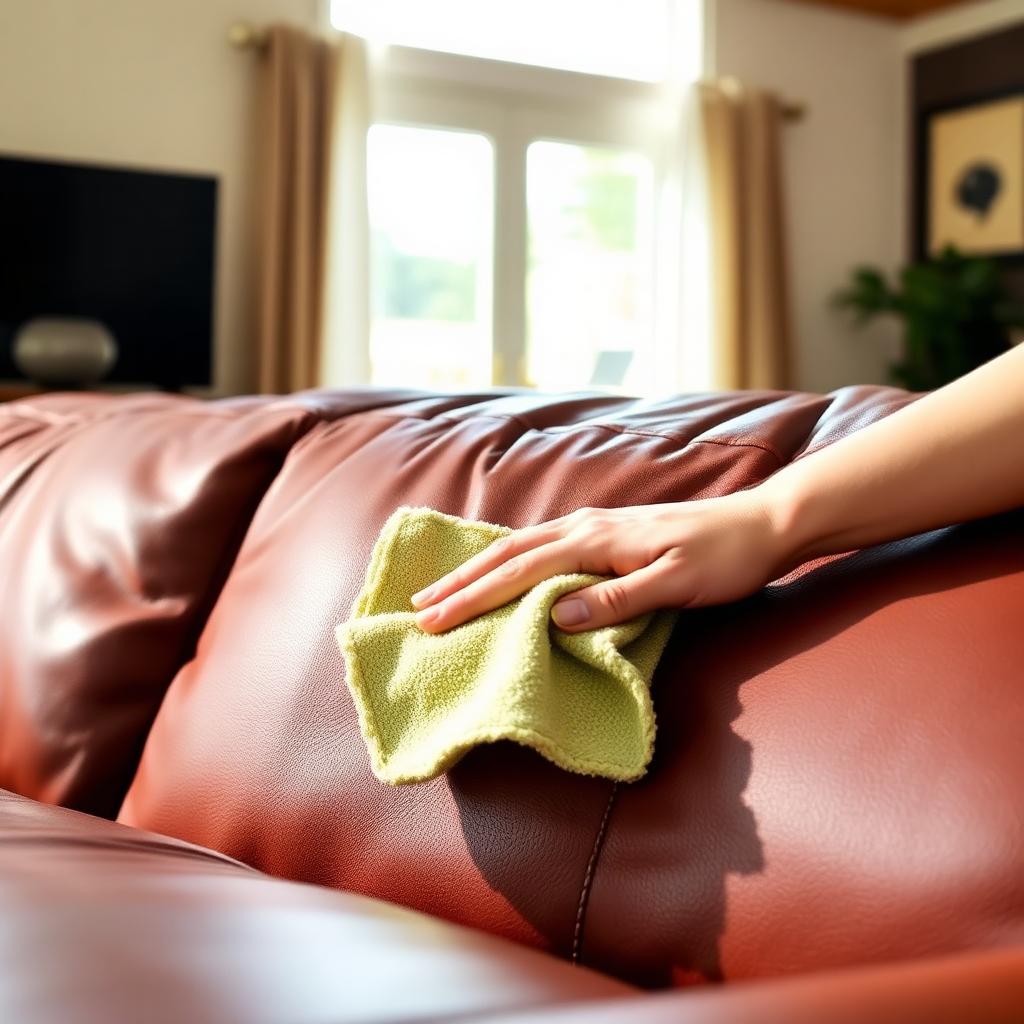
For routine cleaning, vacuum the couch with a soft brush attachment, then wipe it down with a microfiber cloth lightly dampened with a 50/50 mix of warm water and a few drops of unscented liquid Castile soap. Dry with a second clean cloth, then condition every six months with a leather cream designed for furniture (not auto or shoe leather).
Always patch test on a hidden spot first, and skip vinegar, ammonia, baby wipes, magic erasers, and saddle soap. All of them strip the protective finish that keeps the leather from drying out.
Identify your leather first
Most modern couches use one of two finishes, and the cleaning rules differ.
- Protected (pigmented) leather: the dominant choice for family furniture. A water drop beads up on the surface for a few seconds before slowly soaking in. Tolerates damp cleaning well.
- Aniline (unprotected) leather: premium and soft to the touch. Water absorbs immediately and darkens the spot. Treat it like suede; almost never apply liquid.
- Bonded leather: shredded leather glued onto a backing. Treat the same as protected leather, but it cracks earlier and will not last as long no matter what you do.
Find the manufacturer tag (usually under a cushion) or check the original receipt for the exact finish. When in doubt, do the water drop test on the back of the couch.
What you need
- Vacuum with a soft brush attachment.
- Two microfiber cloths.
- Distilled water (tap water leaves mineral spots on dark leather).
- Unscented liquid Castile soap, or a leather-safe cleaner like Leather Honey or Lexol.
- Soft horsehair brush (optional, for crevices).
Step-by-step routine cleaning
- Lift the cushions and vacuum the entire couch, paying attention to seams and the gap under the back cushions. Skipping this step grinds crumbs into the surface during the wipe-down.
- Mix half a cup of warm distilled water with two or three drops of Castile soap.
- Dampen one microfiber cloth in the mix, then wring it until it is barely moist. The cloth should not drip.
- Wipe one cushion at a time using light, circular motions. Work top to bottom.
- Follow immediately with the second dry microfiber cloth to lift any residue.
- Let the leather air dry out of direct sunlight for at least two hours before sitting on it.
Spot-treating common stains
Pen and ink
Catch it within an hour if you can. Dab a cotton swab lightly with rubbing alcohol and roll it over the mark; do not rub. Work from the outside in. Old ballpoint stains often need a dedicated leather ink remover like Amodex.
Grease and oil
Blot up the surface oil with a paper towel. Sprinkle cornstarch or baking soda over the spot and leave it for four to six hours. The powder pulls oil out of the hide. Brush off and repeat once if a shadow remains.
Water rings
Counterintuitively, the fix is more water. Lightly dampen the entire panel (not just the ring) with a barely damp cloth. As the panel dries evenly, the ring disappears.
Pet accidents
Blot, then clean with the Castile mix. Follow with an enzymatic cleaner labelled safe for leather. Avoid white vinegar; it can etch the finish.
Sweat and hair oil on the headrest
This is the most common reason leather couches develop a dark shiny patch on top of the back cushion. Wipe weekly with the Castile mix and condition every three months. Once the patch is glossy, the finish is partly gone and no cleaner can fully restore it.
Conditioning
Leather is skin. It dries out and cracks if you never feed it. Every four to six months, apply a thin coat of a furniture-grade leather conditioner.
- Clean the surface first using the routine above and let it dry.
- Squeeze a coin-sized blob of conditioner onto a clean microfiber cloth.
- Rub into the leather in small circles, one panel at a time. Less is more; a thin even coat is better than a thick wet layer.
- Let it absorb for four hours, then buff with a dry cloth.
Skip auto leather conditioners and shoe waxes. Both are formulated for thicker, harder leathers and can leave a sticky film on furniture hides.
What to never do
- Never use white vinegar, ammonia, bleach, or general purpose multi-surface sprays.
- Never use a magic eraser (melamine sponge). It works by abrasion and will strip the dye.
- Never soak the leather. Water sitting on the surface for more than a few seconds can spot or stretch the hide.
- Never park the couch in direct afternoon sun for years. UV fades and dries the dye faster than anything else.
- Never spot test on a visible cushion. Always use the back panel.
FAQs
Are baby wipes safe on leather?
No. They contain alcohols and surfactants that strip the protective topcoat over time, even though they feel gentle. Use the Castile mix instead.
How often should I deep clean?
Routine wipe every two to four weeks, deeper clean and condition every six months. High-traffic family couches benefit from a monthly condition.
Can I steam clean leather?
Avoid handheld steamers. The heat softens the finish and can leave the leather permanently tacky. Stick to damp microfiber.
The takeaway
Identify your finish, wipe with a barely damp Castile mix, dry with a second cloth, and condition twice a year. Skip every shortcut that promises a quick stain lift; the leather will look better in five years and last for fifteen.