Quick Answer
Most Philodendrons want bright indirect light, a chunky aroid soil mix, and watering only when the top half of the pot dries out. Avoid direct afternoon sun, which scorches the leaves, and avoid soggy soil, which rots the roots.
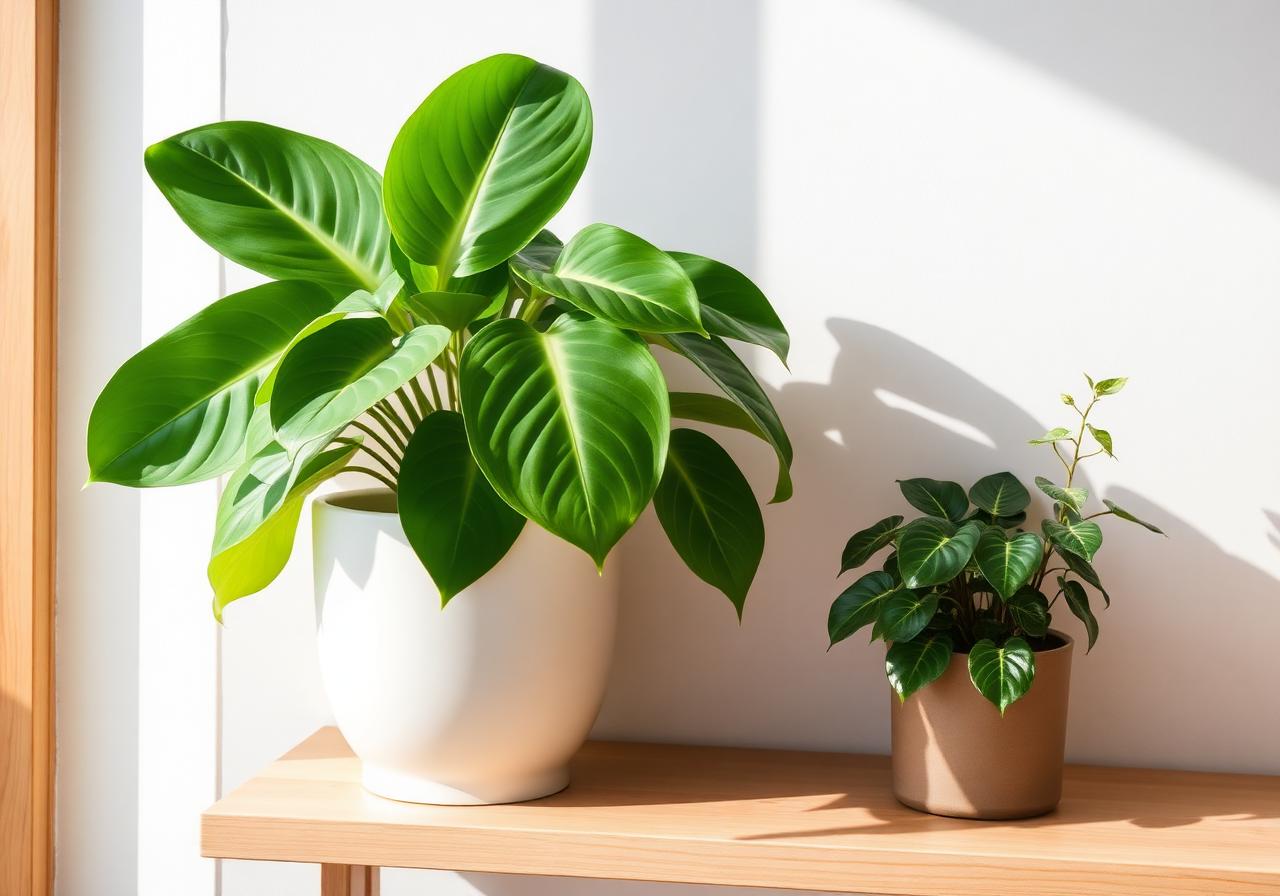
Vining types like Heartleaf and Micans look best in hanging baskets or trained up a moss pole. Upright self heading types like Birkin and Xanadu stay tidy on tabletops near a bright window.
Feed monthly during spring and summer with a balanced fertiliser at half strength.
Know your Philodendron type
The Philodendron genus splits into two growth habits, and the care details shift slightly depending on which you have.
| Variety | Habit | Best display |
|---|---|---|
| Heartleaf (hederaceum) | Vining | Hanging basket or trailing shelf |
| Micans (velvet leaf) | Vining | Moss pole or trailing |
| Brasil | Vining | Hanging basket |
| Birkin | Upright self heading | Tabletop near east window |
| Xanadu | Upright self heading | Floor pot in bright corner |
| Pink Princess | Climbing vining | Moss pole, bright indirect |
Light: the difference between thriving and surviving
Philodendrons evolved under rainforest canopies, so they handle a wide range of indoor light. The sweet spot is bright indirect: think 3 to 6 feet from an east or west facing window, or behind a sheer curtain in a south facing window.
- Too much direct sun: bleached white or silver patches that never recover.
- Too little light: long bare stretches of stem between leaves, smaller new leaves, and slow growth.
- Variegated varieties: need more light than solid green ones to maintain pattern. A Pink Princess in a dim corner will revert to plain green.
Soil: chunky aroid mix
Standard potting soil retains too much water and starves Philodendron roots of oxygen. Mix your own aroid blend in any clean bucket:
- 60 percent peat or coco coir based potting soil.
- 20 percent orchid bark.
- 20 percent perlite or pumice.
The finished mix should look airy and fall apart loosely when squeezed. If you can squeeze a ball that holds together, add more perlite.
Watering: check before you pour
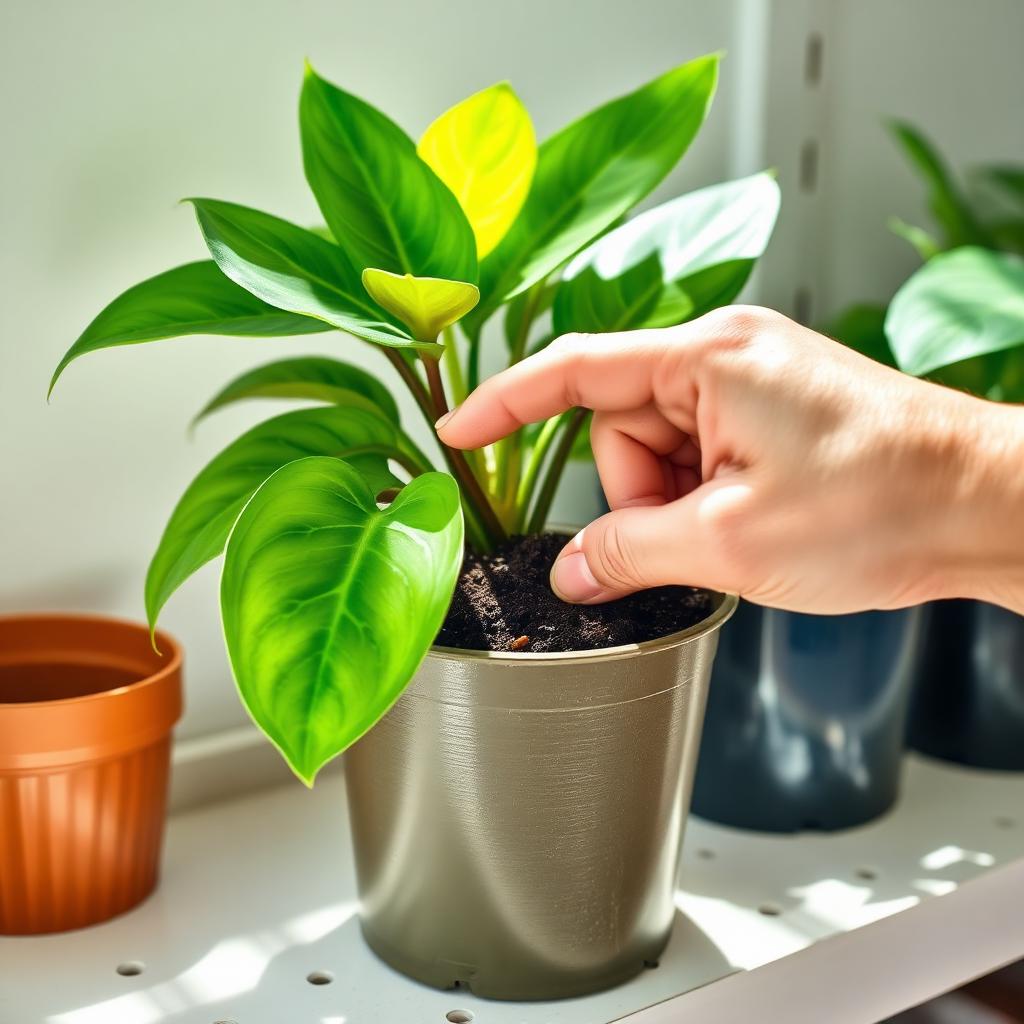
Forget weekly schedules. Push your index finger 2 inches into the soil. If you feel any moisture, wait. If it comes out dry, water thoroughly until water runs out the drainage holes, then dump the saucer.
That works out to roughly every 7 to 10 days in summer and every 14 to 21 days in winter, but the soil moisture test is always more reliable than the calendar.
Humidity and temperature
Philodendrons handle normal household humidity (40 percent) but produce noticeably bigger, glossier leaves above 60 percent. A small humidifier near the plant in winter, or grouping plants together, both help.
Keep temperatures between 18 and 27 C / 65 to 80 F. Below 13 C / 55 F the plant stops growing and may drop leaves. Keep away from cold drafts and from radiators or heating vents.
Feeding
During the growing season (spring through early autumn), feed once a month with a balanced 20-20-20 liquid fertiliser diluted to half strength. Skip feeding in winter when the plant is dormant.
If you see white crust building up on the soil surface, flush the pot with plain water once or twice to wash out salt build up.
Repotting and supporting
Most Philodendrons want a fresh pot every 2 years, sized up by just 2 inches at a time. Spring is ideal.
For vining varieties, decide early whether you want a trailing display or a climbing one. A trailing plant looks fuller and stays smaller. A plant trained up a moss pole grows much larger, mature leaves over time as it climbs, eventually producing the dramatic split or hole patterns some varieties (like Pink Princess and Micans climbing) develop only in their mature stage.
Pruning and propagation
Trim leggy stems just above a leaf node. Every cutting with 2 or 3 leaves and a node roots reliably in a jar of water within 2 to 4 weeks. Move rooted cuttings into soil once roots are at least 2 inches long.
Pinching the tips of vining varieties every few months encourages branching and a fuller look.
Common problems
- Yellow leaves. Most often overwatering. Let the soil dry further between sessions.
- Brown crispy tips. Low humidity or fluoride in tap water. Let water sit overnight before using.
- Drooping leaves. Underwatering if they bounce back after a soak, root rot if they do not.
- Loss of variegation. Not enough light. Move closer to the window.
- Sticky leaves. Scale or mealybug infestation. Wipe with diluted alcohol and treat with insecticidal soap.
Are Philodendrons toxic?
Yes. Like Monsteras, Philodendrons contain calcium oxalate crystals that irritate the mouth, throat, and stomach of cats, dogs, and small children. Keep the plant out of reach if you have pets that chew leaves.
Frequently asked questions
How often should I water a philodendron?
When the top 2 inches of soil dry out, usually weekly in summer and every 2 to 3 weeks in winter.
Why are my philodendron leaves turning yellow?
Almost always overwatering. Check that the pot drains well and let the soil dry further before the next watering.
Do philodendrons like to be misted?
Misting offers very brief humidity bumps. A humidifier is much more effective.
How big do philodendrons get indoors?
Vining varieties can trail 6 to 10 feet. Upright varieties like Xanadu form mounds 3 to 4 feet wide and tall over several years.