Quick Answer
Give a Monstera deliciosa 6 hours of bright indirect light a day, water only when the top 2 inches of soil dry out, and pot it in a chunky aroid mix of peat, orchid bark, and perlite.
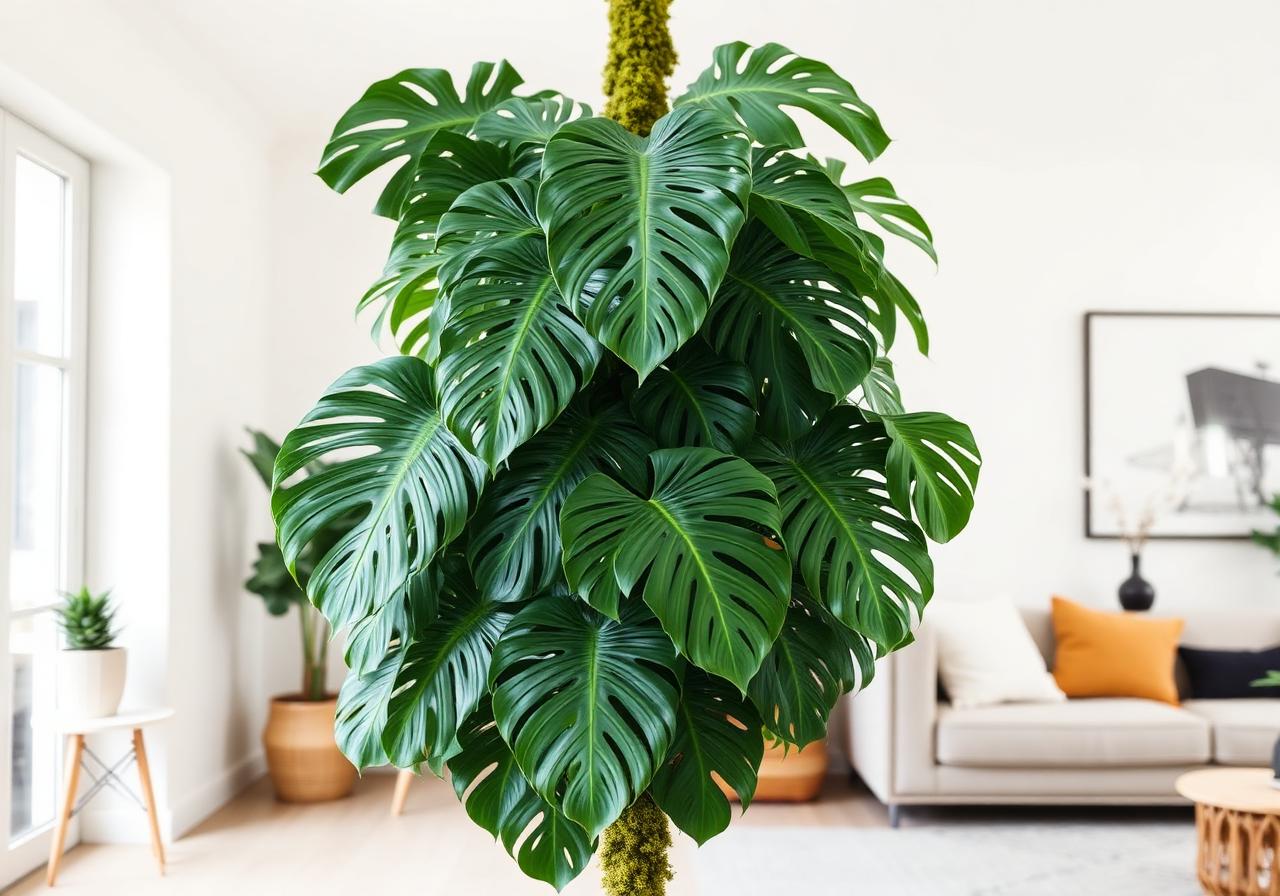
To get those iconic split leaves (called fenestrations), the plant needs more light than most living rooms provide and a moss pole to climb. Aerial roots should be tucked into the soil or wrapped around the pole, never cut off.
Feed monthly during spring and summer with a balanced houseplant fertiliser at half strength.
Light: the biggest variable
Monsteras are climbers from the Mexican rainforest understory. In the wild they start on the forest floor and slowly climb host trees toward brighter canopy light. Indoors, plain heart shaped leaves with no holes almost always mean the plant is not getting enough light.
Place the plant within 3 to 6 feet of a bright east or west facing window. Direct midday sun through south facing glass will burn the leaves, leaving bleached cream patches that never recover. If natural light is limited, a basic 20 watt full spectrum LED grow bulb on a timer for 10 hours a day is enough to trigger fenestration.
Soil: chunky, not dense
Bagged potting soil holds far too much water for a Monstera. The roots are designed to grip bark and leaf litter, so they suffocate in dense, peaty mixes.
Mix your own aroid blend:
- 50 percent peat based potting soil.
- 25 percent orchid bark.
- 20 percent perlite or pumice.
- 5 percent horticultural charcoal (optional, keeps the mix sweet).
The finished mix should feel airy and fall apart when you squeeze it, not clump.
Watering: dry down before you soak
The fastest way to kill a Monstera is overwatering. Stick a finger 2 inches into the soil before reaching for the watering can. If you feel any moisture, wait.
When the top is dry, water thoroughly until water runs out of the drainage holes. Tip out any standing water in the saucer. Depending on the pot size and household humidity, that ends up being roughly once a week in summer and every 10 to 14 days in winter.
The moss pole: how to actually get split leaves
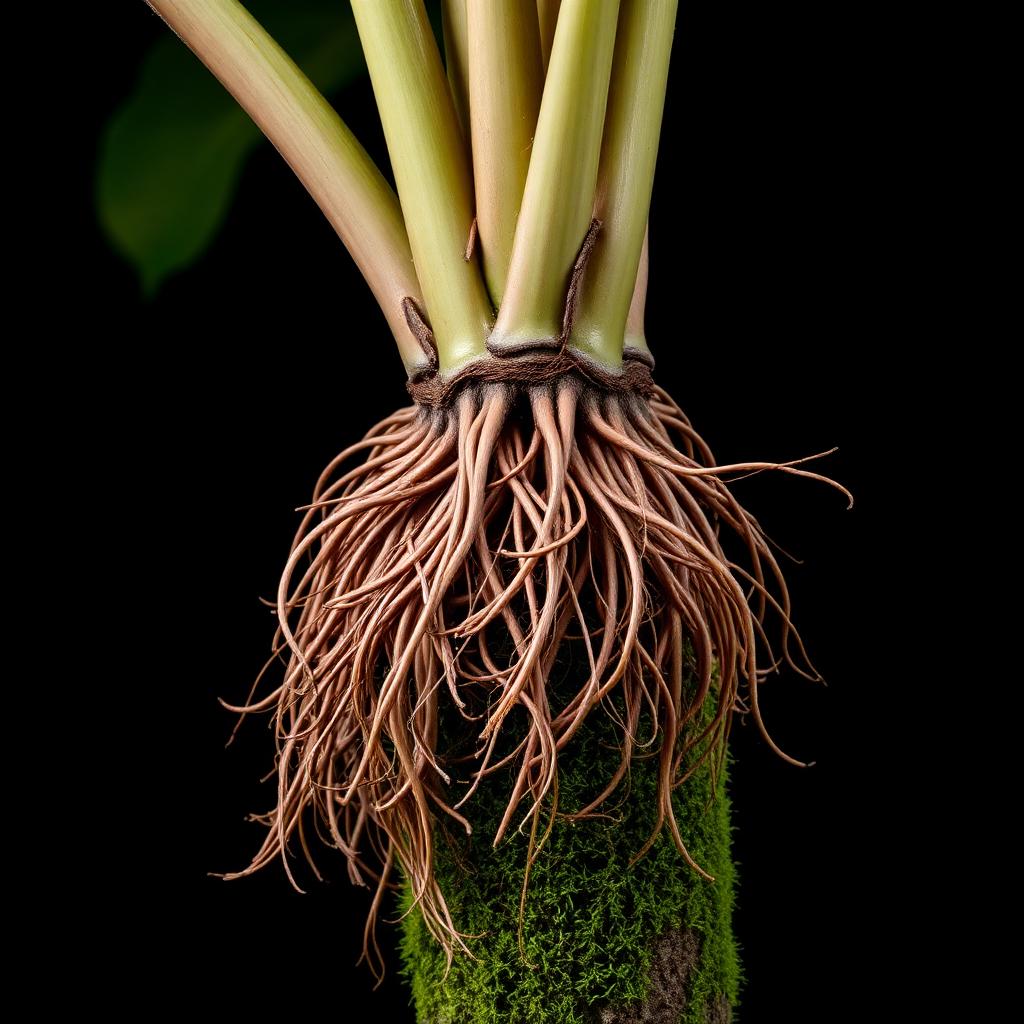
Mature Monsteras send out long, brown, cord like aerial roots from the stem joints. In nature they anchor the plant onto a tree and pull moisture out of the moss and bark. Without something to climb, an indoor Monstera sprawls sideways and leaves stay small and unsplit.
Push a sphagnum moss pole or coir pole 2 inches into the soil right next to the main stem. Use soft velcro plant ties to secure the stem against the pole at each new leaf node. As aerial roots emerge, guide them either into the pole or down into the soil. Never cut them off.
Mist the moss pole every few days. The dampness encourages the aerial roots to attach, and a hydrated pole feeds the plant more moisture, which directly correlates with bigger, more deeply split leaves.
Humidity and temperature
Aim for 60 percent humidity or higher. Standard household humidity (around 40 percent) keeps a Monstera alive but slows growth. A small humidifier near the plant in winter makes a visible difference within a month.
Keep the temperature between 18 and 27 degrees Celsius. Anything below 13 C / 55 F stresses the plant, and cold drafts from doors and windows can cause yellowing.
Feeding schedule
| Season | Fertiliser | Frequency |
|---|---|---|
| Spring and summer | Balanced 20-20-20 liquid at half strength | Every 4 weeks |
| Autumn | Same, even more diluted | Every 6 to 8 weeks |
| Winter | Skip entirely | None |
If you see white crust on the soil surface, flush the pot with plain water to wash out salt build up.
Common problems
- Yellow lower leaves. Usually overwatering. Let the soil dry further between sessions.
- Brown crispy leaf edges. Low humidity or fertiliser burn.
- No fenestrations on new leaves. Not enough light, no climbing support, or the plant is still juvenile.
- Drooping leaves that perk up after watering. Underwatering. Set a slightly tighter schedule.
- Weeping water from leaf tips. Normal. Called guttation, it means the roots are very hydrated.
Pruning and propagation
Trim leggy stems just above a node (the bump where a leaf and aerial root meet). Every cutting with a node and one aerial root will root happily in water within 4 to 6 weeks, giving you a free new plant.
Frequently asked questions
Why does my Monstera have no holes?
Juvenile leaves are always solid. The plant needs strong indirect light and a moss pole to start producing fenestrated mature leaves.
How often should I water a Monstera?
When the top 2 inches of soil dry out. That works out to roughly weekly in summer and every 10 to 14 days in winter.
Should I cut off Monstera aerial roots?
No. Tuck them into the soil or wrap them around the moss pole. They feed the plant.
Is Monstera deliciosa toxic to pets?
Yes. The leaves contain calcium oxalate crystals that irritate the mouth and stomach of cats and dogs. Keep out of reach.