Quick Answer
A bird box that birds actually use is built from untreated cedar, redwood or pine at least 3/4 inch thick, sized to the species you want to attract (NestWatch from the Cornell Lab of Ornithology publishes the exact entrance-hole diameters), has no decorative perch, and includes both ventilation gaps near the top and drainage holes in the floor.
Most birdhouses sold as garden decor fail one or more of these rules and either sit empty for years or, worse, allow predators in. A homemade box that follows the NestWatch specs has a high chance of being occupied in its first or second spring.
Pick the species before you pick the plan
Bird-box dimensions are species-specific. A house wren box is too small for a bluebird and a wood duck box is laughably oversized for a chickadee. The Cornell Lab's NestWatch program publishes a free species-by-species table; the most common North American backyard targets:
- House wren. Floor 4 by 4 inches, height 8 inches, entrance 1 1/8 inches, mounted 5 to 10 feet up.
- Black-capped chickadee. Floor 4 by 4 inches, height 8 to 10 inches, entrance 1 1/8 inches, mounted 4 to 15 feet up.
- Eastern bluebird. Floor 5 by 5 inches, height 8 to 12 inches, entrance 1 1/2 inches, mounted 4 to 6 feet up in open habitat.
- Tufted titmouse and white-breasted nuthatch. Floor 4 by 4 inches, height 8 to 10 inches, entrance 1 1/4 inches.
The 1/8 inch difference between a chickadee hole and a bluebird hole is not cosmetic. A larger hole lets house sparrows and starlings in, both of which evict native cavity-nesters and destroy the eggs already present.
Use the right wood, and only the right wood
Untreated cedar is the gold standard. Redwood and rough-sawn pine work too. Three rules:
- At least 3/4 inch thick. Thinner walls overheat in summer and chill in spring. Eggs die in both directions.
- Untreated, unpainted, unstained interior. The inside of a nest box is humid from nestling breath. Pressure-treated lumber, exterior plywood and chemical wood preservatives all off-gas inside that humid space and poison the chicks. Leave the inside bare.
- Rough sawn surface inside the front wall. Or score the wood with horizontal grooves under the entrance hole. Fledglings need texture to climb the inside wall to the exit. Smooth interior walls trap chicks.
The outside can be left bare or finished with a non-toxic, water-based, light-coloured paint or stain. Light colours reflect heat. Dark paint on a south-facing box turns the cavity into an oven.
Skip the decorative perch
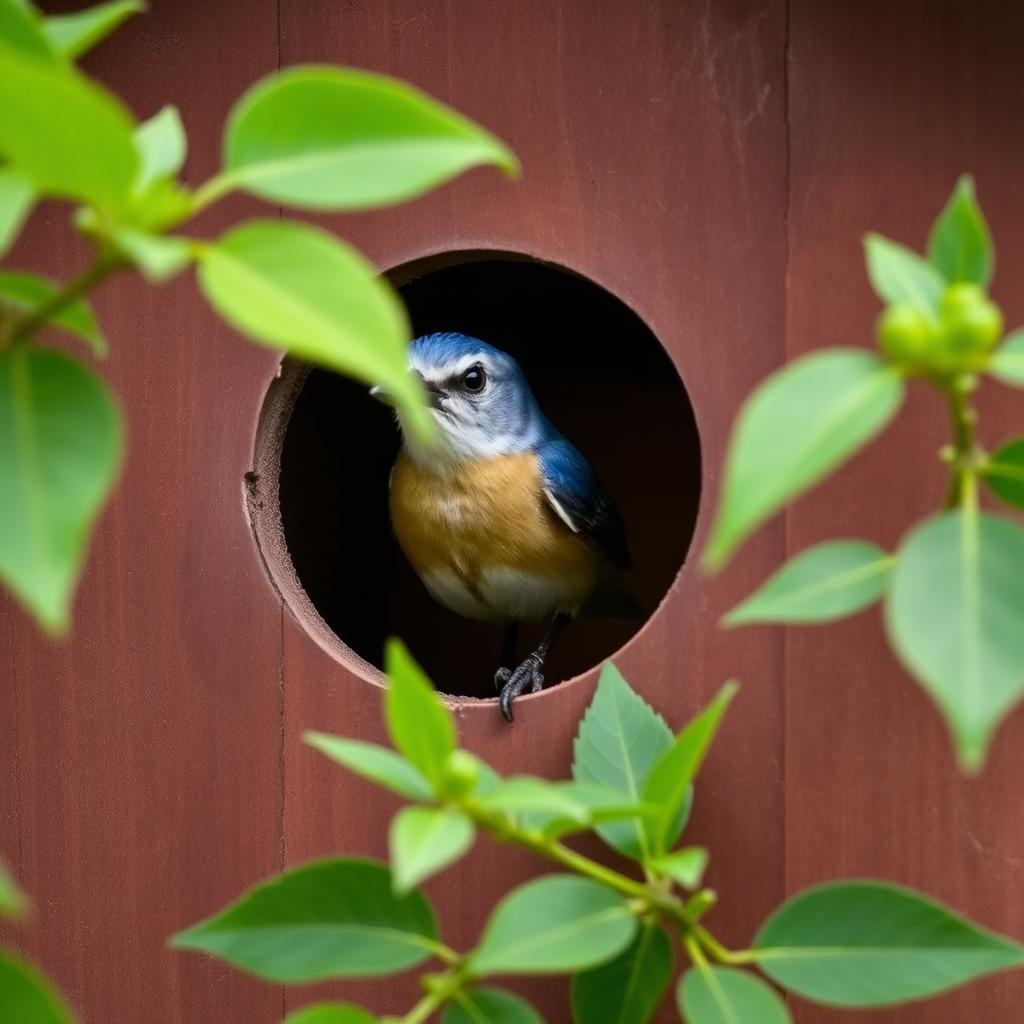
Almost every store-bought decorative birdhouse has a little wooden perch dowel under the entrance hole. Native cavity-nesting birds do not use perches. They land directly on the entrance hole and go inside. The perch only helps invasive house sparrows and starlings hold onto the box while harassing the nesting birds, and it gives a squirrel or rat snake an easy handhold to reach into the cavity. If your plan calls for a perch, leave it off.
Build in ventilation and drainage
Two engineering details separate a working box from a beautiful death trap.
- Ventilation. Cut a 1/4 inch gap along the top of each side wall, just under the roof eaves. Hot air rises and exits through these gaps. Without them, an enclosed box on a sunny May afternoon can hit lethal temperatures within an hour.
- Drainage. Drill four 1/4 inch holes through the floor at the corners, or cut the floor corners off at 45 degrees. Wind-driven rain that gets inside drains out instead of soaking the nest. A wet nest causes hypothermia in chicks even on warm nights.
The roof should overhang the entrance by at least 2 inches in front and 1 inch on each side, sloped so rain runs off the back.
Mount it properly
Where and how you mount the box matters as much as how you built it.
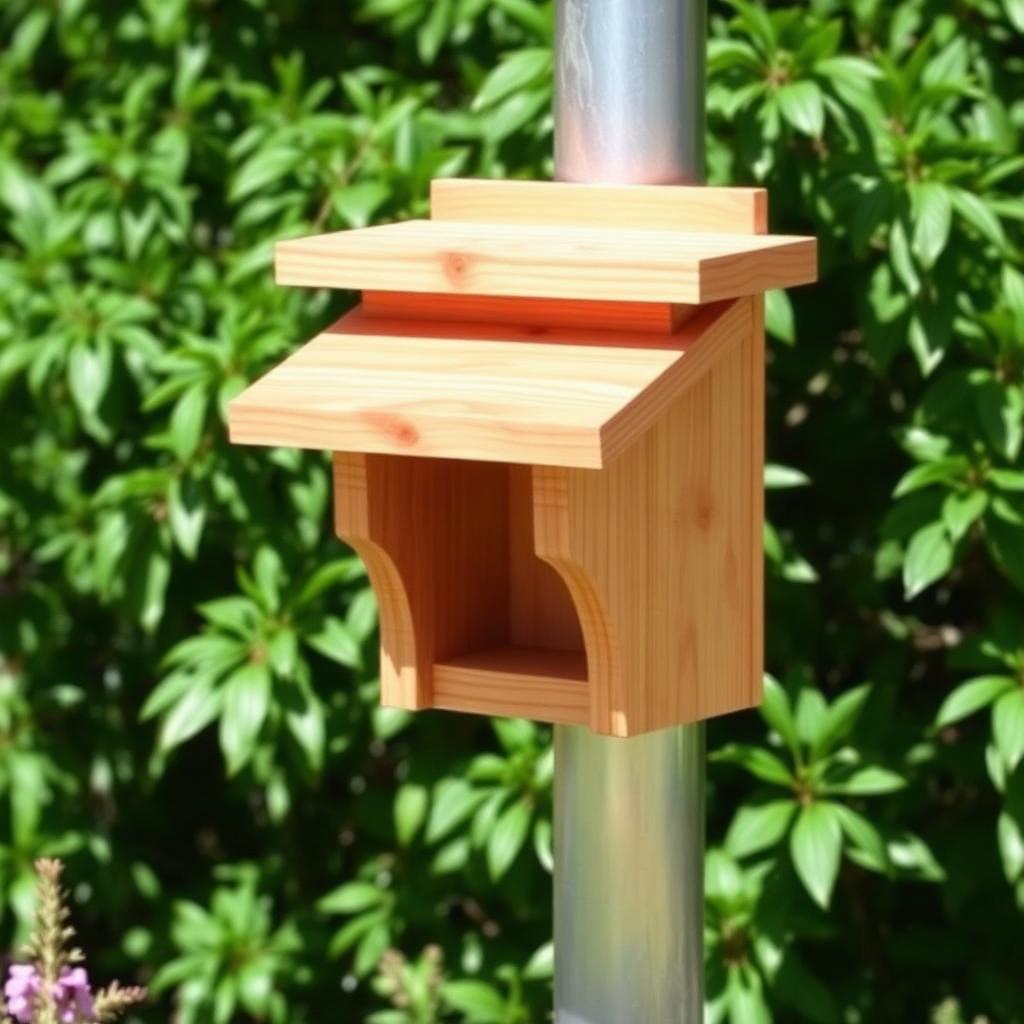
- On a smooth metal pole, not a tree. A tree trunk is a highway for raccoons, snakes and squirrels. A smooth 1/2 inch galvanised pipe or 4 by 4 post fitted with a stovepipe-style predator baffle keeps almost all of them off.
- Predator baffle below the box. A wide cylindrical baffle defeats raccoons and snakes. This is the single biggest survival factor after the entrance hole size.
- Correct height and habitat. Bluebirds want 4 to 6 feet up in open meadow or lawn. Chickadees and wrens want 5 to 10 feet up at a woodland edge. Match the species' habitat or the box will sit empty.
- Face the entrance away from prevailing weather. In most of North America that means facing east or southeast to avoid driving wind and afternoon sun.
Maintain it once a year
A nest box is not install-and-forget. After each nesting season (autumn for most species) open the side or hinged roof, remove the old nest, scrape clean, and rinse with a 10 percent bleach solution. Let it dry completely before closing. This removes parasites (blowfly larvae, mites) that would otherwise infest the next spring's brood.
The takeaway
A wooden bird box that works is precise, not pretty. Cedar at least 3/4 inch thick. The exact NestWatch hole diameter for your target species. No perch. Ventilation gaps under the eaves and drainage holes in the floor. A smooth metal pole with a predator baffle, mounted at the right height in the right habitat. Build to that spec and your box will almost certainly host a brood next spring instead of decorating an empty fence forever.