Quick Answer
Vinyl flooring installed before roughly 1985 frequently contained asbestos, either in vinyl-asbestos tile (VAT) or in the paper backing of sheet vinyl. Vinyl flooring manufactured and sold in the US after 1990 is asbestos-free, the major manufacturers had voluntarily stopped using asbestos by the mid-to-late 1980s after the EPA's 1989 ban (which was partially overturned in 1991 but the industry had already shifted away).
If your home has vinyl flooring installed before 1985, assume it contains asbestos until lab testing proves otherwise.
Vinyl-Asbestos Tile (VAT)
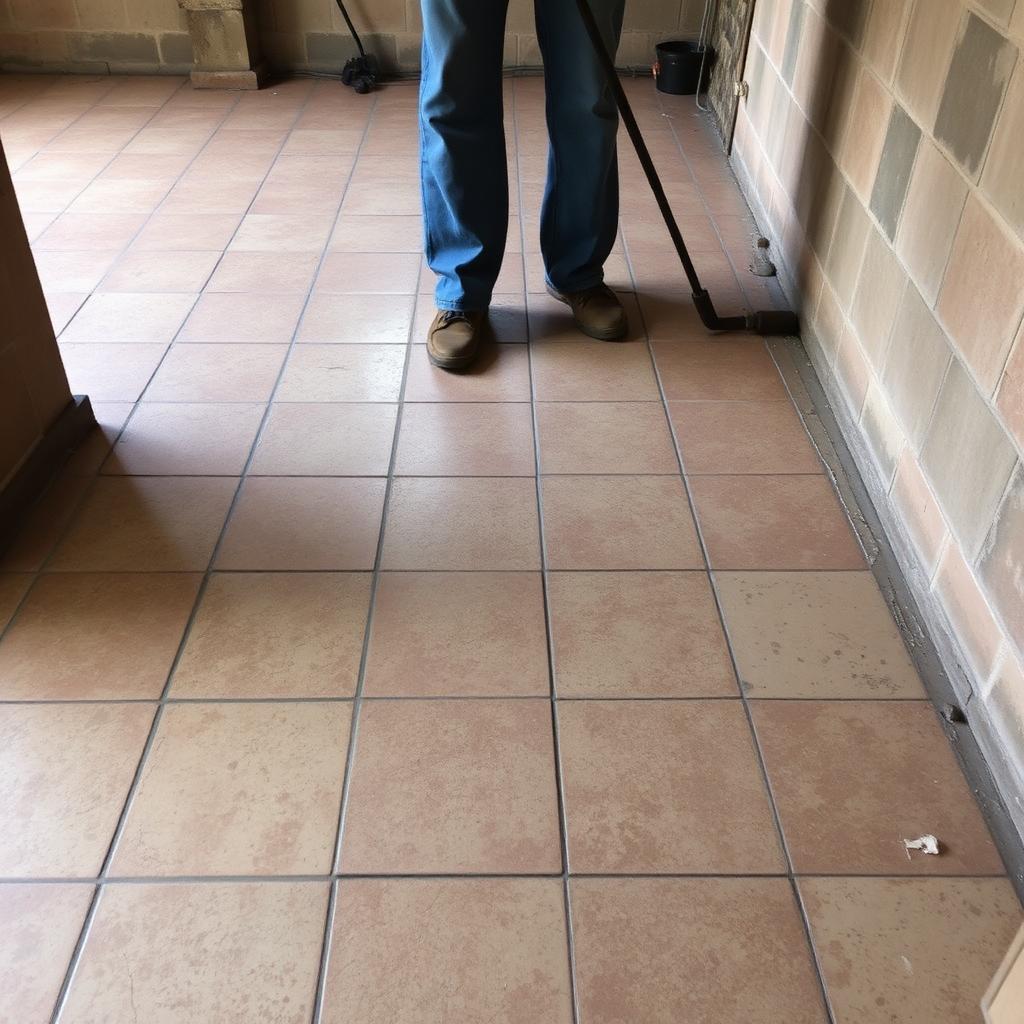
VAT was the dominant residential and commercial floor from the 1950s through the 1970s. Chrysotile asbestos was added (typically 5 to 30 percent by weight) to give the tile dimensional stability, fire resistance, and durability. Telltale signs:
- Hard, brittle tiles, snap rather than bend.
- 9x9 inch (very common) or 12x12 inch grids.
- Mottled, speckled or marble-look patterns.
- Greasy black mastic visible at edges (the mastic itself often contained asbestos too).
Sheet Vinyl Backing
Sheet vinyl from the same era often used an asbestos paper or felt backing for dimensional stability and moisture resistance. The wear surface itself is usually asbestos-free, but the backing is the bigger hazard during removal because pulling the sheet up releases fibers from the felt.
The Timeline
- Before 1980: Most vinyl flooring contained asbestos.
- 1980 to 1985: Transition period. Major brands started removing asbestos under public pressure.
- 1989: EPA finalised an asbestos ban under TSCA, including flooring felt.
- 1991: Fifth Circuit overturned most of the ban, but the flooring industry had largely already moved on.
- After 1990: US-manufactured vinyl flooring is reliably asbestos-free.
Imported Flooring Caveat
The EPA's 2024 final rule under TSCA banned chrysotile asbestos imports entirely. Before that, imported flooring (particularly from countries without asbestos bans) could still contain trace amounts. Buying from a reputable manufacturer in 2026 means asbestos-free is a near certainty, but pre-2024 imports from non-banned jurisdictions had some risk.
Is It a Health Hazard Right Now?
Intact, sealed asbestos flooring that is walked on is not actively releasing fibers and poses minimal risk per EPA guidance. The hazard appears during:
- Removal (especially dry scraping of mastic).
- Sanding the floor or the mastic.
- Cutting tiles with power saws.
- Floor abrasion in a heavy traffic area (older worn tile can release fibers very slowly).
What to Do With It
- Leave it in place if it is in good condition. Install LVP, laminate, tile or carpet directly over the old floor (encapsulation). This is the EPA-preferred approach.
- Test before disturbing. 25 to 75 dollars per sample at an accredited lab.
- Hire a licensed abatement contractor if removal is necessary. Many US states require this by law.
- Never sand, dry-scrape or grind suspected asbestos flooring under any circumstances.
Telltale Mastic
The black tarry adhesive (mastic) used to glue VAT and old sheet vinyl down often contained asbestos itself. Even after tiles are removed, the mastic residue is a continuing hazard if scraped dry. Abatement contractors usually wet the mastic, scrape carefully, and dispose as asbestos waste.
Bottom Line
Vinyl flooring made and sold in the US before about 1985 commonly contained asbestos. Flooring after 1990 is asbestos-free. Test before any removal of suspect flooring, encapsulate when possible, and hire a licensed contractor for any abatement. Modern 2026 vinyl plank from major brands is reliably asbestos-free.
FAQ: Does Vinyl Flooring Have Asbestos?
Does vinyl flooring have asbestos if installed in 1995?
No. By 1990 US-manufactured vinyl flooring was reliably asbestos-free.
Does vinyl flooring have asbestos in the backing only?
Pre-1985 sheet vinyl often did, the felt or paper backing contained asbestos for dimensional stability even when the wear layer did not.
What about imported vinyl flooring?
The 2024 EPA chrysotile ban closed the import loophole. Vinyl flooring sold in the US in 2026 is asbestos-free.
How do I test old vinyl?
Send a 1-square-inch sample including the backing to an NVLAP or AIHA accredited lab. Cost is 25 to 75 dollars per sample.
Final Tips
- Pre-1985 vinyl: assume asbestos.
- Post-1990 vinyl: asbestos-free.
- Encapsulate intact suspect floors in place.
- Hire a licensed abatement contractor for removal.
Disposal of Asbestos Flooring
Once asbestos flooring is removed, it cannot go in regular construction debris dumpsters. EPA's National Emission Standards for Hazardous Air Pollutants (NESHAP) requires double-bagging in 6-mil polyethylene, sealing with duct tape, labelling as asbestos waste, and disposal at a permitted hazardous waste landfill. Most US states require a manifest tracking the waste from job site to landfill.
Disposal costs in 2026 typically run 150 to 400 dollars per ton at hazardous waste landfills, on top of the abatement labour. For a 1,500-square-foot home this adds 200 to 600 dollars to the project budget.
Some states allow homeowners to dispose of their own residential abatement waste at certain transfer stations with a manifest. Check the state DEP or DEQ website before assuming this option is available.