Quick Answer
True linoleum, the linseed oil and jute material invented in the 1860s, almost never contained asbestos in the wear layer. The real asbestos risk in old "linoleum" floors is two things: the asbestos paper backing on sheet linoleum sold from the 1920s through the 1970s, and vinyl-asbestos tile, which homeowners often called "linoleum" but is a different material entirely.
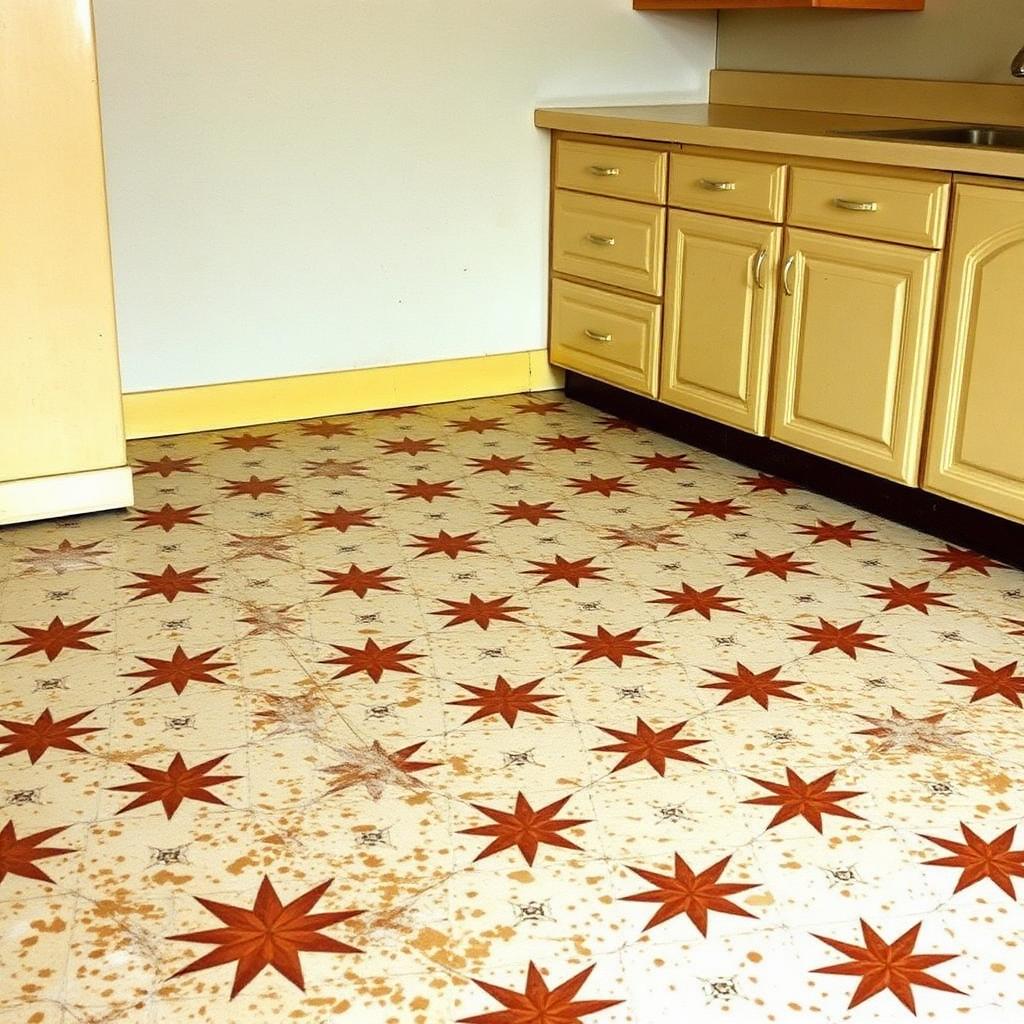
If your house has hard square tiles from before about 1985 in a 9x9 or 12x12 inch grid, those are most likely vinyl-asbestos tile and should be treated as asbestos-containing until tested.
The Two Materials Get Confused
"Linoleum" was a generic shorthand for any kitchen floor for most of the 20th century. The two real materials behind that word are very different:
- True linoleum. Linseed oil, pine rosin, cork dust or wood flour, pressed on a jute backing. Made by Forbo, Armstrong and others, sold from the 1860s through today. The wear surface has no asbestos. The jute backing on most products did not either. Sheet linoleum from roughly 1920 to 1980 sometimes used asbestos paper as a moisture barrier between linoleum and subfloor.
- Vinyl-asbestos tile (VAT). A vinyl-and-asbestos composite, hard square tiles. Sold from the 1920s into the 1980s. Common sizes 9x9, 12x12 inch. Often contained 5 to 30 percent chrysotile asbestos.
How to Tell What You Have
- Roll material (sheet, comes off the wall in long strips when pulled): likely true linoleum or sheet vinyl. The backing might have asbestos.
- Hard, individual square tiles, 9x9 inch is the classic size: very likely VAT, treat as asbestos.
- Pre-1985 install: assume asbestos until tested.
- Post-1985 install: VAT was largely off the market, but tested confirmation is still cheap insurance.
Is It Dangerous Where It Sits?
Per EPA and CDC guidance, asbestos in old flooring is only a health risk when fibers become airborne. Floors that are intact, sealed and walked on are not actively releasing fibers. The danger comes from:
- Sanding, scraping, grinding or sawing the floor.
- Power-stripping the floor.
- Breaking tiles to remove them.
- Tearing up the felt-paper backing under sheet flooring.
Cover or Remove
If the floor is in good condition, the safest plan is to leave it in place and install new flooring directly over it (called "encapsulation"). LVP, laminate or tile-over works on a flat VAT floor. This is the recommendation from most state asbestos programs.
If removal is necessary (subfloor damage, water damage), hire a licensed asbestos abatement contractor. DIY removal of asbestos flooring is illegal in many US states and a serious health hazard everywhere.
Testing
Asbestos testing costs 25 to 75 dollars per sample at an accredited lab. Take a sample roughly 1 square inch including the backing, double-bag it, and ship to a NVLAP or AIHA-accredited lab. EPA's website lists accredited labs by state.
Bottom Line
True linoleum wear surfaces almost never contain asbestos. The backing sometimes does, and old vinyl-asbestos tile (often called linoleum colloquially) definitely does. Pre-1985 hard tile flooring should be tested or covered in place. Never sand, scrape or aggressively remove suspect flooring without professional help.
FAQ: Linoleum and Asbestos
Is real linoleum still made?
Yes. Forbo markets Marmoleum, a modern linoleum made from linseed oil, pine rosin, jute and recycled wood. Asbestos-free.
How can I tell vinyl-asbestos tile from true linoleum?
VAT is hard and brittle, snaps rather than bends, and comes in 9x9 or 12x12 inch squares. Linoleum is roll material that flexes.
Is the mastic under old linoleum hazardous?
Often yes. The black tar adhesive used pre-1985 frequently contained asbestos and should not be scraped dry.
How much does asbestos abatement cost?
2026 averages are 8 to 15 dollars per square foot for residential floor abatement, with most jobs running 1,500 to 4,500 dollars total.
Final Tips
- True linoleum wear surface is asbestos-free.
- Pre-1985 hard tiles in 9x9 or 12x12 size are likely VAT.
- Test before disturbing.
- Encapsulate rather than remove when possible.
What State Programs Require
State asbestos programs vary on what triggers a regulated abatement. In California, OSHA Cal/OSHA rules require licensed abatement for any project disturbing more than 100 square feet of asbestos-containing material. In New York, any commercial disturbance triggers ICR-56 notification. In Texas, the threshold is similar to California's residential single-family exemption.
Single-family homeowner DIY removal is technically allowed in many states under the "homeowner exemption," but most experts strongly advise against it because the homeowner is bypassing OSHA worker protections, EPA disposal rules and may void homeowner insurance coverage for resulting health claims.
For sale of a home with known asbestos flooring, disclosure on the seller property disclosure form is required in most US states. Failing to disclose creates litigation exposure that exceeds the cost of a professional abatement.
For homeowners shopping new flooring in 2026, modern marmoleum from Forbo and similar sustainable producers offers the look and feel of true linoleum without any asbestos risk. These products carry 25 to 40 year wear warranties and are widely available through specialty showrooms.