Quick Answer
Yes for most flooring, but the rules differ sharply by material. Solid hardwood needs the longest acclimation (5 to 14 days). Engineered hardwood needs 3 to 7 days. Laminate needs 48 to 72 hours. Modern rigid-core SPC vinyl plank from most major brands no longer requires acclimation, though the room temperature should be stable for at least 24 hours before install.
Skipping acclimation is the single most common cause of warranty denial in residential flooring. Manufacturers test for this.
Why Acclimation Matters
Wood and wood-based flooring expand and contract with humidity. The moisture content of the plank when installed must match the moisture content it will sit at during normal use. Install a dry plank into a humid room and it will absorb moisture and buckle. Install a humid plank into a dry house and it will shrink and gap.
The NWFA (National Wood Flooring Association) recommends installing solid hardwood at 6 to 9 percent moisture content for most US regions, with the room and subfloor within 4 percent of that value.
By Material
- Solid hardwood. 5 to 14 days, sometimes longer in extreme climates. Test moisture with a pin meter before install.
- Engineered hardwood. 3 to 7 days, but check manufacturer instructions, some brands ship pre-acclimated and call for 48 hours only.
- Bamboo. 5 to 7 days. Strand-woven bamboo is unusually stable, but still benefits.
- Laminate. 48 to 72 hours minimum. Some moisture-resistant brands say 48.
- Click-lock SPC vinyl plank. Most 2026 brands say no acclimation needed, but require room to be 65 to 85 F at install with HVAC running.
- WPC vinyl plank. 24 to 48 hours, slightly more sensitive than SPC.
- Glue-down LVT and sheet vinyl. 24 to 48 hours so the adhesive can cure correctly.
- Ceramic and porcelain tile. No acclimation needed.
How to Acclimate Correctly
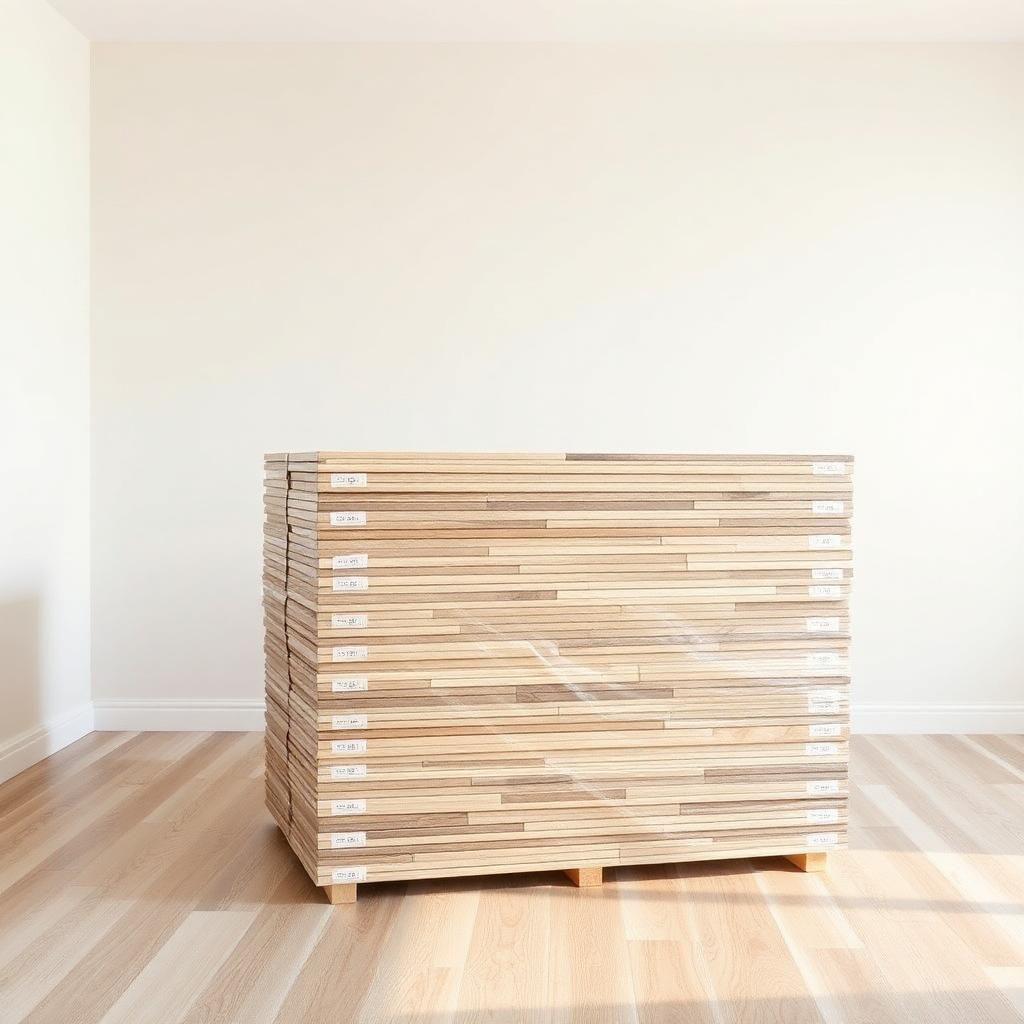
- Move the boxes into the room where they will be installed (not a garage, not a basement).
- Run the HVAC as it will run during normal use of the home.
- Open the boxes or cross-stack them so air can flow around all planks.
- Wait the manufacturer-specified time.
- Measure subfloor moisture and ambient humidity before opening the first plank for install.
The Moisture Meter Test
For hardwood, the gold-standard test before installing is a pin or pinless moisture meter reading. Plank moisture should match subfloor moisture within 4 percent. If they do not match, wait longer.
Common Mistakes
- Acclimating in the garage instead of the install room.
- Leaving boxes sealed (no air flow, no actual acclimation).
- Turning HVAC off during acclimation (room not at normal use conditions).
- Acclimating in a brand new construction where the building is still drying out, the plank will acclimate to a wetter condition than the home will have a month later.
SPC Vinyl Misconception
Even though most SPC click-lock no longer requires acclimation, the install room must be temperature-stable before install. Cold planks installed in a warm room can develop tight joints that fail as the planks warm and expand against each other. 24 hours at install temperature is the practical minimum.
New Construction Reality
New-build homes give off significant moisture from concrete, drywall mud and paint for months after closing. Installing hardwood within 60 days of a new build is asking for problems. Pros usually wait or use a more stable engineered product.
Bottom Line
Most hardwood and laminate flooring needs to acclimate in the install room with HVAC running. Modern SPC vinyl plank usually does not, but the room must be temperature-stable. Follow the manufacturer's instructions exactly, the warranty depends on it.
FAQ: Flooring Acclimation
How long does laminate need to acclimate?
48 to 72 hours minimum. Some brands accept 48 if the room is at normal use conditions.
Does click-lock vinyl plank need to acclimate?
Most modern SPC products do not require formal acclimation, but the room must be at 65 to 85 F for 24 hours before install.
What happens if I skip acclimation?
Buckled joints in laminate, cupping or gapping in hardwood, and voided warranty across the board.
Can I acclimate in the garage?
No. The plank must acclimate to the conditions of the install room, not a different space.
Final Tips
- Move boxes into the install room.
- Run HVAC as normal.
- Cross-stack or open boxes for airflow.
- Confirm moisture content with a meter before installing hardwood.
Acclimation in Cold Climates
In cold-climate winters when indoor heating drives ambient humidity below 25 percent, hardwood and laminate planks acclimate to very dry conditions. Installed in winter, the same floor will swell in summer and may buckle. Many manufacturers in cold-climate regions specify a slightly larger expansion gap (3/8 inch instead of 1/4 inch) for winter installs.
A whole-house humidifier set to maintain 35 to 50 percent relative humidity year-round is the best protection for wood flooring in northern US states. Without it, expect cyclical seasonal movement of 1 to 3 mm per 3-foot wide section.
Concrete subfloors give off measurable moisture for up to two years after pour. A new construction concrete slab should be tested with a calcium chloride or relative humidity probe before installing any wood-based floor, regardless of acclimation time.