Quick Answer
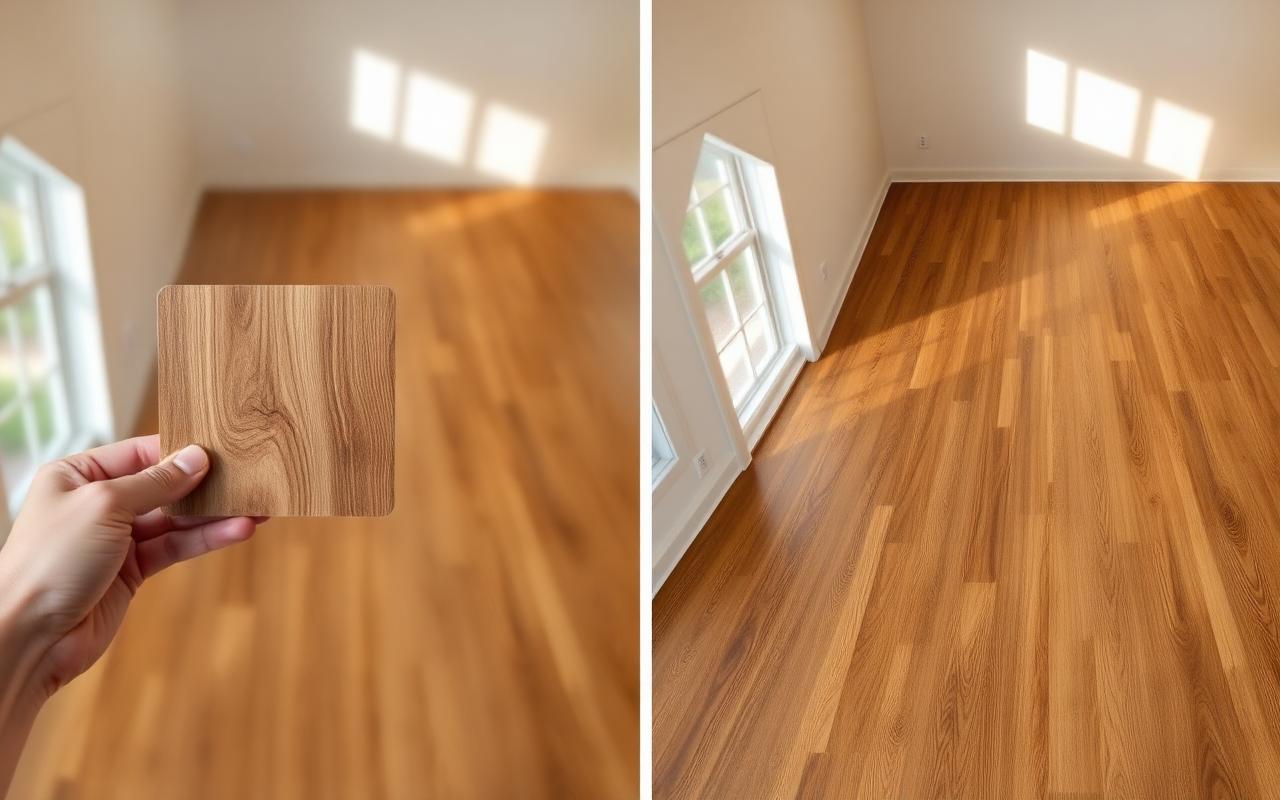
Flooring almost always looks darker once it is laid across the whole room than it did as a small sample in the showroom. Three things cause it: indoor lighting is dimmer than showroom lighting, a big floor reflects less light per square inch than a tiny sample sitting on a white table, and the finish picks up shadows from furniture, walls, and your own body. Solid hardwood also ambers slightly with time and UV exposure, so it can darken by another 5 to 15 percent in the first year.
Always take samples home, lay them flat on the existing floor, and look at them at three times of day: morning, midday, and evening.
Why It Looks Different
- Lighting: showrooms run 800 to 1,500 lux of cool white. Most homes sit at 100 to 300 lux of warm white.
- Surface area: a 6 inch sample reflects more total light per square inch than a 200 sq ft floor.
- Sheen: matte finishes look 1 to 2 shades darker than satin or gloss.
- Wall and ceiling colour: dark walls absorb light and make floors read darker.
- Adjacent floors: a sample next to white tile looks darker than the same plank laid next to oak.
How to Predict the Final Look
- Order three to five large samples (at least 6 inch x 9 inch).
- Tape them edge to edge in a 2x2 grid on the existing floor.
- Look at the grid at 9am, noon, and 7pm, with curtains as you normally have them.
- Photograph each time with your phone so you can compare.
- Stand 6 feet back, not over the samples; that is the eye-level distance you will see daily.
Does Wood Darken Over Time?
Yes. Most solid hardwoods amber with UV exposure: cherry deepens dramatically in 3 to 6 months, maple yellows lightly, oak shifts golden. Pre-finished engineered planks change less because the aluminium oxide top coat blocks some UV. Cover a section with a rug for 6 months and you will see the unprotected area is noticeably darker.
Frequently Asked Questions
Does the answer change for tenants vs owners?
Yes. Tenants almost never see the same financing, removal, or warranty terms an owner gets. Most retailers will only sell to whoever is on title or has written landlord permission.
Is the price quoted in pounds the same in dollars?
No. UK and US flooring markets price differently: the UK quotes per square metre with VAT, the US quotes per square foot pre-tax. Multiply UK per metre by roughly 0.093 to compare per square foot.
Will the answer change in five years?
Probably. Tax thresholds, retailer line-ups, and warranty terms shift every year. Always confirm with the source before signing a contract.
Does the same apply for commercial buildings?
Mostly no. Commercial flooring carries different fire ratings, slip ratings, and depreciation treatment than residential. Anything you read here assumes a typical owner-occupied home unless stated otherwise.
Pro Tips
- Get the quote in writing. Verbal estimates from any retailer or contractor are worth nothing when disputes happen.
- Keep your receipts and lot numbers for at least the length of the warranty. Most claims are denied because the buyer cannot prove what was bought.
- Read the financing small print. Most "interest free" offers carry deferred interest, which means full retroactive interest if you miss the payoff date by one day.
- Ask about disposal fees up front. Removal of the old floor can add 1 to 3 dollars per square foot if not bundled.
Bottom Line
The right answer here depends on your home, your budget, and your local market. Use the numbers as a starting point, get at least two written quotes, and never sign on a contractor's clipboard at the door without 24 hours to read the contract.
Does Flooring Look Darker or Lighter Wet?
Wet flooring almost always looks darker than dry. This matters when you finish wood, mop tile, or apply oil to engineered planks. The polyurethane or oil finish soaks into the grain and the surface reflects less ambient light. The wet appearance is roughly how the floor will look after curing with a satin or gloss top coat.
How Different Finishes Change the Tone
- Matte (3 to 10 sheen): reads the darkest, hides scratches the best.
- Satin (20 to 35 sheen): the most popular choice; mid-tone.
- Semi-gloss (50 to 70 sheen): reads lighter, shows every dust mote.
- High gloss (80+ sheen): mirror look; only for formal rooms.
How to Compare Quotes Without Getting Burned
Get at least three written quotes broken out line by line: material per square foot, labour per square foot, removal of old floor, subfloor prep, baseboard handling, toilet pull, disposal fees, and warranty terms. A "total job" number from a single contractor tells you nothing about where the money is going, and you cannot compare it to anyone else.
Walk every quote against the others using the same measurements. Use the contractor's own square footage, not a guess, because room squareness varies. If one contractor's square footage is 15 percent higher than the others, ask why before signing.
Questions Most Homeowners Forget to Ask
Who is on the crew?
The salesperson rarely lays the floor. Ask for the lead installer's name and years of experience.
Is the install warranty written and transferable?
Most chain installers give a one-year labour warranty; specialist independents often give five.
What happens if my baseboards crack during pull?
Get the replacement policy in the contract, not in conversation.
How is moisture in the subfloor tested?
Concrete should be tested with a calcium chloride or relative humidity probe, not eyeballed.
What is the lead time on the planks I picked?
Special-order colours often run 4 to 8 weeks.