Quick Answer
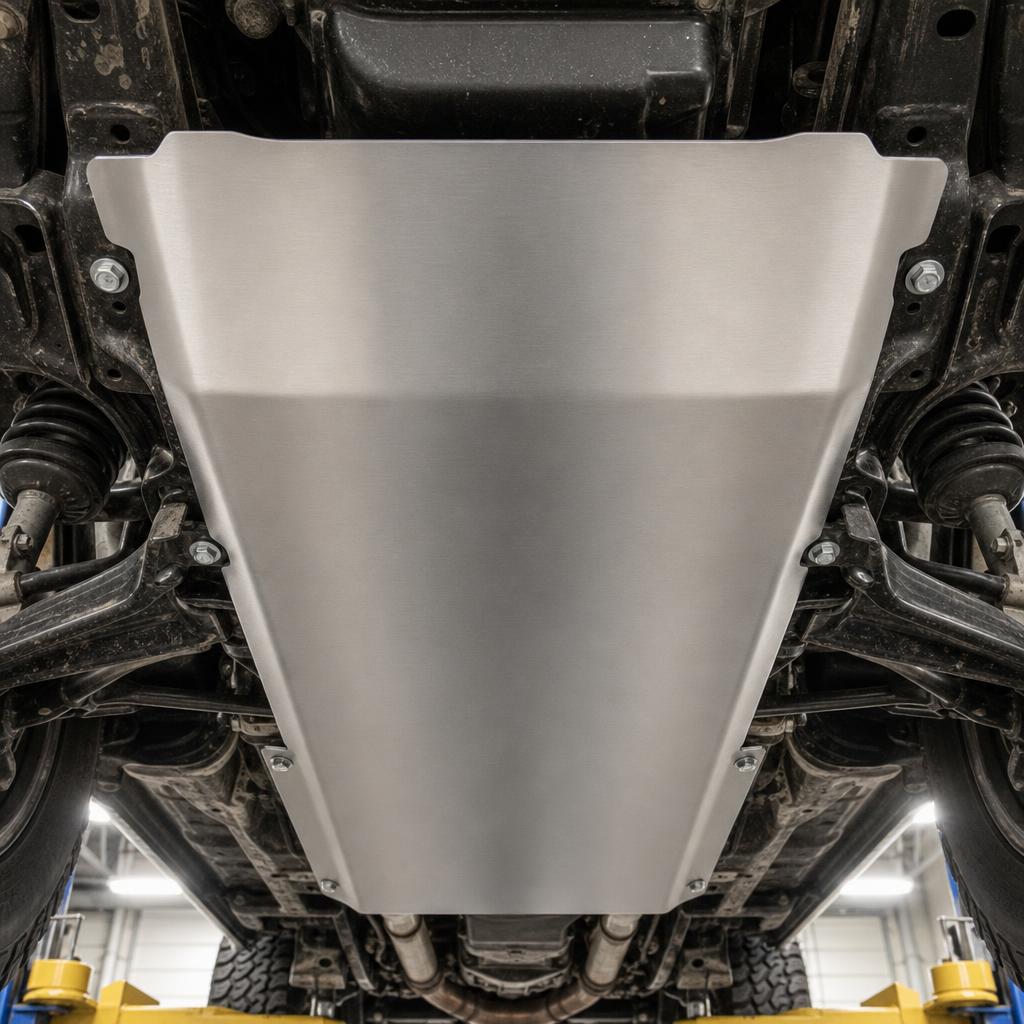
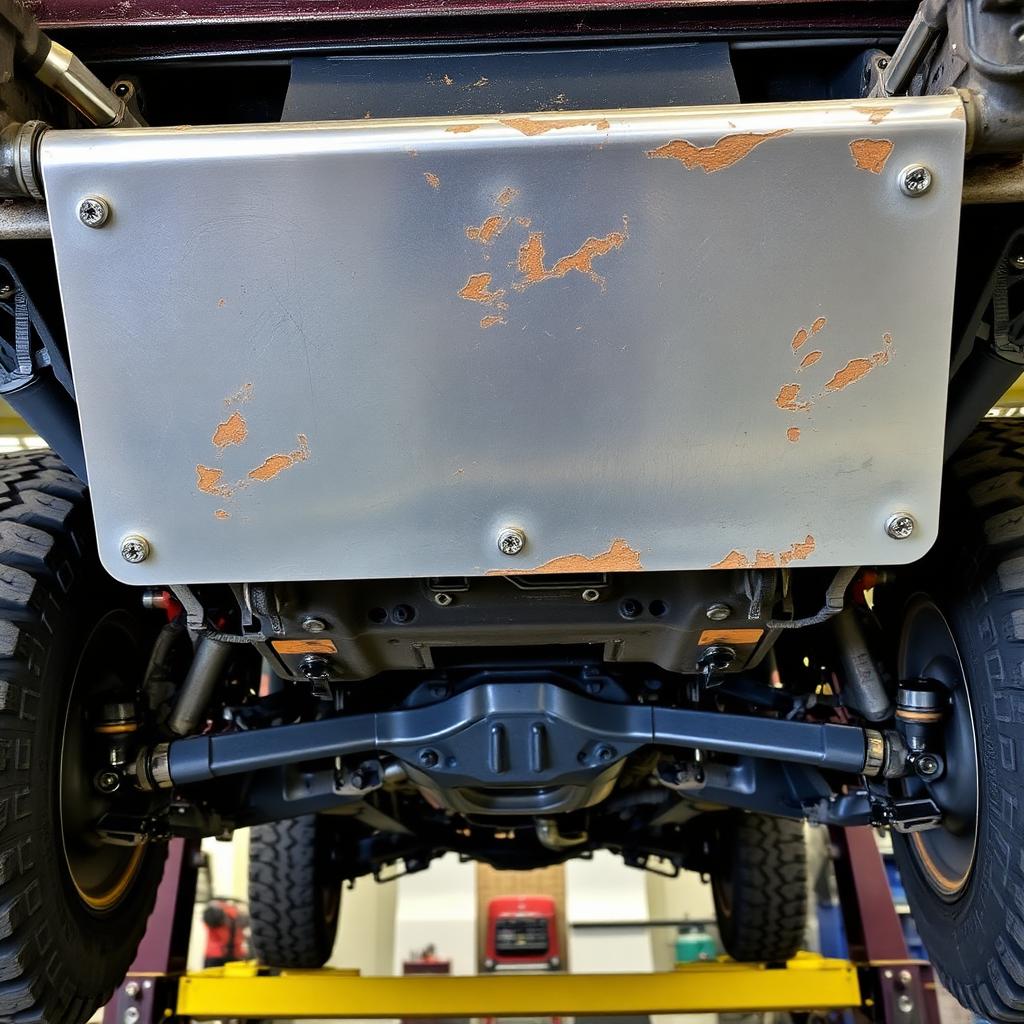
Yes, real skid plates absolutely protect your undercarriage. Factory plastic splash guards are cosmetic and offer zero structural protection. A proper 3/16 inch steel or 1/4 inch aluminum plate distributes rock impacts across the frame and lets the vehicle slide over obstacles instead of catching on them.
Priority order for armor: engine oil pan first, transfer case second, fuel tank third.
Why factory splash guards are not skid plates
Automakers use thin stamped aluminum or plastic covers under the engine bay to keep road water and dust off the alternator. Those covers shatter instantly on a tree root or a hidden rock, at which point the obstacle continues up into your cast-aluminum oil pan.
Lose oil pressure at trail speed and you can lock up an engine in under a minute. That is the failure mode a real skid plate is designed to prevent.
How skid plates actually work
Impact distribution
A quality skid plate mounts to the frame rails or crossmembers, not to the fragile part it protects. When you drop onto a rock, the plate refuses to deflect and spreads the impact load into the boxed frame, which is engineered to absorb it.
Friction reduction (the sled effect)
Good plates are flat, smooth, and use recessed hardware. On a high-centered obstacle the vehicle slides across the top rather than catching a control arm or crossmember and stopping cold.
Steel or aluminum? Both work
| Material | Thickness | Weight profile | Best for |
|---|---|---|---|
| High-strength steel | 3/16 in (4.7 mm) | Heavy (150 to 250 lb for a full kit) | Rock crawling, heavy trail |
| Aerospace aluminum | 1/4 in (6.3 mm) | Roughly 50% lighter than equivalent steel | Overlanding, daily commuting |
Steel slides across granite better and shrugs off point loads. Aluminum saves weight (which helps fuel economy and suspension compliance) and is easier to install without a lift.
Priority order if you are buying on a budget
- Engine oil pan and transmission pan. The most vulnerable, most expensive failure mode.
- Transfer case. Cast aluminum housing that cracks on a sharp center hit.
- Fuel tank. A punctured plastic tank ends the trip and creates a fire hazard.
- Differentials. Only on solid axle rigs where the pumpkin hangs low and forward.
Frequently asked questions
Do I need skid plates for graded fire roads?
For fire roads and easy dirt, factory guards are usually fine. The moment you drop into a rocky wash, a rutted forest trail, or an off-camber climb with hidden rocks, real armor becomes cheap insurance.
Will skid plates trap heat?
Quality plates are designed with venting or drainage slots to shed engine heat. Cheap flat-sheet plates without vents can trap heat around the oil pan. Buy from a vendor that publishes their heat-testing.
Do skid plates hurt approach or departure angle?
Well-designed plates hug the underbody profile and add roughly zero degrees to the front air dam. Extreme full-belly kits can add a small amount of drop, but it is usually less than a factory tow hitch.
Bottom line
Yes, skid plates protect your undercarriage. Move from plastic to 3/16 inch steel or 1/4 inch aluminum and you convert your vehicle's belly from a liability into an active sliding armor system.
Do skid plates really matter on a daily-driver 4x4?
Yes. Even on a daily driver that only sees fire roads and dirt trails, the answer to "do skid plates really protect your undercarriage" is unambiguous. A single hidden rock on a routine forest service road can destroy an oil pan and end a $50,000 truck in one hit. A $400 aluminum skid plate stops that scenario cold.
Install considerations most first-time buyers miss
Skid plates need proper mounting hardware, ideally grade 8 or better bolts with lock washers or Nylock nuts. Vibration from off-road driving will loosen weak hardware over months. I inspect skid plate bolts every oil change and re-torque anything that has walked loose.
I also confirm my chosen skid plate does not block oil pan drain access or transmission cooler airflow. Good vendors design cutouts for the drain plug so you can service the vehicle without removing 30 pounds of armor every time.
Full belly systems versus piecemeal armor
A full belly system covers the engine, transmission, transfer case, and often the fuel tank as one continuous plate. It is expensive ($1,500 to $3,000) but delivers the smoothest sled effect on ledges and the best structural rigidity. Piecemeal armor is cheaper and lets you build over time. Both approaches work if the individual plates are high quality.
Long-term corrosion protection
Steel skid plates will develop surface rust from trail impacts scraping paint off. I apply a coat of Fluid Film or POR-15 to my steel plates every spring and after any major mud run. Aluminum plates do not need corrosion treatment but benefit from an annual cleaning to prevent galvanic corrosion where they contact steel frame brackets.