Quick Answer
Hardy perennial hibiscus needs 6 to 8 hours of full direct sun every day. Tropical hibiscus also loves bright light but performs best with strong morning sun and filtered afternoon shade in regions where summer afternoons exceed 33 degrees Celsius.
Indoor potted hibiscus should sit right next to a bright east or west window to get 4 to 6 hours of high quality light. Without enough sun, all hibiscus varieties produce lush leaves and almost no flowers.
Two Very Different Plants
Garden centers sell two distinct groups of plants labeled hibiscus, and they want different conditions.
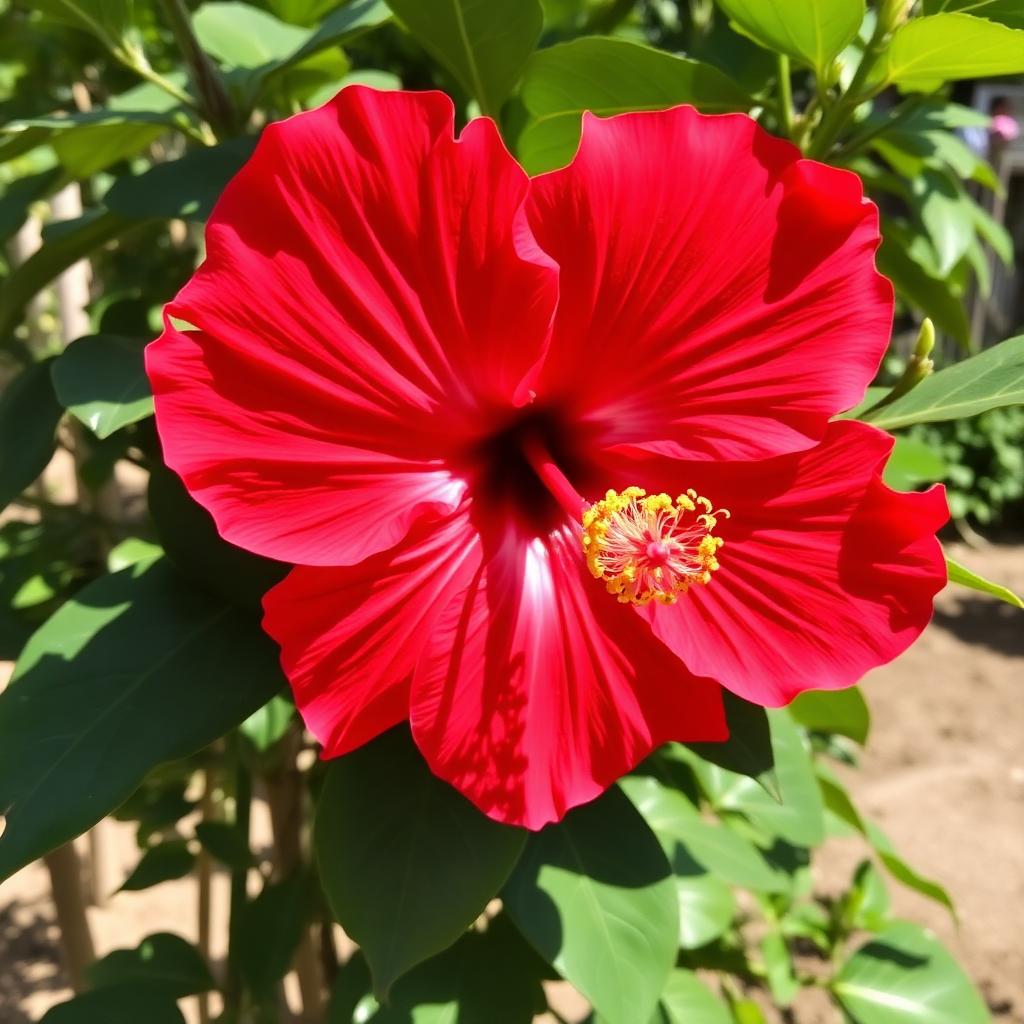
- Hardy perennial hibiscus (Hibiscus moscheutos and relatives) survives freezing winters, dies back to the ground each year, and re emerges in late spring with dinner plate sized flowers in white, pink, or red.
- Tropical hibiscus (Hibiscus rosa sinensis) has glossy dark green leaves and a wide range of vivid flower colors. It is grown as an annual or houseplant outside its native subtropical climate.
Both need plenty of light, but the right amount differs by species and by the heat of your region.
Hardy Hibiscus: Full Sun All Day
Hardy hibiscus is built for open prairie and pond edge habitat where sun pours down from dawn to dusk. To bloom heavily it needs at least 6 hours of direct unfiltered sun, and 8 or more is better.
Plant it in an open south facing bed away from trees and fences that might shade it later in the day. Leaves stay deep green and stems stay sturdy under heavy bloom load.
In too much shade the plant grows tall and floppy with dark foliage but produces few or no flowers. The stems may snap during summer storms.
Tropical Hibiscus: Bright but Heat Sensitive
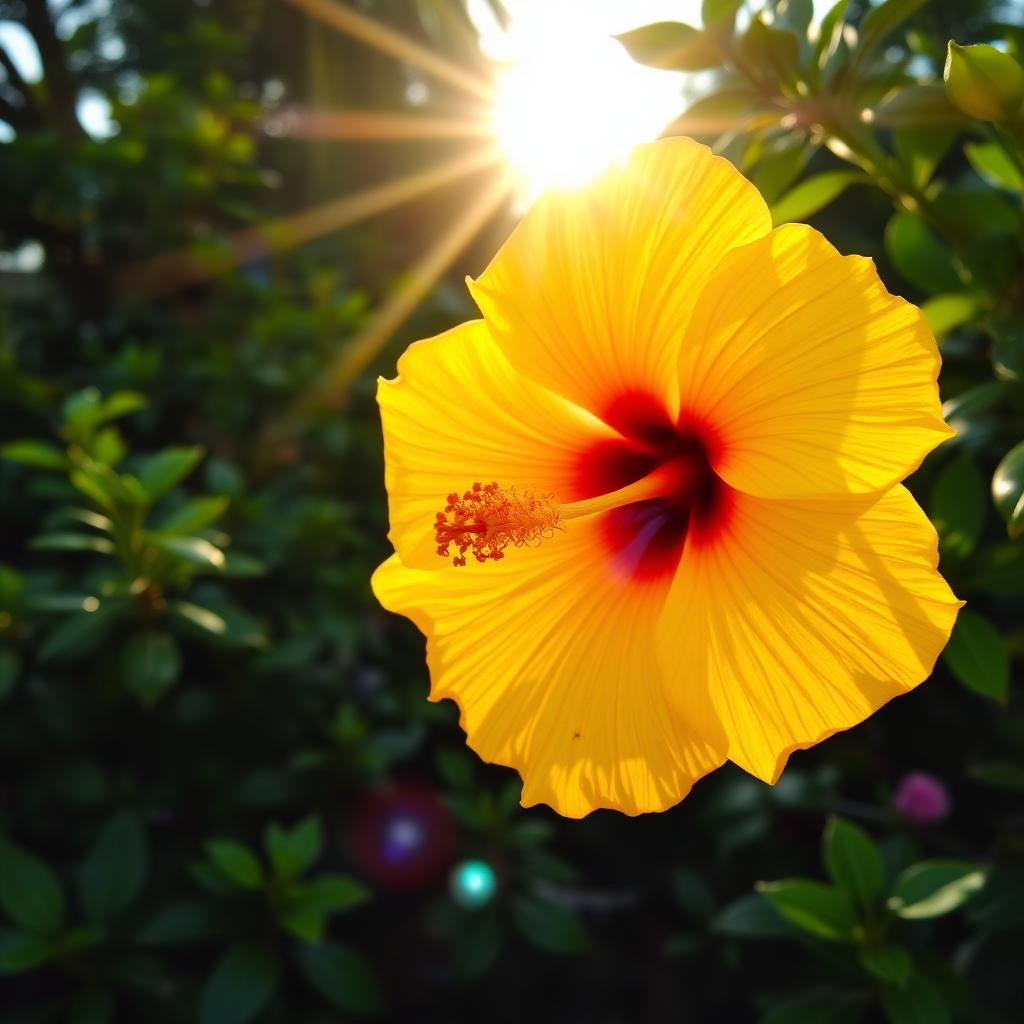
Tropical hibiscus needs about 6 hours of bright light per day to bloom well. The catch is heat tolerance. In hot dry climates, blazing afternoon sun above 33 degrees Celsius scorches leaves and triggers bud drop, where the plant sheds unopened buds to conserve water.
The fix is simple. Place tropical hibiscus where it gets full morning sun until midday and dappled or filtered shade from a tree, pergola, or shade cloth in the afternoon. In milder coastal climates, full sun all day works fine.
Indoor Hibiscus
If you grow tropical hibiscus as a houseplant or move it indoors for winter, choose the brightest window in the house. An east or west window with 4 to 6 hours of direct sun is ideal. A south window can work in winter when sun angles are low.
Supplement with a full spectrum grow light during short winter days if leaves start dropping. Rotate the pot weekly so growth stays even and avoid cold drafts from frosty glass.
Signs Your Hibiscus Is Stressed by Light
- Too little light: Tall leggy stems, dark green leaves, and zero flower buds.
- Too much light or heat: White or silvery scorched patches on leaves, faded flower colors, and buds dropping before they open.
- Sudden shock: Wholesale yellowing and leaf drop after a move from indoors to a hot patio. Acclimate the plant over a week.
Watering Pairs With Light
The hotter and sunnier the spot, the faster the soil dries out. In full sun, a potted tropical hibiscus may need water daily during summer. In shade, twice a week is often enough. Stick a finger an inch into the soil and water when it feels dry.
Hardy hibiscus in the ground appreciates a deep soak twice a week during bloom season, more often in sandy soil.
Feeding for Bloom
Big flowers need fuel. Feed hibiscus with a high potassium fertilizer or a bloom booster every two to four weeks during the growing season. Skip high nitrogen lawn fertilizer because it pushes leafy growth at the expense of flowers.
Bottom Line
Hardy hibiscus wants every bit of sun you can give it. Tropical hibiscus wants strong morning sun with a heat break in the afternoon. Match the light to the type and you will be rewarded with months of those huge dramatic flowers that make hibiscus a garden showstopper.