Quick Answer
Yes, most flooring companies handle baseboards. Pulling and reinstalling your existing baseboards is usually included or runs 1 to 2 USD per linear foot. Installing new baseboards (supply and fit) typically costs 2 to 6 USD per linear foot in 2026, depending on profile, material (MDF vs solid wood), and how many corners.
Painting the new baseboards is often extra. Many fitters either skip paint entirely or charge 1 to 2 USD per linear foot to brush a single coat of premixed white on after installation.
What Most Flooring Companies Will Do
- Pull existing baseboards before the floor install (1 to 2 USD per linear foot).
- Reinstall them after the floor is down, with new finish nails and putty in the holes.
- Install quarter round or shoe moulding to cover the expansion gap.
- Install new MDF baseboards in standard 5.25 inch profile.
- Coordinate paint touch-up if you have leftover wall paint.
What They Often Will Not Do
- Custom millwork. Bespoke profiles need a carpenter.
- Full repaint. Most charge a single coat only.
- Stain matching. Stained baseboards are a finish carpentry job.
- Wall repair. If pulling baseboards damages the drywall, you pay the repair separately.
Why You Should Pull Them
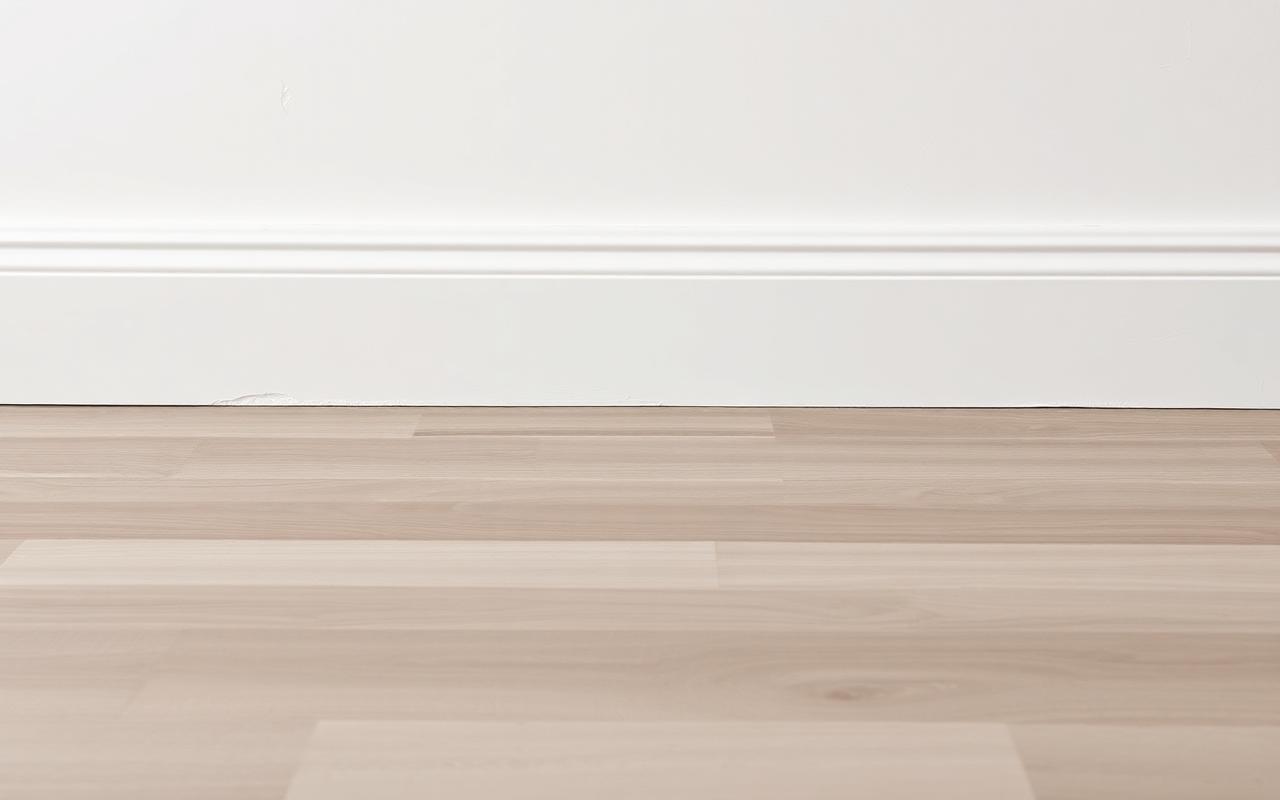
Floor planks fit cleanly under removed baseboards instead of being scribed up against them. The expansion gap stays hidden. The wall looks crisp because the baseboard sits on top of the new floor, not over a visible saw kerf. And the floor edge stays straight even when the wall is bowed.
Frequently Asked Questions
Does the answer change for tenants vs owners?
Yes. Tenants almost never see the same financing, removal, or warranty terms an owner gets. Most retailers will only sell to whoever is on title or has written landlord permission.
Is the price quoted in pounds the same in dollars?
No. UK and US flooring markets price differently: the UK quotes per square metre with VAT, the US quotes per square foot pre-tax. Multiply UK per metre by roughly 0.093 to compare per square foot.
Will the answer change in five years?
Probably. Tax thresholds, retailer line-ups, and warranty terms shift every year. Always confirm with the source before signing a contract.
Does the same apply for commercial buildings?
Mostly no. Commercial flooring carries different fire ratings, slip ratings, and depreciation treatment than residential. Anything you read here assumes a typical owner-occupied home unless stated otherwise.
Pro Tips
- Get the quote in writing. Verbal estimates from any retailer or contractor are worth nothing when disputes happen.
- Keep your receipts and lot numbers for at least the length of the warranty. Most claims are denied because the buyer cannot prove what was bought.
- Read the financing small print. Most "interest free" offers carry deferred interest, which means full retroactive interest if you miss the payoff date by one day.
- Ask about disposal fees up front. Removal of the old floor can add 1 to 3 dollars per square foot if not bundled.
Bottom Line
The right answer here depends on your home, your budget, and your local market. Use the numbers as a starting point, get at least two written quotes, and never sign on a contractor's clipboard at the door without 24 hours to read the contract.
Should You Install Baseboards Before or After the Floor?
Always after. The flooring goes down first (with a 1/4 to 3/8 inch expansion gap to the wall), then the baseboard sits on top of the new floor, covering the gap. Trying to install the floor under existing baseboards forces the fitter to scribe every plank to the wall, which is slow and looks worse.
Choosing a Baseboard Profile
5.25 inch MDF in a colonial or modern flat profile is the 2026 default. Tall baseboards (7 to 9 inch) read upscale and hide more drywall scuffs. Solid pine is paintable and cheap but cups in humid rooms. Polystyrene baseboards are waterproof for bathrooms.
How to Compare Quotes Without Getting Burned
Get at least three written quotes broken out line by line: material per square foot, labour per square foot, removal of old floor, subfloor prep, baseboard handling, toilet pull, disposal fees, and warranty terms. A "total job" number from a single contractor tells you nothing about where the money is going, and you cannot compare it to anyone else.
Walk every quote against the others using the same measurements. Use the contractor's own square footage, not a guess, because room squareness varies. If one contractor's square footage is 15 percent higher than the others, ask why before signing.
Questions Most Homeowners Forget to Ask
Who is on the crew?
The salesperson rarely lays the floor. Ask for the lead installer's name and years of experience.
Is the install warranty written and transferable?
Most chain installers give a one-year labour warranty; specialist independents often give five.
What happens if my baseboards crack during pull?
Get the replacement policy in the contract, not in conversation.
How is moisture in the subfloor tested?
Concrete should be tested with a calcium chloride or relative humidity probe, not eyeballed.
What is the lead time on the planks I picked?
Special-order colours often run 4 to 8 weeks.