Quick Answer
Yes, doors provide insulation. Exterior fiberglass and steel doors with foam cores rate R-5 to R-7 (about 4 times better than a single-pane window). Solid wood doors rate R-2 to R-3. Hollow-core interior doors barely insulate at all.
How well a door actually insulates depends as much on the weather seal, threshold gasket, and door sweep as on the door material itself. A well-sealed cheap door beats a poorly sealed expensive door.
R-value primer
R-value measures resistance to heat flow. Higher numbers are better. A standard wall typically rates R-13 to R-21. A single-pane window is around R-1. Double-pane windows are R-2 to R-4. So even a mid-range insulated door at R-5 outperforms most windows by a wide margin.
Material comparison
Fiberglass door with foam core: R-5 to R-8. Steel door with foam core: R-5 to R-7. Solid wood door (1-3/4 inch): R-2 to R-3. Hollow-core interior door: R-1 to R-2. The foam core inside steel and fiberglass doors is what does most of the insulating work.
Why seals matter as much as the door
A door that has gaps around the perimeter leaks heat regardless of its R-value. A 1/8-inch gap around a standard door equals about the same heat loss as a 1 square foot hole in your wall. Weatherstripping, threshold gaskets, and door sweeps eliminate most of those gaps.
Air sealing 101
Test for air leaks by closing the door on a piece of paper and trying to pull it out. If it slides freely, the seal is bad in that spot. Compression-style weatherstripping should leave a faint indentation along the contact line; if it does not, replace it.
Glass inserts and their impact
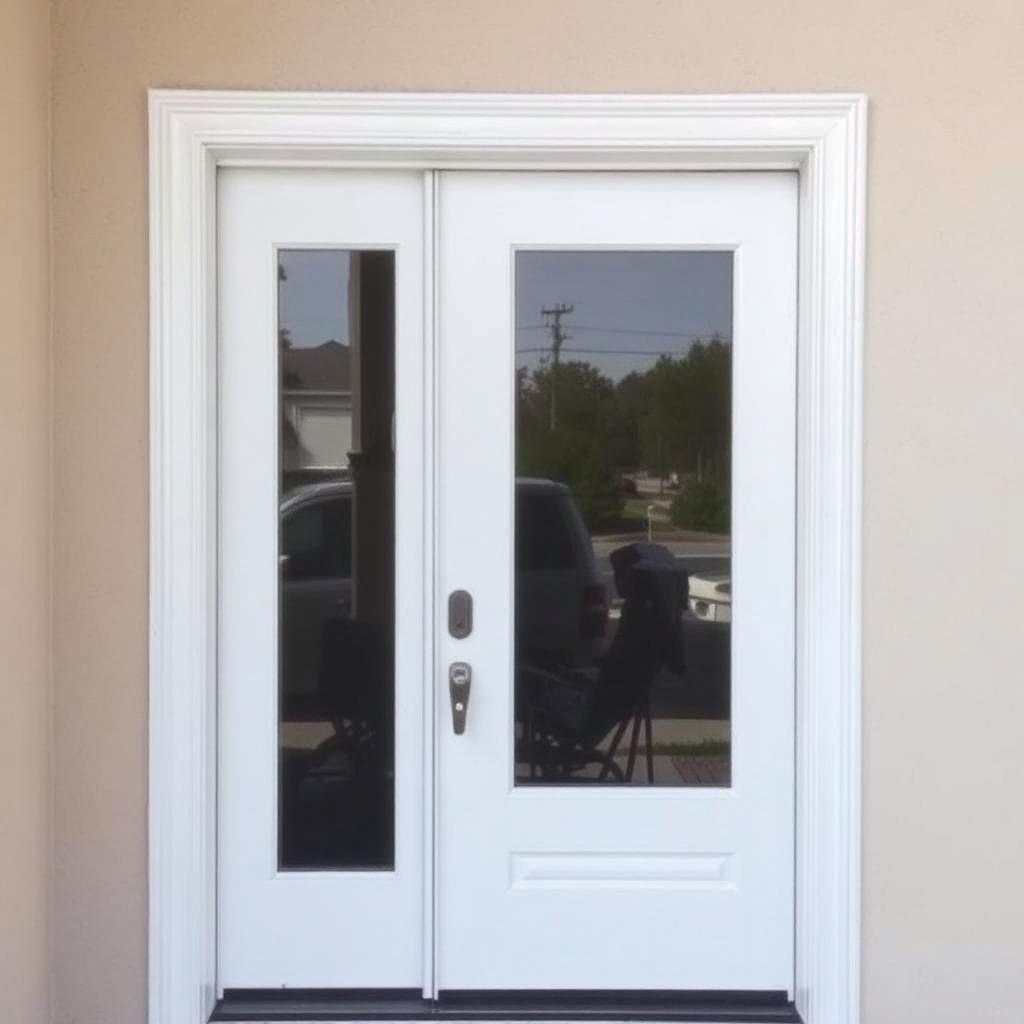
Many entry doors have decorative glass panels. Each panel reduces overall door R-value. A door with full glass insert may drop from R-7 to R-3 overall. Choose low-E, gas-filled double-pane glass inserts to minimize the penalty.
Interior doors and insulation
Interior doors rarely provide meaningful thermal insulation since both sides of the wall are conditioned space. Their value is sound insulation, privacy, and air flow control rather than heat retention.
Energy Star ratings
The US Energy Star program certifies exterior doors meeting specific U-factor and SHGC thresholds. Choosing an Energy Star door typically saves $40 to $100 per year on heating and cooling versus a non-certified door in the same climate zone.
Cost vs payback
A high-performance fiberglass entry door costs $500 to $1,500 installed. Compared to a basic wood door, the energy savings alone usually pay back in 8 to 15 years depending on climate. Combined with reduced drafts, better security, and longer life, the payback is faster than the energy math suggests.
Garage doors
Insulated garage doors range from R-6 to R-18. If your garage is attached to a heated space, an insulated garage door is one of the highest-leverage upgrades you can make for whole-house comfort.
What to upgrade first
If your front door is older than 20 years, install weather-stripping and a door sweep first ($30 to $50, 30 minutes). If it is older than 30 years, consider a full replacement with a fiberglass or insulated steel unit. The upgrade pays for itself within a decade in most climates.
Yes, doors provide insulation: modern exterior doors meaningfully reduce energy loss, especially when the seals and threshold are in good condition.
U-factor vs R-value
Window and door industry often uses U-factor (lower is better) instead of R-value. A door with U-factor 0.20 equals roughly R-5. Energy Star certified doors typically meet U-factor thresholds between 0.17 and 0.30 depending on climate zone.
Threshold and door sweep details
An adjustable threshold can be raised or lowered to meet the door sweep tightly. Replace torn or worn door sweeps annually in cold climates. A high-quality automatic drop seal that lowers when the door closes can almost eliminate bottom-edge air leaks.
Door insulation upgrades for existing homes
Even without replacing the door, you can add weather-stripping ($15), a door sweep ($30), a storm door ($200 to $400), and door curtains ($50 to $150 fabric). Combined, these upgrades can cut a leaky old door's losses by half without buying a new door.
Climate zone matters
In a Florida or Southern California climate, door insulation barely affects energy bills. In a Minnesota or Maine winter, every R-point counts. Match your door investment to your climate; do not overpay for R-8 fiberglass in mild zones.
When to upgrade vs repair
Repair if: door is structurally sound, seals are the problem, hardware works. Upgrade if: door is rotted, frame is warped, hinges are pulling out, or original construction predates modern insulation standards (pre-1990 typically).
Storm doors as insulation boosters
A quality storm door adds an air gap, blocks wind, and shields the primary door from UV and weather. Modern storm doors with low-E glass can add R-2 to R-3 to your effective door assembly. They typically cost $200 to $500 plus installation.
Bottom line
A modern exterior door with good seals can match the insulation of a wall cavity. Spend on the door if your climate is harsh; spend on the seals always.