Quick Answer
Yes, doors can be painted. Wood and MDF doors paint easily with standard latex enamel. Fiberglass and steel doors need a bonding primer first. Even some PVC and vinyl doors can be painted with the right adhesion promoter, though results are less durable.
The job takes a weekend: remove the door, clean and sand it, prime if needed, apply 2 coats of paint, and rehang. Expect $40 to $80 in materials per door and 3 to 6 hours of total work.
Step 1: remove the door
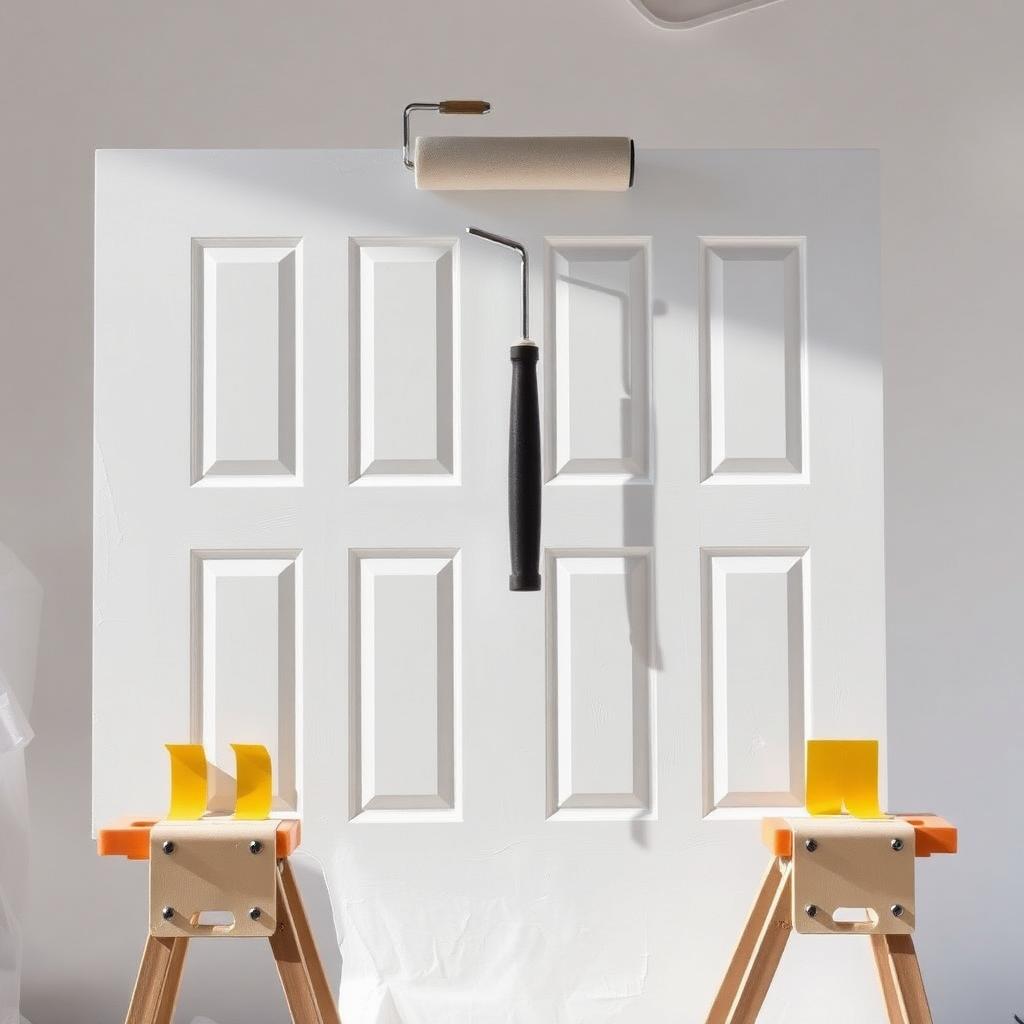
Tap out the hinge pins from the top using a nail and a hammer. Lift the door off and lay it flat on sawhorses. Painting flat eliminates drips and lets you reach the top and bottom edges (critical for moisture sealing on exterior doors).
Step 2: remove or mask hardware
Unscrew knobs, latches, and the strike plate. Cover hinges with painter's tape if you want to keep them or unscrew them entirely. Save all hardware in a labeled bag so you can find it during reinstallation.
Step 3: clean
Wipe the door with a TSP (trisodium phosphate) solution or a degreasing cleaner. Front doors especially accumulate grime that paint will not stick to. Rinse with clean water and let dry fully before sanding.
Step 4: sand
Use 220-grit sandpaper or a fine sanding sponge over the entire door. The goal is to scuff the surface so primer and paint can grip. For glossy or previously polyurethaned doors, use 180-grit first then 220-grit. Wipe off all dust with a tack cloth.
Step 5: prime if needed
Use a bonding primer for fiberglass, steel, PVC, or any door with a slick or glossy finish. Use a stain-blocking primer for raw wood. Bare MDF needs a sealing primer to prevent the face from drinking up paint unevenly. Skip primer only if you are repainting a previously painted wood door in the same color family.
Step 6: paint
Use a high-quality latex enamel (Behr Marquee, Sherwin-Williams Emerald, or Benjamin Moore Advance are common choices). Apply with a 4-inch foam roller for flat surfaces and a 2-inch angled brush for panels and moldings. Two thin coats look better than one thick coat. Let each coat dry 4 to 6 hours.
Step 7: dry and reinstall
Wait at least 24 hours before rehanging so the paint can cure enough to resist scratches. Reinstall hardware, slide hinge pins back in, and check that the door closes properly. Avoid leaning anything against the door for a full week while the paint reaches full hardness.
Color choice tips
Front doors: bold accent colors (navy, red, forest green, black) work well and are the cheapest way to upgrade curb appeal. Interior doors: white or trim-color matches keep the room calm; bold colors add drama in modern interiors.
Special cases
Fiberglass doors with simulated wood grain are designed to be stained, not painted. They can be painted but you lose the wood-grain effect. Steel doors prone to dents should be repainted after any dent repair to prevent rust. Vinyl exterior doors should be painted only with a paint specifically rated for vinyl (Sherwin-Williams VinylSafe line).
Common mistakes
Skipping the sanding step (paint peels in 6 to 12 months). Painting the door in place vertically (drips and you cannot reach the top/bottom). Using cheap brushes that shed bristles. Putting the door back on hinges before paint is fully cured (scratches that show forever).
Doors can be painted with confidence using basic tools and a free weekend. The prep work is where most failures come from; rush it and the paint fails fast.
Best paint for doors
For interior doors, a waterborne alkyd enamel (Benjamin Moore Advance, Sherwin-Williams Emerald Urethane Trim Enamel) flows like oil-based paint with low VOCs. For exterior doors, a 100 percent acrylic exterior enamel with UV stabilizers resists fade and chalking. Avoid generic wall paint on doors; it does not cure hard enough.
How to fix a previously poor paint job
If a door has peeling, drippy, or roller-stippled paint, sand it back to smooth bare areas or a uniform tooth, prime any bare spots, then repaint. Trying to "paint over" a bad job rarely hides the defects.
Drying times that matter
Latex paint feels dry to the touch in 1 to 2 hours but is not actually cured for 14 to 30 days. The dry-but-uncured window is when most damage happens: avoid heavy use, sticky weather-stripping contact, and pressure washing during the first 2 weeks after painting.
Cost breakdown per door
Paint: $25 to $50 per door (a quart covers 2 doors). Primer: $15 to $25. Sandpaper, tape, brushes, rollers: $20 to $40 for a starter kit usable across many doors. Total per door: $40 to $80 in materials, plus 3 to 6 hours of labor.
Hiring a pro vs DIY
Pros charge $150 to $400 per interior door painted, $300 to $800 per exterior door. Pros are usually worth it for front doors, high-visibility doors, or when you have 5+ doors to paint. DIY is fine for closet doors and bedroom doors.
Color trends in 2026
Matte black front doors remain the top accent choice. Deep forest green and warm terracotta are rising fast. White interior doors stay dominant in resale-driven markets. Bold accent colors (cobalt, mustard) work in maximalist interiors where the door is part of a larger color story.
Bottom line
Prep, prime, paint, cure. Skip any step and the paint peels; respect all four and the finish lasts 10 to 20 years.