Quick Answer
For tight wooded trails and technical rock crawling, Polaris is better off-road. Its upright cockpit gives better forward visibility and its shorter wheelbase turns tighter. For wide-open desert whoops, sand dunes, and high-speed racing, Can-Am is better. Its low, long, wide race-car geometry stays planted at triple-digit speeds.
Neither brand is universally superior. Pick based on your terrain.
The two design philosophies
Polaris RZR: upright trail command
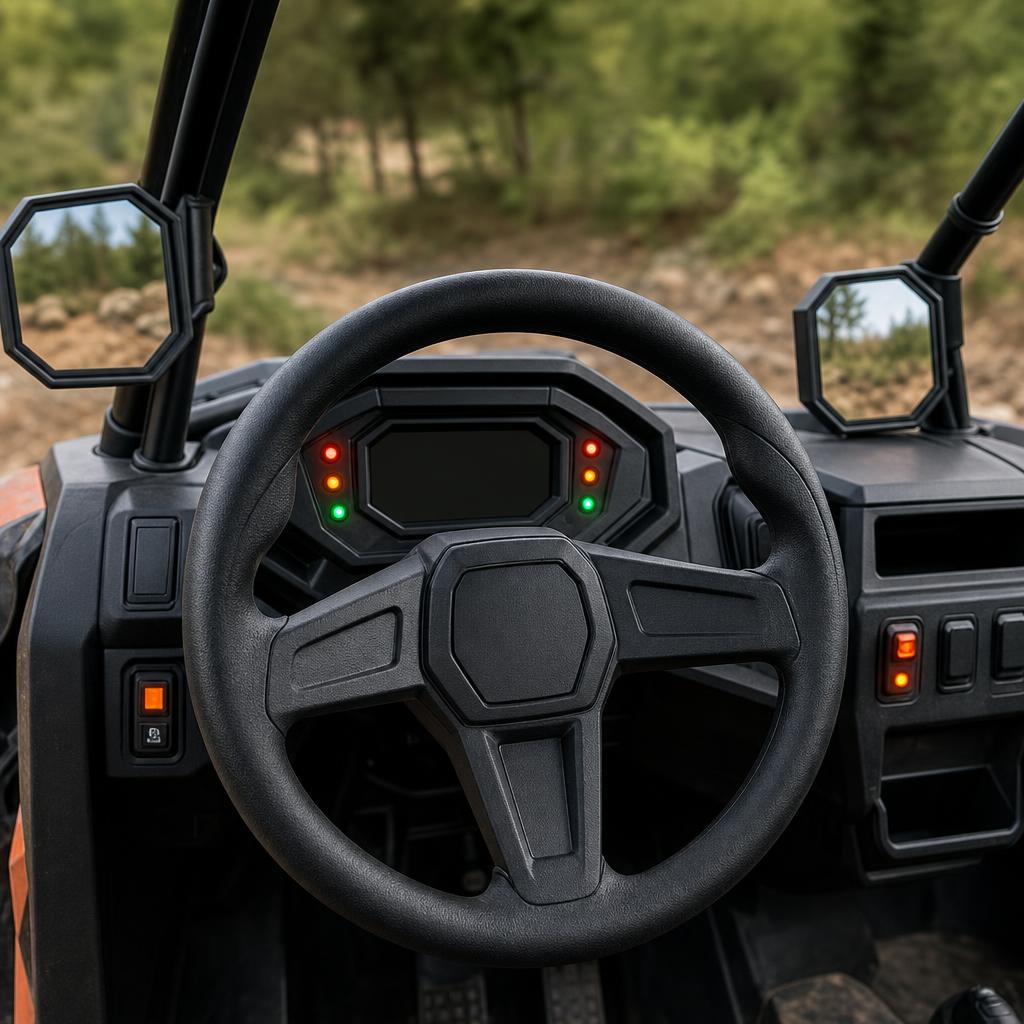
Polaris builds the RZR with a relatively upright seating position and a short, sloping hood. You can see exactly where the front wheels are placed, which matters on rock ledges and tight tree lines. Steering feel is tuned for slow-speed precision and quick line corrections.
Can-Am Maverick: low-slung trophy truck
The Maverick X3 and Maverick R put the driver in a deep reclined bucket behind a long, aggressive hood. It feels like sitting in a Baja trophy truck. The layout dramatically lowers the center of gravity and stretches the wheelbase, which trades slow-speed visibility for stability at speed.
Terrain by terrain
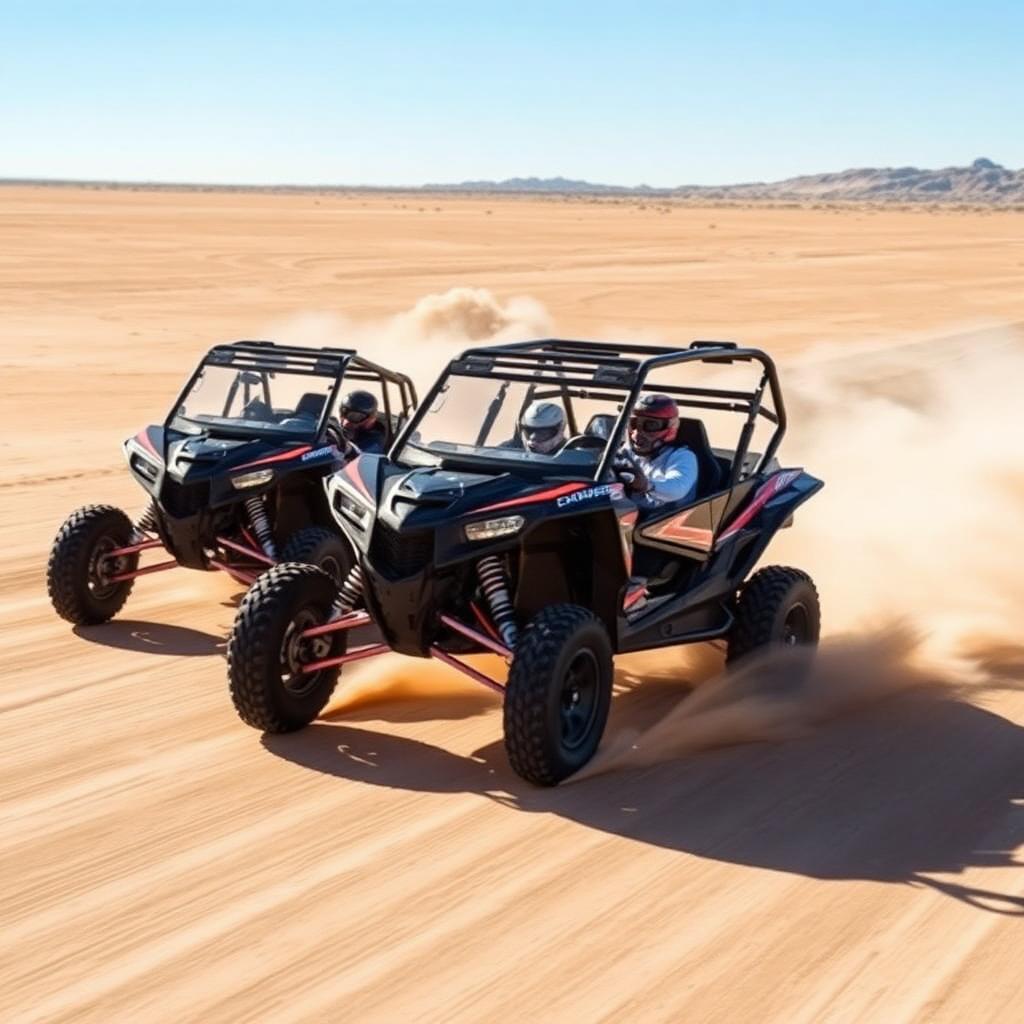
Desert whoops and dunes: Can-Am wins
The Maverick X3 was designed around this exact use case. Long trailing arms, huge Fox Podium shocks, and a wide track keep the chassis flat and predictable across evenly spaced whoops. Sand dunes are the same story: the Maverick R's turbocharged 240 horsepower drivetrain and long wheelbase eat dune faces for breakfast.
Tight forest trails and rock crawling: Polaris wins
On a twisting single-track cut through pines, a Maverick R's long wheelbase becomes a liability. The RZR turns tighter, sees better, and delivers smoother slow-speed throttle response for careful rock work. The Polaris ProHD On-Demand True AWD system also transfers power to the front wheels faster than most Can-Am configurations in low-traction crawls.
General trail riding: it is a wash
On mixed-use forest service roads with occasional fast sections and occasional technical bits, both brands do fine. Preference here comes down to seating comfort, dealer support, and aftermarket ecosystem.
Comparison at a glance
| Metric | Polaris RZR | Can-Am Maverick |
|---|---|---|
| Best terrain | Wooded trails, rock crawling | Desert whoops, sand dunes |
| Cockpit | Upright, high visibility | Reclined, race-car feel |
| Wheelbase | Shorter, tighter turning | Longer, more stable at speed |
| Aftermarket support | Largest in class | Excellent, race-focused |
Frequently asked questions about Can-Am vs Polaris
Which has better reliability?
Both brands publish similar reliability metrics when maintained by the book. Owner surveys usually give Polaris a small edge on drivetrain durability and Can-Am a small edge on suspension component life. Neither brand matches Japanese OEMs like Yamaha for pure hours-per-failure reliability.
Which is faster in a straight line?
The current Can-Am Maverick R (240 hp turbocharged) is the fastest production side-by-side available. Polaris responds with the RZR Pro R (225 hp naturally aspirated V8-like sound). Both blow past 80 mph on hardpack.
What about resale value?
Polaris RZR generally holds resale slightly better in North America thanks to broader dealer coverage and larger used-market demand. Can-Am has closed the gap significantly since 2020 with high-visibility models like the Maverick R.
Suspension geometry differences you feel on the trail
The Polaris RZR uses a double A-arm front suspension with a trailing arm rear, tuned for tight turning and quick line changes. The Can-Am Maverick X3 uses a similar layout up front but pairs it with a much longer trailing arm rear and a wider track, tuned for high-speed stability. These are not marketing choices. You feel them in the first 30 seconds behind the wheel on any real terrain.
Rear axle behavior over whoops
The Maverick's longer trailing arms and wider track keep the rear axle planted at speed across evenly spaced desert whoops. The RZR's shorter geometry can start to skip and pogo on the same terrain past a certain speed, which is why you see Cans-Am dominate desert racing while RZRs dominate rock crawling circuits.
Front differential engagement
Polaris ProHD On-Demand True AWD transfers power to the front wheels almost instantly when the rears slip. Can-Am's Smart-Lok system offers driver-selectable front-diff lock modes, which give more control on technical terrain but require more input. Neither is universally better.
Aftermarket support and long-term ownership
Polaris has the deepest aftermarket ecosystem in the industry. Anything you can imagine (cages, wheels, tires, storage, audio, lighting, engine mods) is available in multiple price tiers. Can-Am has closed the gap significantly since 2020, especially for Maverick X3 and R models, but Polaris still wins on selection depth.
Dealer coverage matters when things break
Both brands have strong North American dealer footprints. If you live somewhere with only one local dealer, that dealer's brand basically decides your platform for you. A great Polaris dealer beats a mediocre Can-Am dealer every time, and vice versa.
Total cost of ownership
Purchase price, insurance, tire replacement, and CVT service costs run within about 10 to 15 percent of each other between the two brands. Choose based on terrain and cockpit preference, not on total cost.
Bottom line
Choose Polaris for tight, technical trails and rock work. Choose Can-Am for high-speed desert and dune riding. Test drive both in your terrain before committing.