
Quick Answer
Choose a scalp massager as a comfort or shampooing accessory, not a proven hair-regrowth treatment. Look for smooth, flexible tips, a handle you can control with wet hands, and a design that you can clean and dry completely. Your fingertips may do the same practical job without another purchase.
I would avoid any tool that scratches, pulls hair, or requires firm pressure. If you have new thinning, patchy loss, scalp pain, or persistent itching, finding the cause with a dermatologist matters more than choosing a massage brush.
What the hair-growth evidence does and does not show
Small studies of scalp massage have prompted interest, but they do not establish that an ordinary consumer brush reliably regrows hair. Study size, methods, and outcome measures limit what can be concluded. A self-reported survey is not equivalent to a controlled treatment trial.
Claims about increasing circulation or stimulating growth genes do not automatically translate into visible, durable regrowth. Even if a mechanism is plausible, that is different from showing that a particular tool improves a specific type of hair loss.
Do not expect a guaranteed improvement after a fixed number of weeks. Before-and-after photographs can differ because of lighting, hairstyle, wetness, or camera angle. A seller's testimonials do not establish that massage caused the change.
A scalp brush also does not diagnose nutritional deficiency, hormonal hair loss, alopecia areata, infection, or scarring conditions. Delaying appropriate evaluation while testing accessories can be more consequential than the cost of the brush itself.
Start with the condition of your scalp
If your scalp feels comfortable and has no broken areas, gentle massage may be pleasant. If it is painful, inflamed, sunburned, crusted, or covered in sores, skip the tool until the cause is addressed. More scrubbing is not a universal treatment for flakes.
Dandruff, eczema, psoriasis, allergic reactions, and fungal infection can all cause symptoms that look similar to a shopper. The American Academy of Dermatology emphasizes identifying why the scalp itches. A brush that removes visible scale does not necessarily treat the condition underneath.
Ask your clinician before massage after a hair transplant or other scalp procedure. Follow the treating team's timing and restrictions. An online routine intended for a healthy scalp is not appropriate postoperative care.
What to look for in the tool
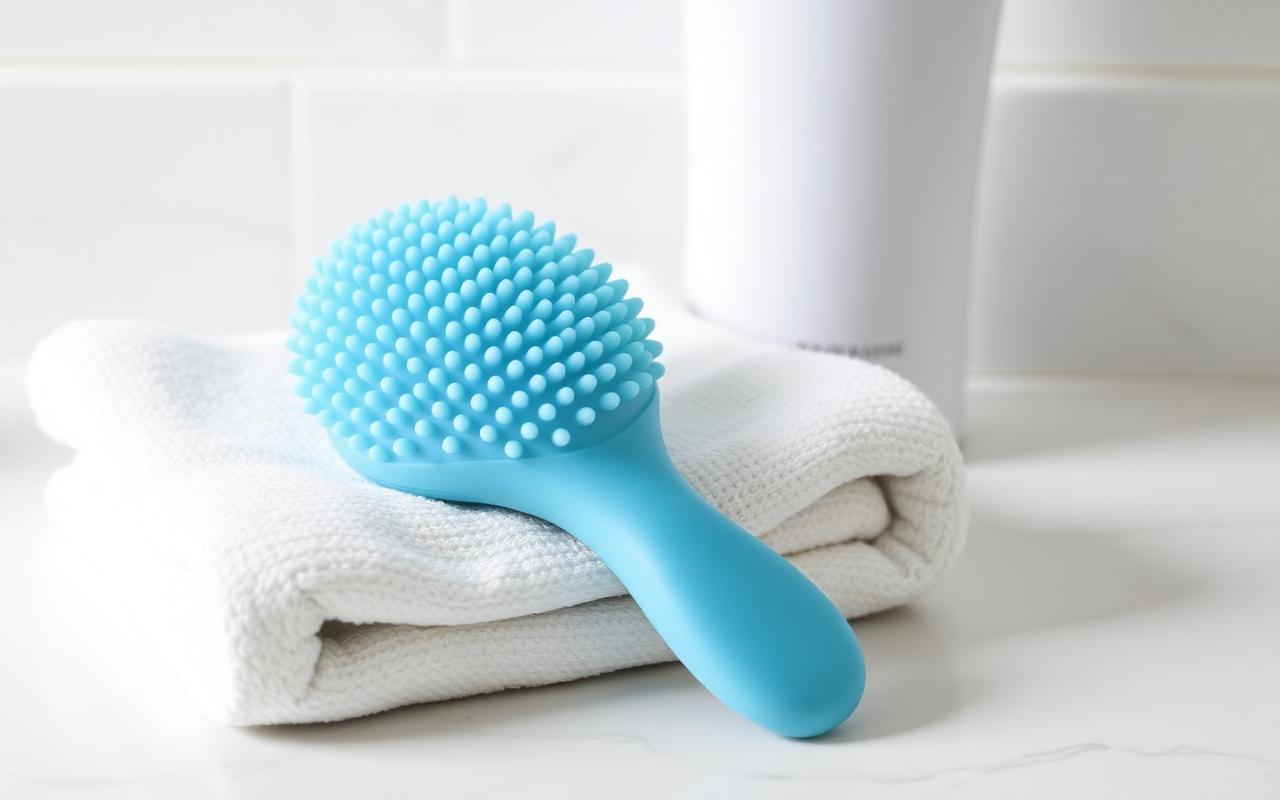
Choose tips that feel smooth and yield under light pressure. Silicone is one possible material, but the word silicone alone does not guarantee a safe design. Hard seams, rough molding, or damaged tips can scratch regardless of the marketing description.
Medical-grade wording is not proof of hair-growth performance. Look for clear material information and care instructions instead of treating that phrase as a certification of effectiveness. There is no established ideal tip count or millimeter length for everyone.
Consider your hair density and texture. The tool should reach the scalp without forcing through tangles or dragging across lengths. A dense brush may be awkward in tightly curled or very thick hair, while a larger head can be difficult to position precisely.
Check the handle with your usual grip. A finger loop, palm grip, or simple handle may help, but it should not require clenching. If limited hand movement makes control difficult, a smaller tool or fingertip massage may be more practical.
Manual versus powered designs
A manual tool is simple to control and has no battery or charging requirements. A vibrating or rotating model may feel pleasant, but extra motion is not evidence of better regrowth. Rotating heads may also tangle hair if the design or technique is unsuitable.
For powered devices, read the actual water-resistance instructions. Safe use on damp hair is not the same as safe submersion or shower use. Keep chargers away from water, and never assume that a sealed-looking handle is waterproof.
Compare ongoing care rather than just purchase features. Can the head be removed without breaking clips? Are replacement parts available? Will water remain trapped inside? A design you can inspect and dry is preferable to one that looks sleek but hides residue.
A gentle way to try massage
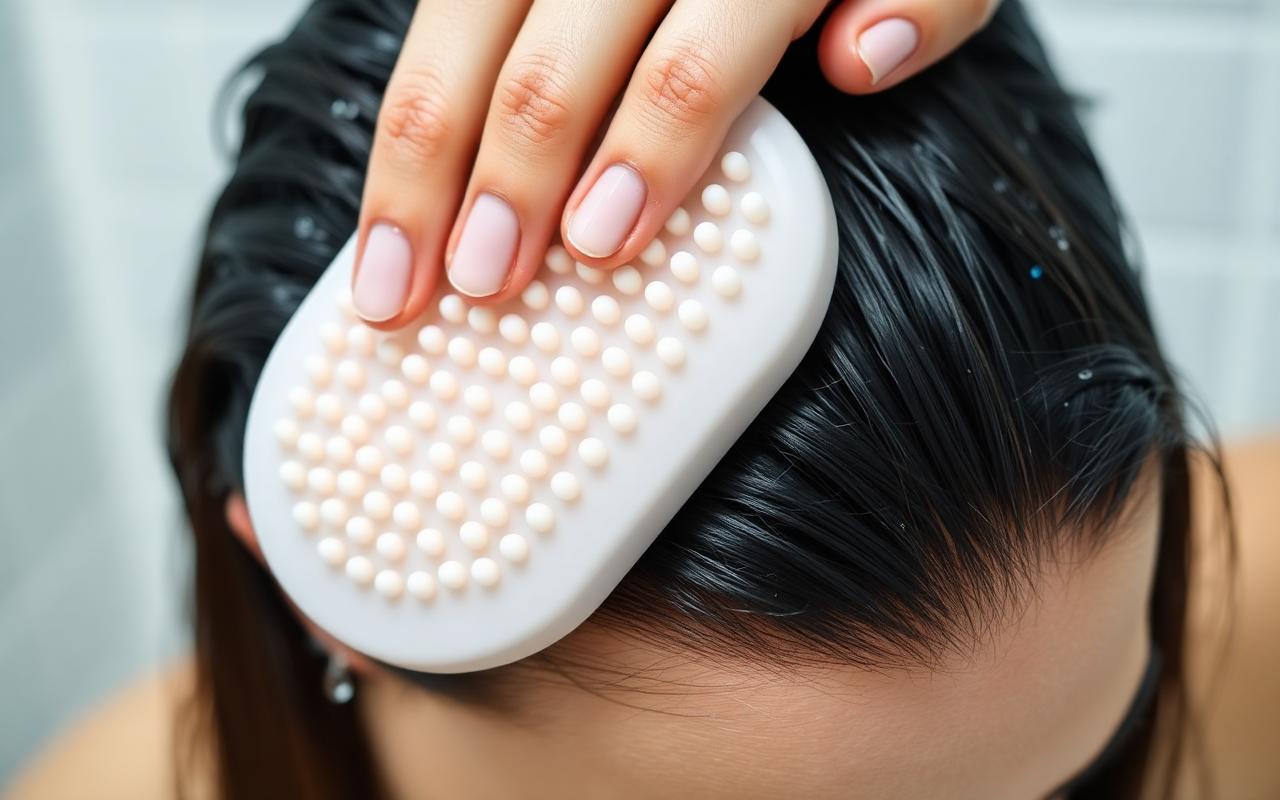
Detangle hair as appropriate before starting. Place the tool lightly against a small scalp area and make minimal movements without dragging through the hair. Lift and reposition rather than sweeping across the entire head in long strokes.
Start with a brief trial and stop while it still feels comfortable. There is no validated daily duration that everyone must complete for regrowth. Redness, tenderness, scratching, or increased tangling means the pressure, tool, or routine is not suitable.
If using it during shampooing, follow the shampoo directions. A medicated shampoo may need a particular contact time; the brush does not replace that instruction. Conditioner usually belongs where its label recommends, not automatically on every scalp.
Do not add essential oils or strong exfoliating products just because they are sold with a massager. They can irritate or trigger allergy. A tool should not be used to increase penetration of medicine unless the prescriber specifically recommends that approach.
Protect fragile hair
Hair that is thinning or breaking benefits from gentle handling. Avoid yanking the brush through wet strands or pressing hard enough to move tangles across the scalp. Massage should not become another source of traction or abrasion.
The AAD recommends gentle shampoo, conditioner, and careful styling for people with hair loss. These habits do not solve every cause, but they help limit avoidable damage while treatment is considered. Avoid self-prescribing hair supplements, since excessive amounts of some nutrients can be harmful.
If you use a prescribed or over-the-counter hair-loss treatment, keep following its directions. Ask a clinician whether and when massage fits your plan. Do not substitute a brush for a treatment simply because the brush is described as natural.
Cleaning and storage
Remove trapped hairs and rinse or wash the tool as its instructions allow after use. Pay attention to the base of each tip and any removable seams. Rinse cleaning residue away and let all parts dry fully before storage.
Do not boil, bleach, or soak the tool unless the manufacturer explicitly permits it. Heat and harsh chemicals can damage adhesives, plastics, and electronics. A monthly boiling routine is not a universal hygiene requirement.
Store it in a ventilated place rather than a closed wet shower caddy. Do not share it, particularly when someone has an unexplained scalp problem. Replace damaged tips or discard a tool that cannot be adequately cleaned.
FAQ
Can a massager make shedding look worse?
Loose hairs may become noticeable during handling, but pulling can also break hair. Stop if massage causes pain, tangling, or a clear increase in damage, and seek advice about persistent shedding.
Is tingling proof that it is working?
No. Tingling is not a validated measure of hair growth. Discomfort should not be treated as a desirable treatment target.
When should I seek medical help?
Arrange assessment for sudden or patchy loss, inflammation, scarring, persistent scalp symptoms, or progressive thinning that concerns you. Earlier diagnosis can improve treatment choices.
Bottom line
Buy a scalp massager only if it makes gentle care more comfortable. Prioritize smooth flexible tips, control, and easy cleaning, not regrowth promises. Use light pressure, protect fragile strands, and investigate hair loss rather than expecting an accessory to diagnose or reverse it.