

Quick Answer
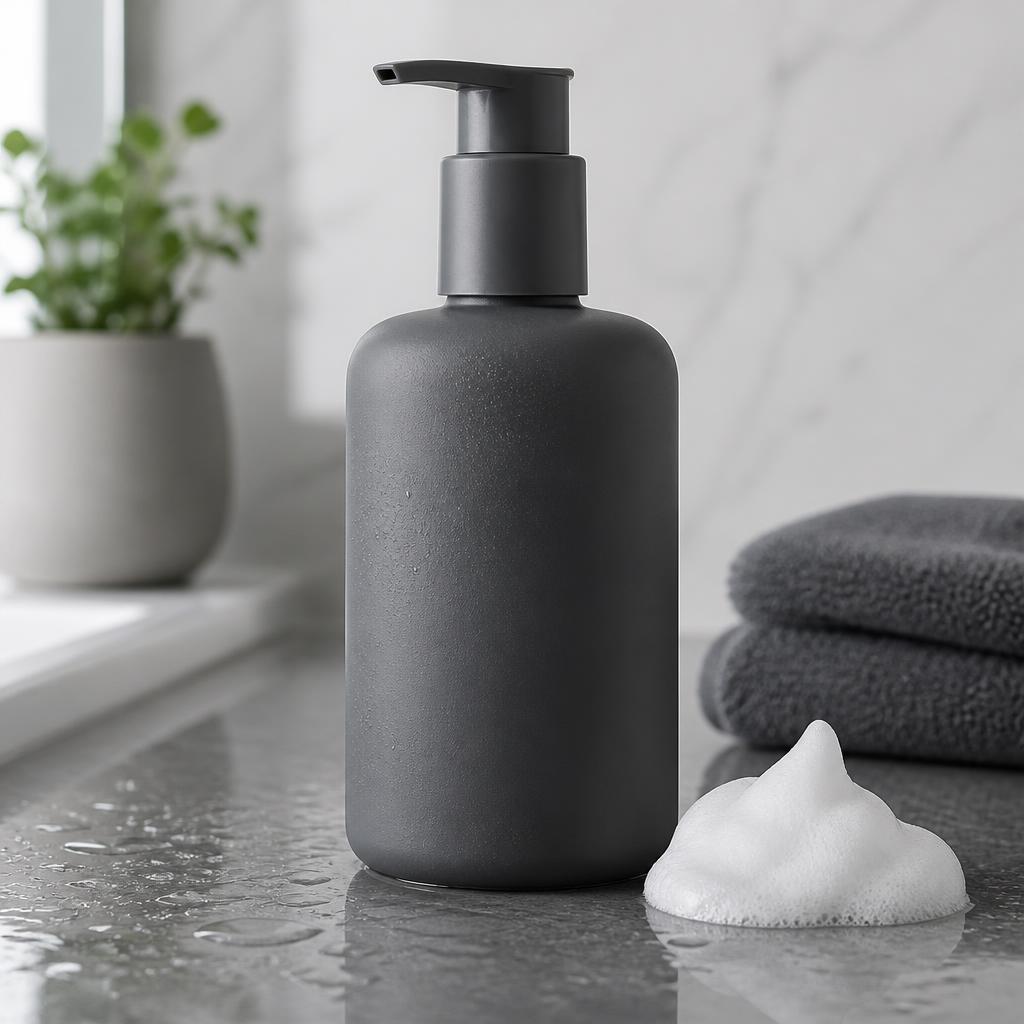
Choose a gentle face wash that removes surface oil without leaving your skin sore, tight, or flaky. A mild foaming cleanser is a reasonable starting point; fragrance-free and noncomedogenic labeling can help narrow the options if you are sensitive or acne-prone.
Wash up to twice daily and after sweating, using lukewarm water and fingertips rather than a scrub. Follow with a suitable moisturizer and daytime sunscreen. Oily skin does not need harsh soap, alcohol, or a mandatory charcoal ingredient.
Identify oiliness without assuming every problem is acne
Shine over the forehead, nose, and chin can be normal oil production. The amount varies with the person, environment, medicines, and other factors. A men's label does not identify a unique cleanser chemistry that everyone with facial hair requires.
Skin can also be oily and irritated at the same time. Flaking, burning, and tightness after washing suggest you should reassess the routine, not necessarily choose a stronger degreasing product. A greasy feel alone does not tell you whether you have acne, rosacea, or another condition.
I would begin with the simplest tolerable cleanser and review the rest of the routine before adding an active. Hair pomades, fragranced aftershave, repeated scrubbing, and several acne products can complicate the picture. Change one item at a time so the result is interpretable.
Read labels for the whole formula
The AAD recommends a gentle foaming wash for oily skin and avoiding harsh or alcohol-based cleansers. The goal is to clean without unnecessary irritation, not to strip away all oil. Foam quantity and a squeaky finish are poor measures of cleansing quality.
Look for clear instructions and an ingredient list from an identifiable manufacturer. Fragrance-free is generally a more useful starting point for sensitivity than unscented, which may still contain masking fragrance. Noncomedogenic indicates a product is intended not to clog pores, though individual reactions remain possible.
A precise pH range on a marketing page does not guarantee that a cleanser will suit you. Surfactants, concentration, added ingredients, exposure, and your skin all matter. Likewise, no single surfactant name can establish the tolerability of every complete formula.

When a salicylic acid cleanser may help
A salicylic acid acne cleanser may be useful if blackheads, clogged pores, and mild acne accompany oiliness. Follow the exact product label, including how often to use it and whether to rinse promptly. Do not infer the concentration from a product name or an old review, because formulas can differ.
Start cautiously within the directions, especially if you already use a retinoid, benzoyl peroxide, an exfoliating toner, or another medicated wash. More active ingredients can mean more irritation rather than faster improvement. A plain cleanser may be the better partner for an effective leave-on acne treatment.
A cleanser has limited contact with skin and is not a substitute for assessment of painful, scarring, or persistent acne. If you develop significant burning, peeling, or redness, stop or reduce the irritating product and seek advice when necessary. Do not push through a rash to reach an arbitrary trial period.
Charcoal, clay, and cooling ingredients
Charcoal or clay can be included in a cleanser, but their presence does not prove superior oil control, acne prevention, or gentleness. A dark lather is a cosmetic feature, not evidence that toxins or deep pore debris are being removed.
Menthol, essential oils, and strong fragrance can create a sensation of freshness without improving cleansing. They may irritate some people. There is no universal safe percentage you can deduce from an ingredient list, and tingling is not a requirement for a product to work.
Creamier textures are not automatically forbidden for oily skin. If a gentle product cleans comfortably and rinses appropriately, its texture alone is not a reason to reject it. Judge the complete routine and your response rather than rigid categories.
Wash without turning cleansing into exfoliation
Wash your hands, wet the face with lukewarm water, and apply the labeled amount. Spread gently with fingertips over the forehead, nose, cheeks, jaw, and accessible beard area. Avoid the eyes unless the cleanser is intended for that use.
There is no universal requirement to massage for a fixed number of seconds. Follow any medication contact directions, but do not leave a regular cleanser sitting like a mask. Brushes, rough washcloths, and abrasive scrubs can add unnecessary friction to already irritated skin.
Rinse thoroughly and pat dry with a clean towel. Warm water does not open pores, and a cold rinse does not close them. Air drying is not known to automatically stimulate excess oil, so do not rub aggressively to prevent a supposed rebound.
Moisturizer and sunscreen still belong
Use a lightweight moisturizer that suits your skin, particularly if acne products make it dry. Oil-free and noncomedogenic products can be convenient choices, but you do not need to eliminate every emollient ingredient. A comfortable barrier is a better objective than a completely matte face all day.
Apply broad-spectrum SPF 30 or higher to exposed skin in the daytime. Choose a texture you can use consistently and reapply as directed. A moisturizer with sunscreen can simplify the routine if used in a sufficient amount and according to its label.
For midday shine, gently blot rather than repeatedly scrubbing or washing. The AAD advises cleansing after sweating as well as the usual daily routine. Fit that around exercise sensibly rather than adding multiple unnecessary washes or treating twice a day as an inflexible rule that forbids post-workout cleansing.
Troubleshooting before you buy another bottle
If skin feels tight immediately after every wash, try a gentler formula, cooler water, and less friction. If it stays itchy or red, review shaving and leave-on products as well. Persistent discomfort warrants medical advice rather than an endless sequence of increasingly strong cleansers.
If acne continues despite tolerable cleansing, that does not mean you failed to remove enough oil. Acne often needs targeted treatment. Seek care for nodules, scars, widespread breakouts, or major distress rather than relying on an oil-control claim.
Keep the cap and dispensing opening clean, do not dilute the bottle with water, and store as directed. Avoid sharing face brushes or towels. An old product that changes smell, texture, or appearance should be assessed against its storage and expiration instructions, not used up at any cost.
FAQ
Do men need a different cleanser from women?
Not simply because of gender. Choose according to your skin, shaving routine, and tolerance. A shared product type can be appropriate, although personal applicators and hygiene still matter.
Should I stop moisturizing if I look shiny?
Not automatically. Try a lighter suitable texture or adjust the amount according to the label. Dehydrated or irritated skin can still be oily, and a harsh cleansing routine is not a reliable solution.
How long should I test a wash?
Comfort should be acceptable from the start. Acne improvement may need longer and depends on the treatment, but a painful rash is not a reason to keep going for six weeks. Follow medication guidance and ask for help if unsure.
Bottom line
Start gentle, wash without scrubbing, and use moisturizer and sunscreen that fit your skin. Add a medicated cleanser only when it serves a clear need. The best oily-skin wash is a tolerable part of a complete routine, not a charcoal color, exact pH number, or men's brand label.
Sources: Authoritative guidance; Further safety guidance.