
Quick Answer
Choose a body trimmer explicitly approved for the areas you intend to groom, with secure guards, controllable handling, and clear cleaning instructions. For sensitive skin, leaving some length is often more manageable than repeatedly chasing a skin-close finish. No blade material makes a trimmer nick-proof.
I would start with a longer guard and a small, easy-to-see area. Stop if the tool pinches, pulls, gets hot, or irritates skin. Marketing terms such as skin-safe, ceramic, or intimate do not remove the need for caution.
Define the treatment area precisely
Chest, abdomen, outer thighs, underarms, and external pubic-hair areas are not interchangeable. A body groomer may permit some and exclude others. Read the exact model and attachment instructions rather than treating a broad manscaping label as approval for every surface.
Do not use ordinary grooming equipment on mucous membranes. Loose, folded genital skin can be difficult to protect, and some manufacturers prohibit use there. If an area cannot be seen and supported safely, leave it alone or ask a clinician about alternatives.
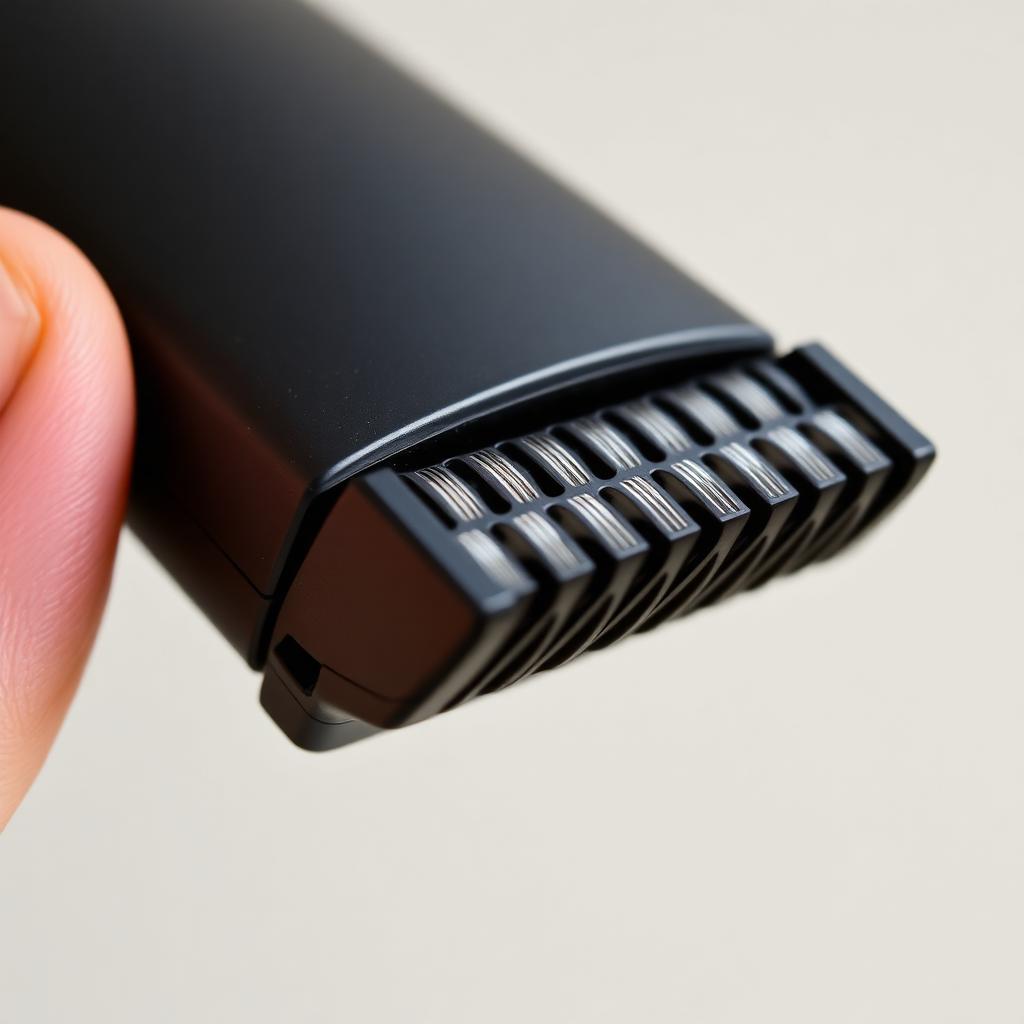
A beard trimmer is not automatically unsafe for every body area, but it should only be used where its manufacturer allows. Conversely, a dedicated body trimmer can still cut. There is no universal tooth spacing that makes it impossible for skin to enter the cutter.
Prioritize guards and control
Check that guards fit securely and are not cracked or distorted. Start longer than your intended result, assess comfort, and shorten gradually only if the instructions permit. There is no medically established guard length that guarantees safety for every person.
Choose a handle you can hold without squeezing hard and controls you will not bump accidentally. A light can improve visibility, but it cannot replace a stable position and a mirror. Avoid twisting into an awkward posture to reach a hidden patch.
Steel and ceramic blades can both be used in grooming tools. Heat depends on the complete design, condition, and session length. Stop if the head becomes uncomfortable rather than trusting a cool-running label.
Wet and dry claims need checking
Some trimmers are approved for shower use; others only have a rinseable head. Follow the model's requirements for hair and skin preparation. A water-resistance rating alone does not answer every question about safe use or charging.
Keep mains-connected charging equipment away from water. Do not operate while charging unless the model explicitly permits corded operation in that setting. Never assume a wet-use device can safely be plugged in beside a bath or shower.
Dry trimming can make clippings easier to see and collect, but it is not a universal medical rule. Choose the method the device supports, and avoid adding oils or creams unless approved because these may affect cutting or grip.
A conservative trimming routine
Clean the area gently, inspect for rashes or broken skin, and skip irritated patches. Do not trim over sores, inflamed follicles, raised lesions, or a changing mole. Avoid trying a new grooming method immediately before prolonged friction or an important event.
Fit the chosen guard with the power off. Work slowly in small sections and use the recommended direction of movement. Do not press the head into folds or pull the tool rapidly through dense hair.
Where the instructions call for supporting the skin, do so carefully without dragging a bare cutting head over stretched sensitive tissue. Do not transfer every razor-shaving technique to a trimmer or every trimmer technique to a razor.
Pause to clear hair as directed. Repeated passes over the same patch can increase irritation even if no visible cut appears. Accepting a little remaining length is safer than treating discomfort as a sign you need more pressure.
Hygiene and aftercare
Switch off and disconnect before cleaning. Remove trapped hair, rinse only approved components, and let them dry fully. Use separate attachments for face and intimate-area grooming when the manufacturer recommends this, and do not share personal cutting tools.
Follow the oiling and replacement instructions for the actual head. A damaged guard, missing tooth, or misaligned cutter needs replacement or service. Adhesive repairs and improvised modifications are not appropriate near sensitive skin.
After grooming, use a simple product you already tolerate if the skin needs moisture. Avoid fragranced sprays, essential oils, and strong exfoliants on irritated areas. If clothing rubs, choose a less restrictive garment while the skin settles.
Troubleshooting bumps and nicks
Bumps after grooming are not all the same. Ingrown hairs, irritation, and infection can look similar, and a trimmer is not a diagnostic tool. Do not dig at hairs or squeeze pustules.
If minor bleeding occurs, stop grooming and apply appropriate first aid with clean materials. Seek advice for persistent bleeding, a deep cut, worsening pain, spreading redness, or signs of infection. Repeated injuries suggest the tool, technique, or area is unsuitable.
Check the kit before each session
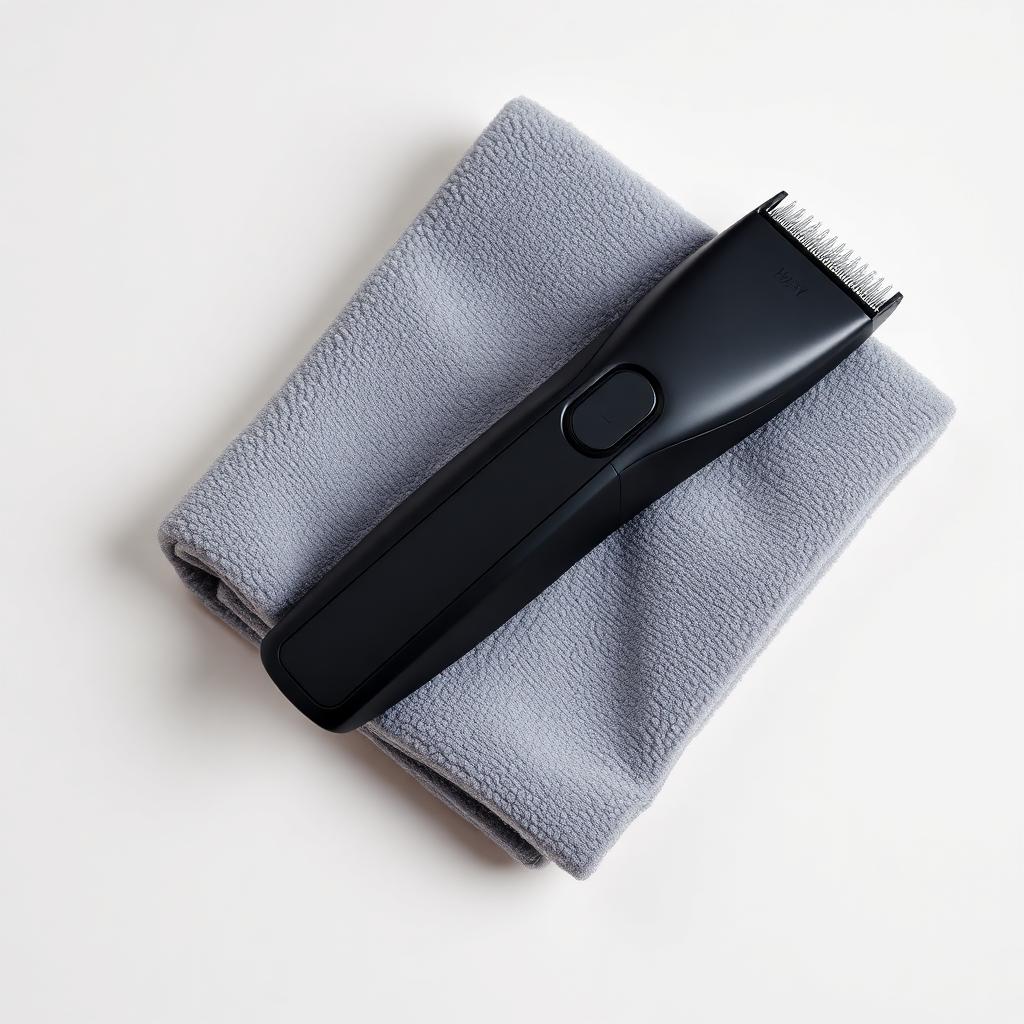
Lay out the intended attachment and confirm its approved use before switching the tool on. Check that the length setting has not moved during storage and that the guard locks into place. Keep a clean towel and a suitable place for the switched-off tool nearby. If the room is poorly lit or you cannot maintain a stable position, postpone the trim instead of improvising around those limitations.
FAQ
Are ceramic blades always better for sensitive skin?
No. Material alone does not establish cutting safety, temperature, or comfort. Secure guards, approved treatment areas, correct maintenance, and light pressure matter more than an isolated material claim.
Should I remove all hair for hygiene?
No. Hair removal is a personal choice, not a requirement for cleanliness. Gentle washing and ordinary skin care can maintain hygiene without close trimming or shaving.
Can a guard prevent every cut?
No. A guard can limit contact but can shift, break, or be used incorrectly. Loose skin and poor visibility remain important risks. Stop rather than trying to make a difficult area perfectly smooth.
Bottom line
Buy for explicit area approval, secure guards, visibility, and comfortable control. Keep some length, follow the model's wet-use and maintenance rules, and stop at the first sign of injury. Sensitive skin does not need an aggressive grooming routine.