Quick Answer
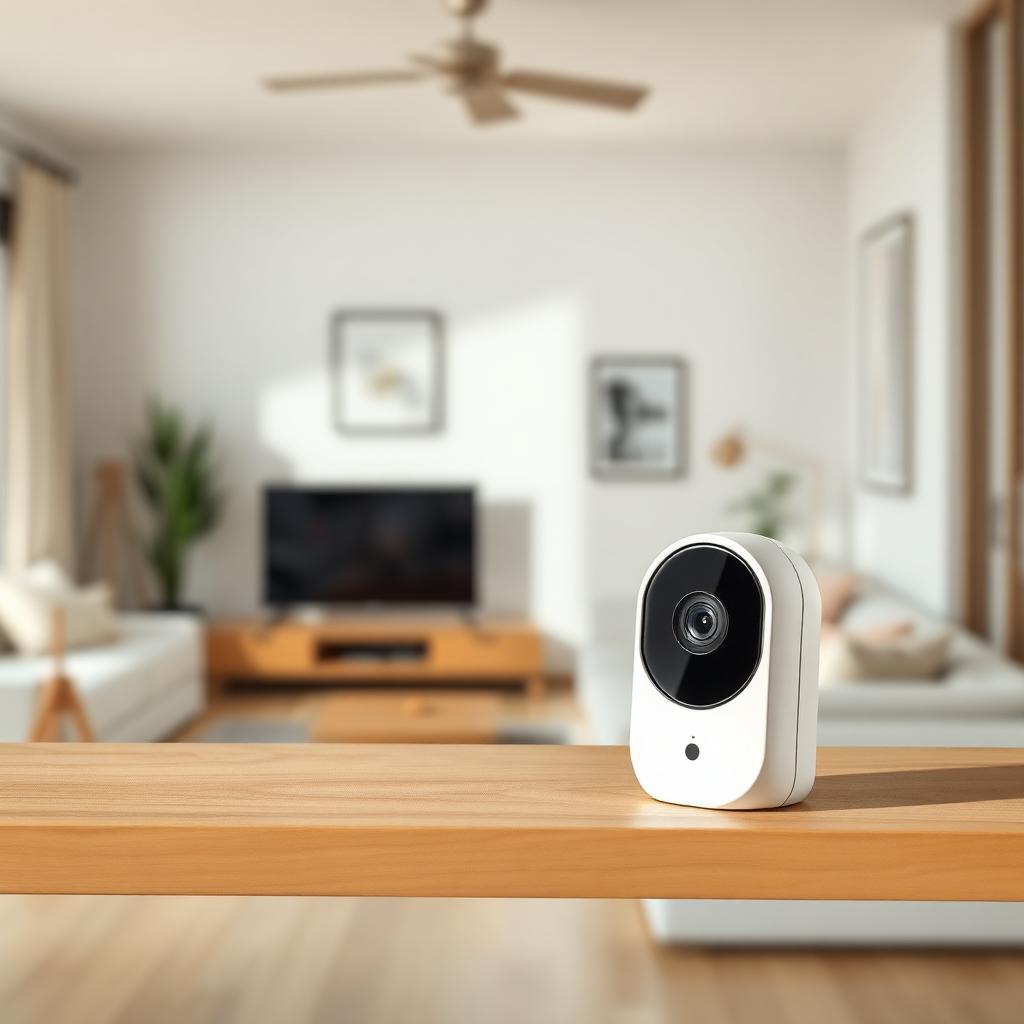
The Eufy Indoor Cam S350 is the best indoor security camera for home in 2026. It packs a dual-lens turret with a 4K wide-angle lens and a 2K telephoto lens for 3x optical zoom, pans a full 360 degrees and tilts 75 degrees for whole-room coverage, records locally to a microSD card up to 128 GB with AES-256 encryption, and does not require a monthly subscription for smart alerts.
For a truly cheap 2K pan-tilt cam with the same no-fee local storage, the Eufy Indoor Cam C220 is the value pick. For deep Google Home integration and a clean design, the Google Nest Cam (Wired, Indoor) is the pick. For an Alexa household that already has a Blink or Ring hub, the Blink Mini 2 stays cheap and simple.
Why indoor cameras finally became worth it
Indoor cameras used to mean either paying a monthly cloud fee or losing all your footage the moment your Wi-Fi router blinked. Two things fixed that. First, on-device AI is now good enough to tell a person from a passing shadow without shipping video off to a server. Second, most decent cameras now record locally to a microSD card or a home NVR, so a subscription is optional. That combination means a $35 to $130 camera can genuinely replace a $30 a month monitored plan for most families.
What actually matters in an indoor camera
Local storage vs cloud
Local microSD storage (Eufy) means your footage never leaves the house. Cloud-only (older Ring and Nest models) means it lives on someone else's server. Both work, but local storage plus end-to-end encryption is the strongest privacy posture and avoids the recurring fee. Some cameras (like the Nest Cam Wired) also cache locally for a short window when the internet drops, which is a nice hybrid.
On-device person and pet detection
Motion alerts are useless if a curtain waving in an AC vent triggers ten notifications an hour. Look for a camera that classifies people, pets, and packages on the camera itself. Eufy, Nest, and Wyze all do this well now. Cheap generic cameras still trigger on wind.
Pan and tilt vs fixed
A pan-tilt camera on a rotating base covers a whole room from one corner. A fixed camera only covers what you point it at. Pan-tilt cams also often include an "Away" mode that physically rotates the lens to face the wall when you are home, which is a nice reassurance for a bedroom or nursery.
Night vision quality
Infrared LEDs give you a monochrome image in total darkness. Some cameras add a "color night vision" mode that uses a bit of ambient light plus a starlight sensor. Color night is fine for a room with any streetlight leak; IR is the safer default in a windowless space.
Best overall: Eufy Indoor Cam S350
The S350 is the first mainstream indoor camera to use two lenses in one head. The wide 4K lens keeps the whole room in frame, and the 2K telephoto snaps in to 3x optical zoom on whatever the AI decides is worth a closer look. It rotates a full 360 degrees, tilts 75 degrees up and down, tracks people and pets automatically, and stores everything on a microSD card up to 128 GB with AES-256 encryption. No monthly plan, no HomeBase required, works with Alexa and Google Home.
Best value: Eufy Indoor Cam C220
Under $45, the C220 is the same pan-and-tilt hardware idea in a smaller body with a single 2K lens. Local microSD storage, no subscription, physical privacy mode that rotates the lens into the housing when you press a button in the app. This is the camera to put in a rental or a college dorm.
Best Google Home pick: Google Nest Cam (Wired, Indoor)
The Nest Cam has the best out-of-the-box AI in the category. Person, package, animal, and vehicle detection are all included without a subscription. It caches up to an hour of events locally when your Wi-Fi drops, then syncs to the cloud when it comes back. If you already run Google Home speakers and displays, the integration is seamless.
Best Alexa pick: Blink Mini 2
Amazon owns Blink and Ring, so if your house is already on Alexa the Mini 2 drops in with one QR code. 1080p, weather-resistant enough for a covered porch, and cheap enough to buy three at a time. Cloud recording needs a subscription, but a Blink Sync Module 2 with a USB drive gives you local storage instead.
The window-glass mistake
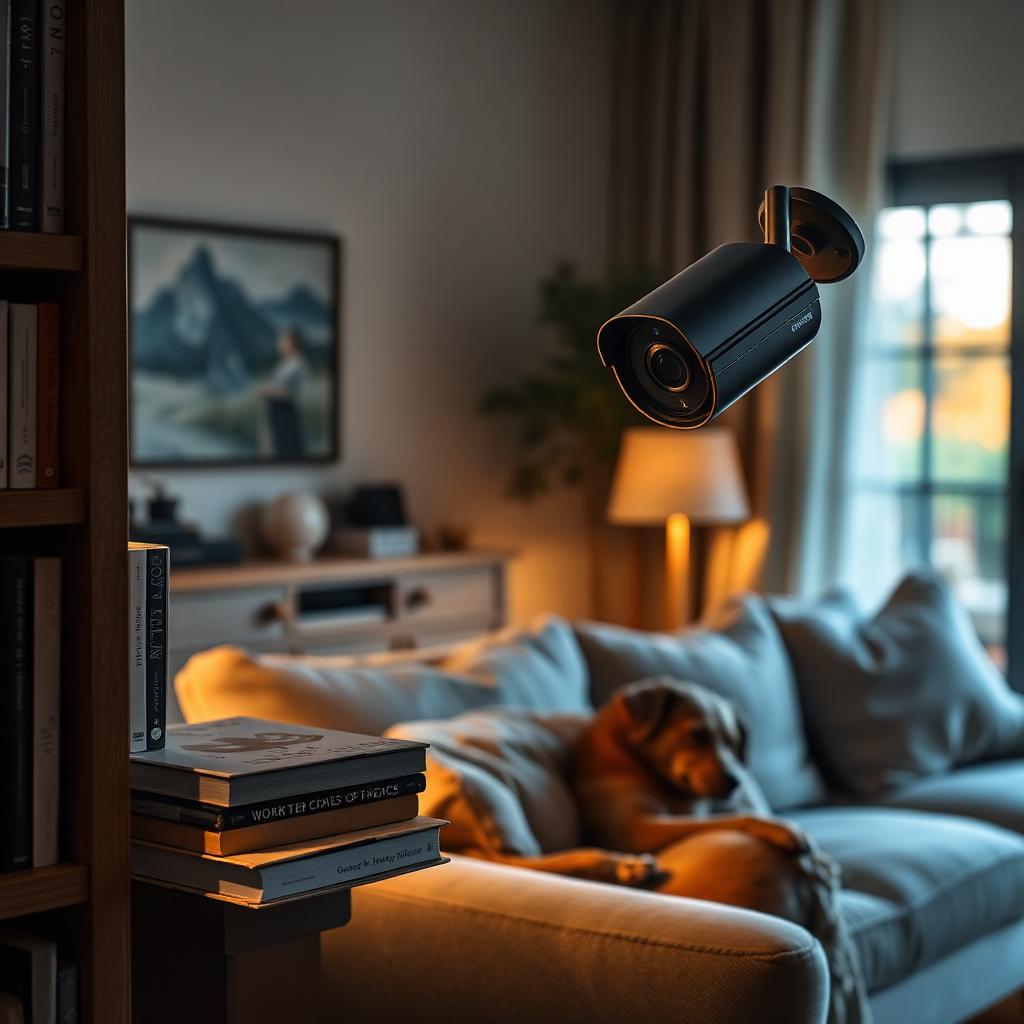
Do not aim an indoor camera through a window pane at night. Infrared LEDs bounce off the glass and blind the sensor with a giant white halo. If you want to watch a driveway, buy an outdoor-rated camera and mount it outside. Indoor cameras belong on high corner shelves that see the whole room, not on a windowsill pointed outward.
Wi-Fi and placement
Every 4K indoor camera is a heavy uploader. If your router is on the other side of the house, run the camera at 2K or add a mesh node in the same room. 5 GHz Wi-Fi gives the smoothest live view, but 2.4 GHz reaches farther through walls. Most current cameras support both bands.
Privacy hygiene
Change the default admin password on setup. Turn on two-factor authentication on the manufacturer account. Cover or physically rotate the lens when you are home if the camera lives in a living space (Eufy has a built-in privacy rotation; on Nest and Blink you unplug or use a schedule). Delete old footage on a set cadence.
Bottom line
The Eufy Indoor Cam S350 is the best indoor security camera for home because it delivers dual-lens 4K + 2K coverage, real 3x optical zoom, motorized 360 degree tracking, and encrypted local storage with no monthly fee. The Eufy C220 covers the budget end with the same privacy story, the Google Nest Cam Wired is the tidiest fit for Google households, and the Blink Mini 2 is the plug-and-play Alexa choice. Whichever you pick, keep it out of windows and turn on two-factor.