
Quick Answer
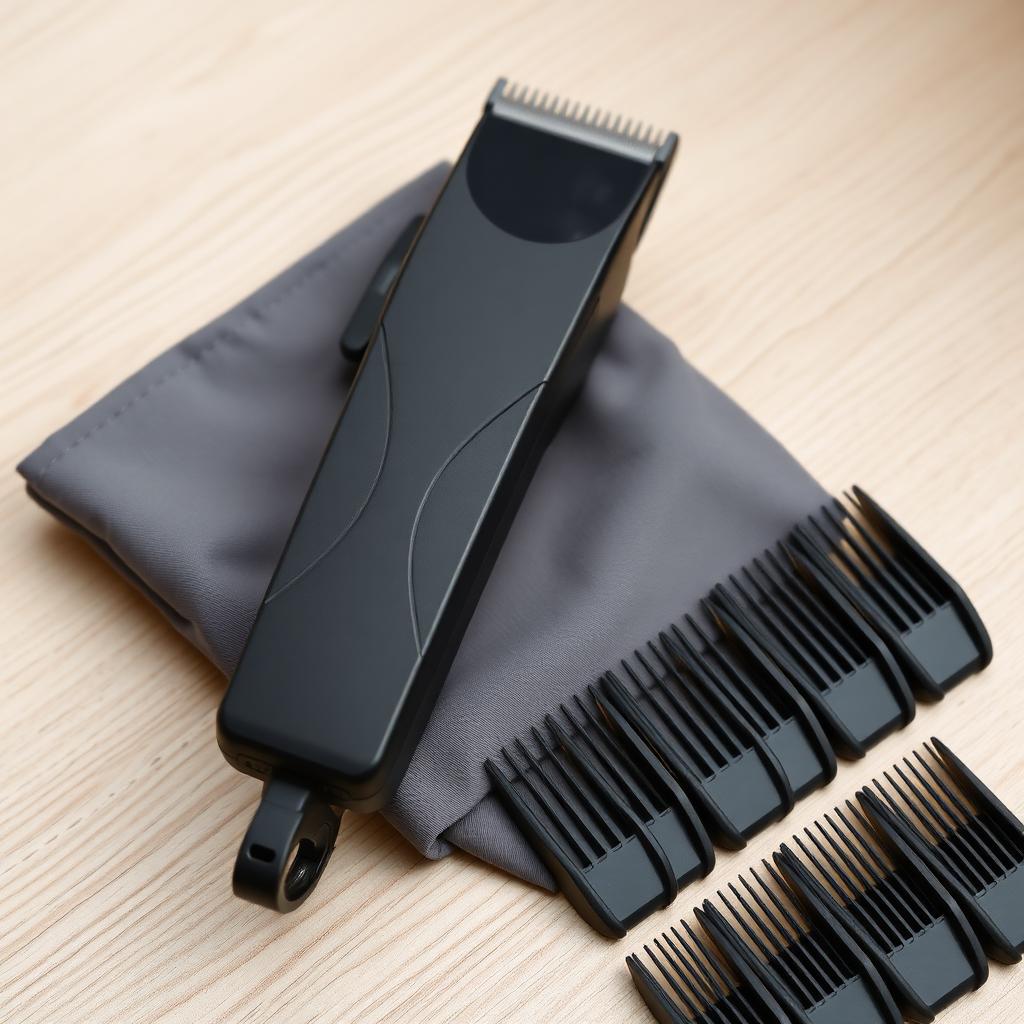
Choose a home haircut clipper that feels secure in your hand, includes guards for your intended length, and has clear blade-care instructions and available replacement parts. Cordless freedom can be useful, but a good corded model is also a practical option in a dry, safely arranged workspace.
Start with a longer guard than you think you need, use mirrors to check the back, and cut slowly. Cleaning, correct lubrication, and intact guards matter more than a claimed professional motor or a long accessory list.
Match the clipper to the haircut
Decide what you want to maintain before comparing specifications. A simple one-length buzz cut needs fewer guard lengths than a blended taper. Longer textured styles or precise fades can require techniques and visibility that a first-time solo haircut does not provide.
A full-size hair clipper removes bulk; a small detail trimmer is intended for edges and closer work. Neither is automatically a substitute for the other. Avoid choosing a beard trimmer solely because it is already in the bathroom if its combs and cutting width do not suit scalp hair.
Hair density and curl pattern also affect the experience. Look for manufacturer guidance relevant to your hair and the lengths you intend to keep. No blade material or motor label guarantees that a clipper will glide through every hair type without sectioning, cleaning, or careful technique.
Prioritize fit, control, and guards
Hold the tool if possible and imagine reaching your nape and opposite side. Check the weight, grip texture, switch position, vibration, and whether you can attach guards confidently. A palm-shaped body suits some users, while others find a conventional handle easier to control.
Read guard lengths in millimeters or inches, not just the printed number. Numbering can differ between systems, and a lever can change the effective cut. Make a small reference list for your own kit so you do not confuse a remembered number with an actual length.
Look for guards that seat securely and are easy to replace if a tooth breaks. A large assortment is unnecessary if you only use two lengths. Conversely, a very limited kit may be frustrating if you plan to learn blending and cannot buy compatible intermediate guards.
A wide blade can cover a broad area efficiently, but it is not automatically easier around ears or curved parts of the head. Choose control over maximum coverage, especially if you have limited shoulder mobility or will be working entirely through mirrors.
Compare power without relying on slogans
Cordless tools avoid a trailing cord but need charging and eventual battery service or replacement. Read realistic runtime and charging information for the actual model. Do not assume all lithium-ion clippers cut with identical power until the final second of charge.
Corded clippers can provide uninterrupted use and avoid battery maintenance. Route the cord so it does not catch around your body or pull the clipper off a counter. Keep the workspace dry and do not use a plugged-in clipper beside a filled sink or tub.
Some rechargeable models cannot run while charging. Others have specific power-adapter requirements or restrictions on rinsing. Check the manual before purchase rather than assuming a familiar connector means any charger works. Use the supplied or manufacturer-approved power arrangement.
Set up for a conservative first cut
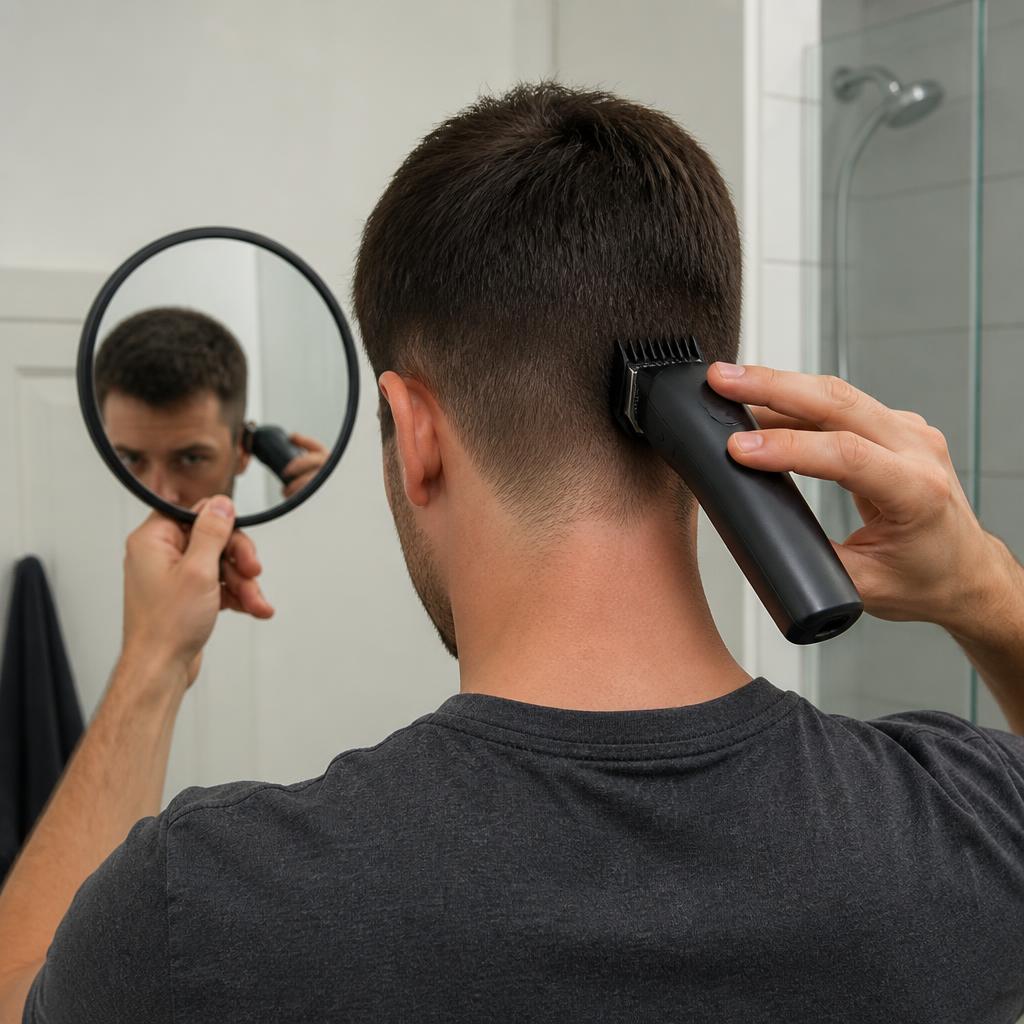
Use good light and a stable arrangement of mirrors that lets you see both sides and the back. Keep the floor clear of cords and loose objects. A cape or old shirt can help contain hair, but do not let a slippery towel hide the tool or create a trip hazard.
Prepare the hair according to the clipper instructions, commonly clean, dry, and free of heavy styling product. Comb out tangles before cutting. Avoid repeatedly passing blades over inflamed, broken, infected, or irritated scalp; seek appropriate advice if a skin problem makes clipping uncomfortable.
Attach the longest useful guard and verify that it is fully seated before switching on. Start with a small visible area. Make slow overlapping passes, let the blades do the work, and comb between passes so uncut sections stand out. Pressing harder does not improve a struggling motor.
Check the rear frequently instead of trying to finish it by feel. Around ears, keep the guard controlled and do not fold skin into the blade path. A beginner does not need to remove the guard to create a sharp neckline. Ask for help where visibility is poor.
Clean, oil, and store correctly
Turn the clipper off and disconnect power before brushing out trapped hair or removing parts. Follow the manual for blade removal and cleaning. A removable blade is not automatically rinseable, and a rinseable attachment does not mean the motor housing is waterproof.
Wahl's care guidance emphasizes clean blades, appropriate blade oil, and dry storage. Follow your model's lubrication points and schedule rather than an arbitrary every-few-haircuts rule. Use recommended clipper oil, not cooking oil or a household spray lubricant that may leave unsuitable residue.
After oiling as directed, wipe away excess so it does not run onto the scalp or into storage materials. Wash compatible guards separately when allowed, dry them fully, and protect the blade from impact. Do not store damp parts in a sealed case and expect them to remain corrosion-free.
If others use the kit, follow the manufacturer's cleaning and disinfection directions between people. Removing visible hair and lubricating are not the same as disinfecting. Use only compatible products and respect their directions; careless soaking can damage components without providing reliable hygiene.
Troubleshoot before buying another tool
Pulling can result from tangled hair, clogged blades, inadequate oil, low charge, a damaged cutting set, or an overly fast pass. Stop, disconnect, inspect, and correct the obvious cause. Never keep dragging a painful tool across the scalp to finish faster.
If the blade becomes uncomfortably warm, stop and let it cool, then review cleaning, lubrication, and alignment instructions. Do not improvise blade adjustment or zero-gapping for a first home haircut. A dropped clipper with chipped teeth or an altered blade position needs inspection before reuse.
Uneven patches often reflect changing angles or incomplete coverage rather than inadequate motor power. Recheck with the same longer guard before reaching for a shorter one. Chasing every line with successively shorter guards is a common way to turn a small correction into an unwanted close cut.
FAQ
Do I need ceramic or self-sharpening blades?
Not necessarily. Blade quality, condition, compatibility, and care matter. Self-sharpening does not mean maintenance-free, and ceramic does not guarantee a cool blade under every workload.
What should I spend extra on?
Bottom line
Choose for the haircut, your grip, and the care you will actually perform. Cut conservatively, keep the workspace dry, and maintain the blades as instructed. Reliable control and maintenance are more valuable than rankings or oversized specifications.