

Quick Answer
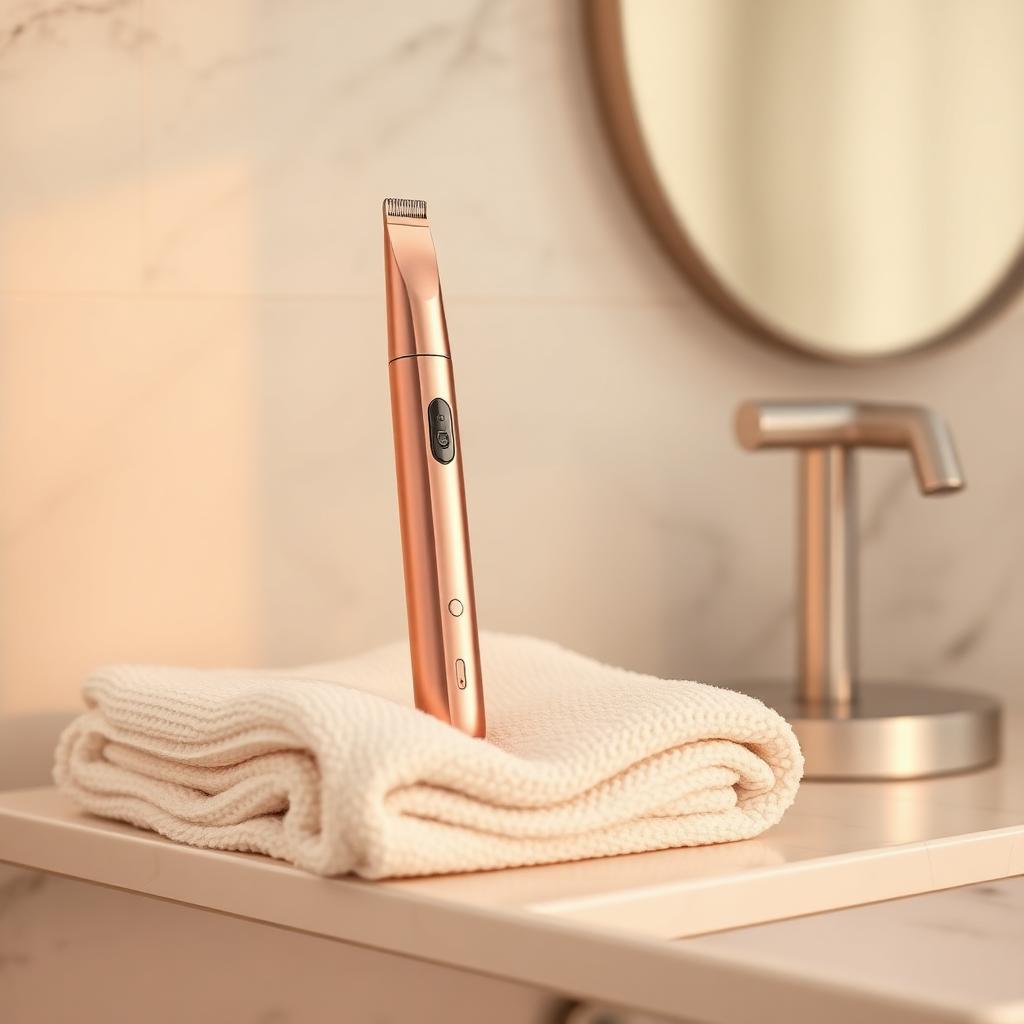
Choose a facial hair trimmer with a small guarded cutting head, a grip you can control, clear instructions for facial use, and replacement parts you can obtain. Match the head to the area: broad peach-fuzz removal and precise eyebrow shaping are different tasks.
Gold plating, ceramic branding, and a built-in light do not guarantee irritation-free trimming. I would prioritize comfortable contact, easy cleaning, and a protective design over decorative materials. Use the motion and skin preparation specified for that model, and stop if it pulls or scratches.
Decide what result you actually want
A trimmer cuts hair above or near the skin surface. It does not remove the follicle, so results are temporary. Some tools leave a little stubble; others cut closer through a foil. Neither outcome is wrong if it matches your preference and leaves your skin comfortable.
Fine facial hair is normal and does not need removal for health. If your goal is smoother makeup application, you may only need occasional light trimming. Coarser chin hairs may require a different head or method. Do not assume one miniature device handles every facial hair equally well.
Understand the cutting head
An enclosed rotary facial shaver, a small foil shaver, and a narrow guarded detail trimmer work differently. A manual facial razor is another category again. Check the actual mechanism instead of relying on a product listing that groups razors, epilators, and electric trimmers together.
A protective foil or guard reduces direct blade exposure but does not make injury impossible. A dented foil, broken guard, or excessive pressure can irritate or cut skin. Gold plating and ceramic components are not proof that a device is hypoallergenic for every user, and coatings may wear over time.

Features that make daily handling easier
Choose a handle that does not rotate in your fingers and a switch you can reach without changing your grip awkwardly. A light can help you see pale hairs, but good room lighting and a stable mirror remain important. You should not need to press harder to see whether the head is touching.
Check head size against the treatment area. A broad round head may cover cheeks easily but be less precise near an eyebrow. A narrow head may give control around the upper lip but take longer over a larger area. Use only attachments intended for the area you plan to trim.
Battery and rechargeable options can both work. Consider replacement batteries, charger compatibility, battery indicators, and whether the device operates while plugged in. Wet-use permission and cleaning permission are separate questions: a washable head does not necessarily mean the whole handle is waterproof or approved for shower use.
Prepare according to the manual
Wash your hands and remove makeup and residue gently. Many small facial trimmers are intended for clean, dry skin; others permit wet use. Follow the model's instructions rather than adding shaving gel or oil to a dry-use device. Products can clog some heads and interfere with cutting.
Inspect the skin first. Avoid active rashes, open wounds, cold sores, irritated acne, and raised lesions. Do not trim over a mole simply to remove the hair growing nearby. If you have eczema, rosacea, recurrent razor bumps, or a history of severe reactions, ask a dermatologist about a suitable approach.
Inspect the cutter and charge or fit the battery as directed. Test a small, less conspicuous area and observe your skin before treating more. Do not try an unfamiliar device for the first time immediately before an important event, when any unexpected redness would be difficult to manage.
Trim with a light hand
Hold the skin gently steady without aggressively stretching it. Bring the cutting surface into light contact and move as directed: some rotary heads use small circles, while narrow trimmers use short strokes. There is no universal circular technique for every facial device.
Keep the head moving and avoid repeatedly passing over one patch. If a hair is missed, check direction, cleanliness, and the head's suitability before increasing pressure. Skin does not need to feel scraped to be hair-free. Stop if you feel catching, heat, pain, or persistent stinging.
Stay outside nostrils and away from eyelids, lash lines, and the lips themselves unless a dedicated attachment is explicitly designed for a particular area. Eyebrow work needs extra care because a small slip can remove more hair than intended. Never reach toward an eye while distracted or in a moving vehicle.
Keep aftercare simple
Remove loose hairs gently and apply a comfortable fragrance-free moisturizer if needed. Avoid stacking scrubs, strong acids, and other irritating treatments onto skin that feels sore after trimming. There is no need to “close pores” with cold water; pores do not open and shut like doors.
Use regular sun protection, including broad-spectrum SPF 30 or higher on exposed skin. Trimming is not a sunscreen treatment, and a smooth face can still be irritated by fragrance or harsh aftershave. If a product burns after trimming, rinse it away and simplify the routine while the skin recovers.
Clean and replace cutting parts properly
Turn the device off before opening the head. Brush or rinse only the parts the manufacturer permits. Do not immerse a dry-use body, tap a delicate foil against a sink, or use household disinfectants without compatibility instructions. Dry all washable parts thoroughly before storage and reassembly.
Do not share personal trimming heads. Follow the specified lubrication and replacement schedule, and replace sooner if the foil is damaged or hair pulls despite cleaning and a sound battery. There is no universal three- or six-month lifespan for every head. Access to replacements is worth checking before purchase.
Troubleshoot pulling, bumps, and poor results
Pulling can reflect trapped hair, a weak battery, a worn cutter, excessive hair length, or the wrong technique. Stop and inspect rather than pushing through. Some coarser hairs may need a trimmer designed for them rather than repeated passes with a peach-fuzz shaver.
Persistent bumps, redness, dark marks, or pustules deserve a break from the method and, if recurrent, a dermatology assessment. AAD notes that hair removal can cause irritation and ingrown hairs. A protected electric head lowers direct blade exposure but is not a promise of painless or reaction-free use.
FAQ
Will facial hair grow back thicker?
No. Mayo Clinic explains that shaving does not change hair thickness, color, or growth rate. A blunt cut tip can feel coarser while growing out. That sensation is not evidence that trimming has changed the follicle.
Should I also dermaplane?
Not necessarily. If trimming meets your goal, there is no need to add blade exfoliation. More hair-removal methods can mean more irritation. Professional dermaplaning and home facial shaving also differ in technique and risk.
What if facial hair increases suddenly?
Talk with a clinician, especially if the change is marked or occurs with other symptoms. Medication effects or hormonal conditions can contribute. A trimmer manages visible hair but cannot explain a new growth pattern.
Bottom line
Choose an appropriate guarded head, good control, and straightforward cleaning. Follow the device-specific preparation and motion, use minimal pressure, and replace damaged parts. A comfortable routine matters more than gold plating, an LED, or claims that one tool suits every face.