


Quick Answer
Choose an eyebrow razor with a small head you can see clearly, a secure nonslip handle and a protective cover. A guarded edge may reduce exposure to the blade, but it cannot prevent every cut. Use only a tool intended for facial touch-ups and follow its directions.
I would limit home touch-ups to clearly visible stray hairs away from the eyelid and lash line. If your hand is unsteady, vision is limited or the target area is too close to the eye, professional help is a better choice than trying a sharper blade.
Know what a brow razor actually does
Shaving cuts hair at the surface rather than pulling it from the follicle. Results are temporary, and regrowth timing varies. It does not permanently reshape the brow or make the hair grow thicker. A blunt cut end can simply feel different as it emerges.
A razor can be useful for a few strays, but it is not automatically superior to tweezers, threading or leaving the hair alone. Each option has drawbacks. Frequent hair removal may irritate skin, and precision around the eye matters more than speed.
Do not confuse an eyebrow touch-up with full-face dermaplaning. Removing hair close to an eye involves different visibility and injury concerns from shaving a broad cheek area. A social-media demonstration is not a substitute for the instructions supplied with your tool.
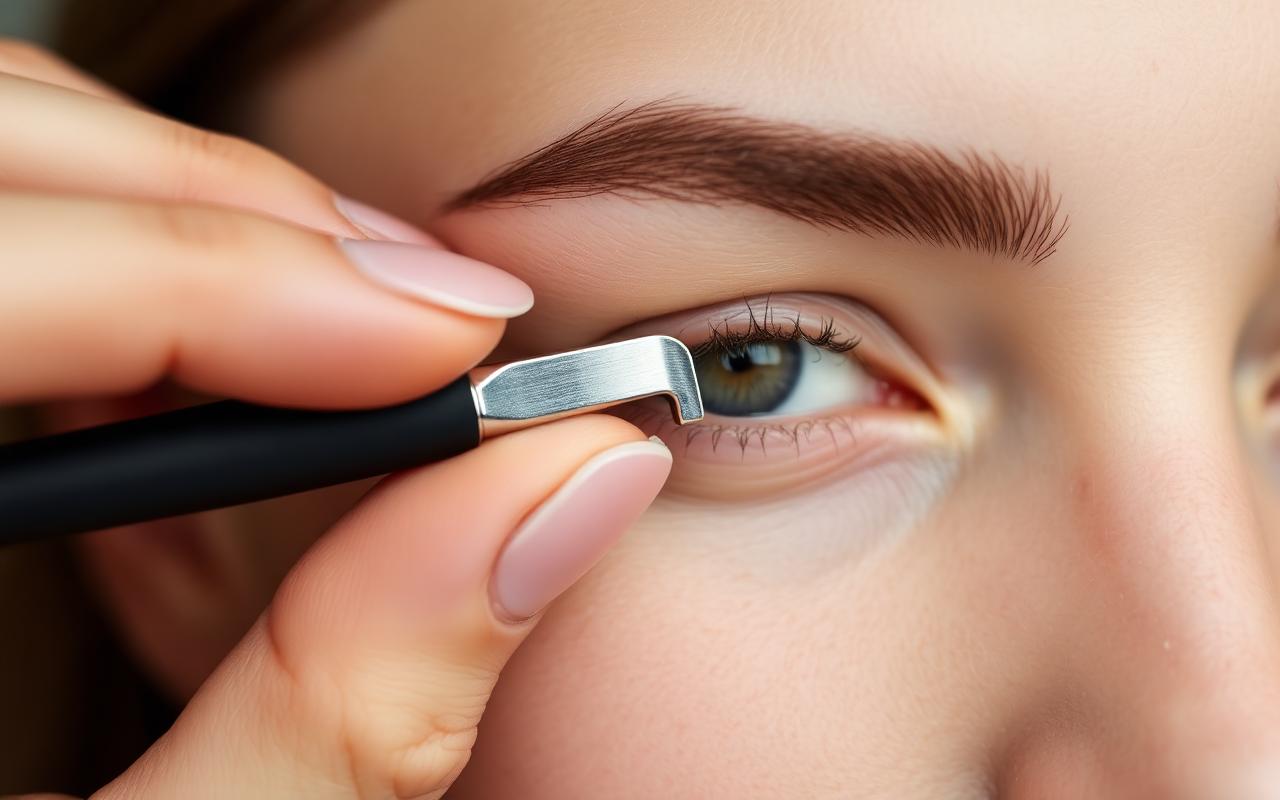
The pictured angle is illustrative, not a universal requirement. Follow your razor's directions and keep the blade away from the eyelid. A guard and a particular angle do not make eye-area shaving injury-proof.
Features that matter when shopping
A head that leaves the target visible
Choose a size that lets you see the hair you intend to remove without blocking the outline of your brow. There is no evidence-based width that works for every face. Smaller is useful only if you can still hold the tool steadily and control its direction.
A comfortable handle and secure cover
A lightweight handle can help control, but it should not feel slippery or flimsy. Inspect any folding mechanism and cover before use. A loose head, damaged hinge or cap that falls off is a reason to replace the tool rather than improvise a repair.
Clear replacement and cleaning instructions
Check whether the razor is disposable or uses replacement heads. Confirm replacements are available and that you understand how to change them without touching the edge. Avoid products with unclear labeling, rusty blades or damaged packaging.
A guard can reduce some contact with an exposed edge, but skin can still be cut. Do not accept claims that a mesh prevents the blade from touching skin under all conditions. Pressure, direction and damaged equipment all change the risk.
Prepare your skin and workspace
Use good lighting and a stable mirror. Set up somewhere you will not be bumped, and put pets and children outside the immediate work area. Avoid balancing on a slippery bathroom surface or working in a moving vehicle.
Wash your hands and remove makeup from the area with a gentle cleanser. Inspect the skin before starting. Skip active eczema, sunburn, broken skin, inflamed spots and healing wounds. Do not shave through a mole, skin tag or an unexplained bump.
If you use retinoids, exfoliating acids or prescription skin treatments, ask your clinician whether hair removal is appropriate when the skin is irritated. Do not stack several exfoliating methods simply because each looks mild on its own.
Use a conservative touch-up method
- Brush the brow into its normal position and identify only obvious hairs outside the shape you want to keep.
- Read whether your specific tool is intended for dry use or use with a suitable lubricant. Do not assume every razor has the same instructions.
- Support the skin gently without pulling it toward the eye. Keep your fingers clear of the blade path.
- Use light, short strokes in the direction of growth where possible. Never saw sideways across the skin.
- Remove the razor from your face before clearing trapped hair using the approved method.
- Step back and reassess after a small change. Stop before trying to make the two brows perfectly identical.
For ordinary blade shaving, the AAD recommends softening hair and using shaving cream or gel. Some small facial tools have different instructions. This is why a blanket instruction to always dry-shave the brow is inappropriate. Keep any cleanser or lubricant out of the eye.
Do not use the tool on the eyelid, lash line or lashes. If the only way to reach a hair is to bring the blade close to the eyeball, leave it. Cosmetic neatness is not worth an eye injury.
Aftercare that avoids extra irritation
Gently remove loose hair and any product according to the directions. Pat rather than rub. If the skin feels dry, a small amount of a familiar fragrance-free moisturizer on the surrounding skin may be enough. Keep it out of the eyes.
Aloe is optional and is not universally soothing. Avoid experimenting with a new serum, strong acid or heavily fragranced product immediately afterward. If there is stinging or redness, stop the grooming session rather than trying to finish the other brow.
For a minor skin nick away from the eye, use gentle pressure with clean material. Persistent bleeding needs medical advice. Eye pain, blurred vision or possible contact between the blade and the eye needs urgent assessment, not cosmetic aftercare.
Clean, dry and replace the tool
Follow the manufacturer's cleaning method. Do not assume that rinsing or an alcohol wipe makes a used razor sterile. Do not share it. Store it dry with its guard or cover secure and where children cannot reach it.
There is no universal four-use or six-use lifespan. Replace a disposable tool as directed, and replace any blade that drags, rusts, becomes damaged or no longer cuts comfortably. Pressing harder to compensate for a poor edge increases risk.
FAQ
How often should I touch up?
Only when there are unwanted hairs and the skin is comfortable. A fixed weekly schedule is unnecessary. If frequent shaving irritates the area, reduce the frequency or discuss another approach with a qualified professional.
Can I fix an over-trimmed arch immediately?
Do not keep cutting the other side to match. Stop, allow regrowth and use a suitable temporary cosmetic if desired. Repeated corrections can turn a small difference into a much larger gap.
What if a new product causes a rash?
Stop it and wash it off gently. The AAD notes that delicate eye-area skin can react to cosmetics and tools. Persistent swelling, itch or rash deserves evaluation, especially near the eye.
Bottom line
Prioritize visibility, a sound blade and a very conservative target area. A small guarded razor can help with stray hairs, but it is not risk-free. Follow the tool's instructions, leave eyelids alone and stop before precision turns into repeated scraping.