

Quick Answer
Choose a scalp-compatible electric shaver that you can hold comfortably, clean thoroughly, and maintain with available replacement cutters. Rotary and foil designs can both work. The best fit depends on your scalp contours, hair growth, skin sensitivity, and preference for wet or dry shaving.
A certain number of heads, a waterproof rating, or a palm-shaped body does not guarantee the closest or fastest shave. Use light pressure, trim longer hair first when instructed, and avoid shaving over irritated skin, wounds, or raised lesions.
Decide how close you need to shave
A very smooth finish may require more contact with the skin than a short clipped look. If you get razor bumps or irritation, leaving a little length with clippers may be more comfortable than repeatedly chasing a perfectly bare scalp. Grooming goals should accommodate your skin rather than the other way around.
AAD's general shaving advice emphasizes gentle technique and avoiding irritation. Scalp shaving adds visibility challenges, especially around the crown and back of the head. A second mirror and a methodical pattern can be more useful than buying a device with the largest possible head array.
Rotary versus foil is a practical choice
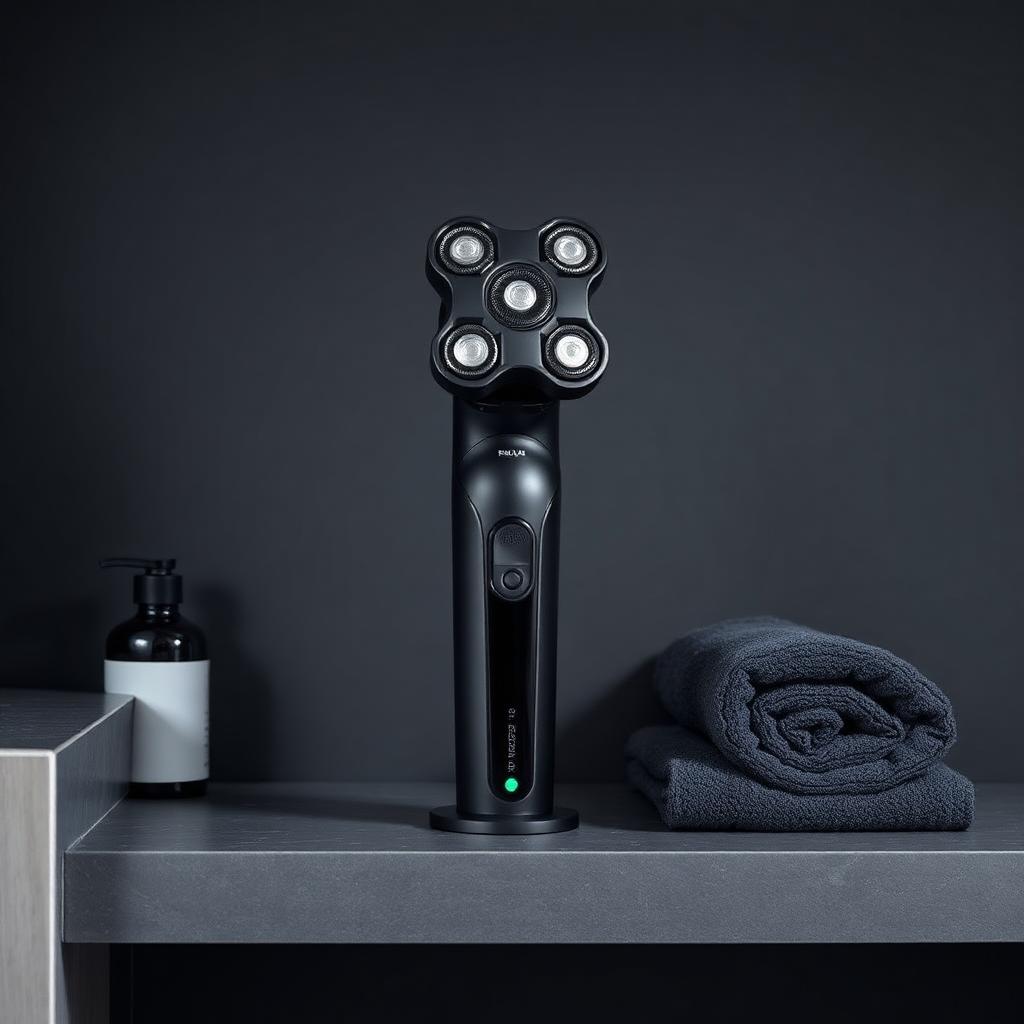
Rotary cutters can follow curved areas and often use circular movements, depending on the model. Foil cutters commonly use short straight strokes. Neither design universally wins on speed or closeness, and the number of cutters does not establish how well a particular head contacts your scalp.
Check whether the manufacturer explicitly permits scalp use. Some facial shavers can be used on the scalp; there is no universal ban on them or proof that they take four times longer. Others are awkward or unsuitable for that area. Instructions and comfortable access matter more than the marketing category alone.
Features to check before buying
Try to judge grip security, weight, switch placement, and reach around your ears and neck. A compact palm grip may suit some hands, while a longer handle may help others. Someone with limited shoulder movement may need a different design or assistance for the back of the head.
Look for clear battery information and a realistic way to charge. Runtime matters less if you can comfortably finish your usual routine, and longer advertised runtime is not proof of cutting quality. Check the price and availability of replacement heads before committing to a handle that depends on proprietary parts.
Washability, waterproof testing, wet shaving, and use while charging are different issues. Read the manual for each. An IP rating does not by itself authorize shaving in the shower or operating a wet appliance while connected to power. Follow the manufacturer's specific permitted uses and electrical precautions.
Prepare the scalp and the tool
Inspect the scalp in good light. Avoid cuts, sunburn, inflamed bumps, crusted areas, and raised spots. A lesion that bleeds repeatedly or does not heal deserves medical assessment, not a closer pass with the shaver. Do not shave off a mole or pick at a scab to make the surface smooth.
If hair exceeds the shaver's recommended length, shorten it with suitable clippers first. There is no universal three-day-growth limit because hair growth varies. Use an appropriate guard and method rather than assuming every first shave should start with unguarded clippers against the skin.
For dry shaving, use the skin preparation specified in the manual. For an approved wet shave, use compatible shaving cream or gel as directed. A warm shower can soften hair but does not “open pores.” Avoid oils or thick products that the cutter system is not designed to handle.
Shave in an organized pattern
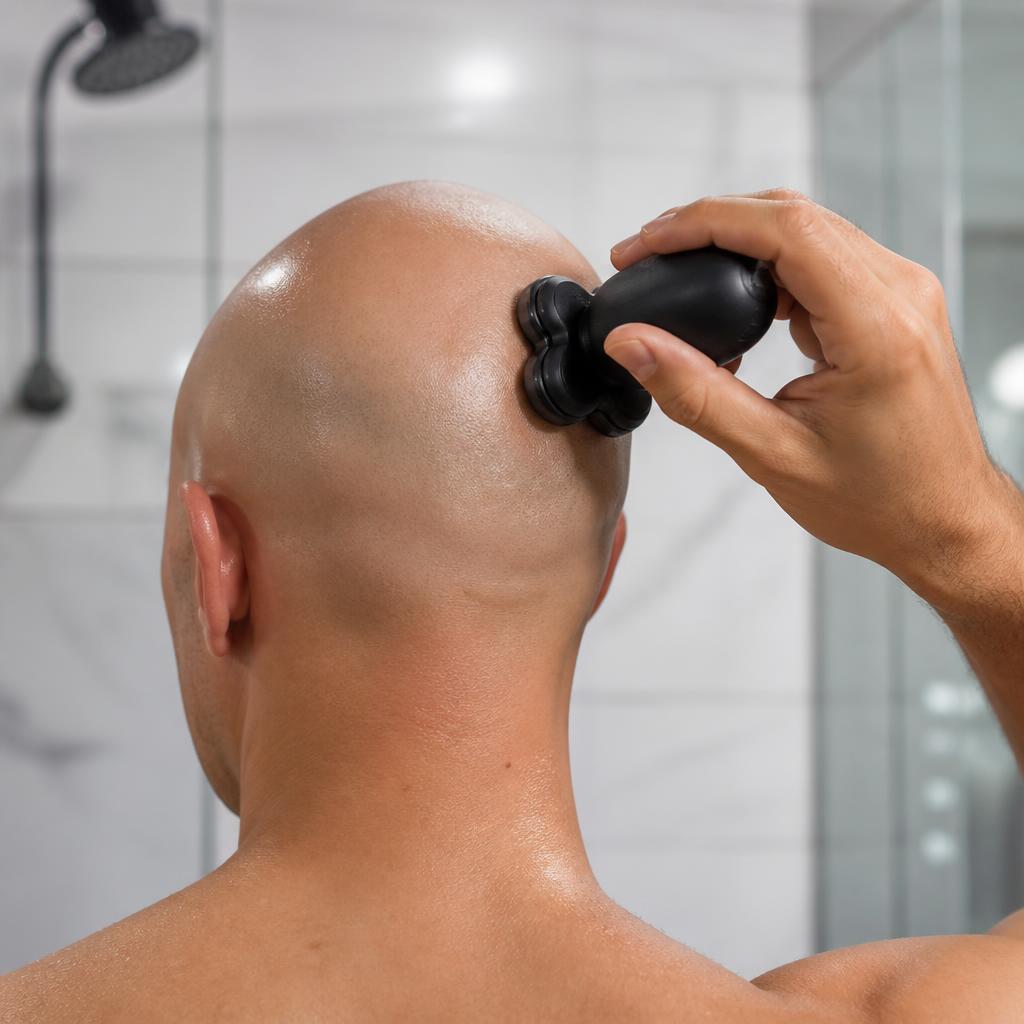
Begin with an easy visible area and use the lightest pressure that maintains contact. Follow the specified angle and movement rather than applying foil instructions to a rotary head. Keep passes controlled and overlapping enough to avoid missed strips without repeatedly polishing the same patch.
Work around the ears carefully and use a mirror to check the back. Your free hand can help identify missed hair, but do not rub hard over irritated skin. If a patch will not cut cleanly, check hair direction and head cleanliness before pressing harder or making many more passes.
Stop if the tool pulls, gets uncomfortably hot, scratches, or suddenly sounds different. A weak battery, accumulated hair, a damaged foil, or worn cutters may be involved. Do not finish at any cost. Let skin comfort determine when to stop, even if a little stubble remains.
Aftercare and sun protection
Remove loose hair gently and use a comfortable fragrance-free moisturizer if needed. Skip alcohol-heavy aftershave or strong exfoliants when the scalp feels sore. Recurrent bumps or dark marks may require a less-close method or advice from a dermatologist rather than a stronger scrub.
A bare or thinning scalp needs sun protection. AAD recommends broad-spectrum SPF 30 or higher, with water resistance for sweating or swimming, alongside protective measures such as a hat. Do not rely on a universal claim that every bald scalp burns in ten minutes; exposure risk varies, but prevention remains important.
Apply sunscreen according to its directions and reapply outdoors. If it stings on freshly irritated skin, use shade and a protective hat while seeking a more comfortable formula and reviewing the shaving routine. Shaving should not leave the scalp persistently raw.
Clean cutters without damaging them
Turn off the appliance before opening or cleaning the head. Brush or rinse only as permitted. Some removable heads tolerate water while the handle does not. Do not assume all electric shavers can be held under a running tap.
Let washable parts dry and follow instructions for lubrication. Do not invent a six-month oiling schedule or use an oil that the manufacturer does not recommend. Rotary cutter pairs may need to stay matched, and delicate foils can be damaged by hard brushing or tapping against a sink.
Replace parts on the maker's schedule or sooner if damaged or persistently pulling despite proper cleaning. There is no category-wide twelve-to-eighteen-month replacement interval or fixed replacement price. Store the clean, dry shaver protected from impacts and do not share personal cutting heads.
Troubleshooting recurring skin problems
Small bumps can have several causes, including ingrown hairs or follicle inflammation. Avoid picking, squeezing, or shaving closer to remove them. Pause the irritating method and seek advice if the problem recurs, spreads, becomes painful, or produces pus.
Persistent redness, bleeding, scaly patches, or changing spots also need assessment. A shaver cannot diagnose scalp disease, and frequent grooming can make subtle lesions easier to overlook if you assume every mark is razor burn. Check the skin regularly while cleaning and moisturizing.
FAQ
Must I shave every day?
No. Choose a frequency your skin tolerates and that keeps hair within the tool's intended cutting range. Some people prefer less frequent shaving or a clipped finish. Repeated irritation is a reason to adjust the routine.
Are five heads always better than three?
No. Contact, maneuverability, cutter condition, and your scalp shape matter. More heads can also mean more area to clean and more costly replacement parts. Choose usability rather than a number alone.
Can I shave while charging?
Only if the manufacturer explicitly permits it, and never assume wet use while connected is safe. Many wet-use devices operate cordless for safety. Follow the manual and keep charging equipment away from water.
Bottom line
Choose comfortable control, scalp compatibility, clear wet-use instructions, and maintainable cutters. Use gentle passes, clean the tool correctly, and protect exposed skin from the sun. Closer is not better if it leaves your scalp inflamed.