

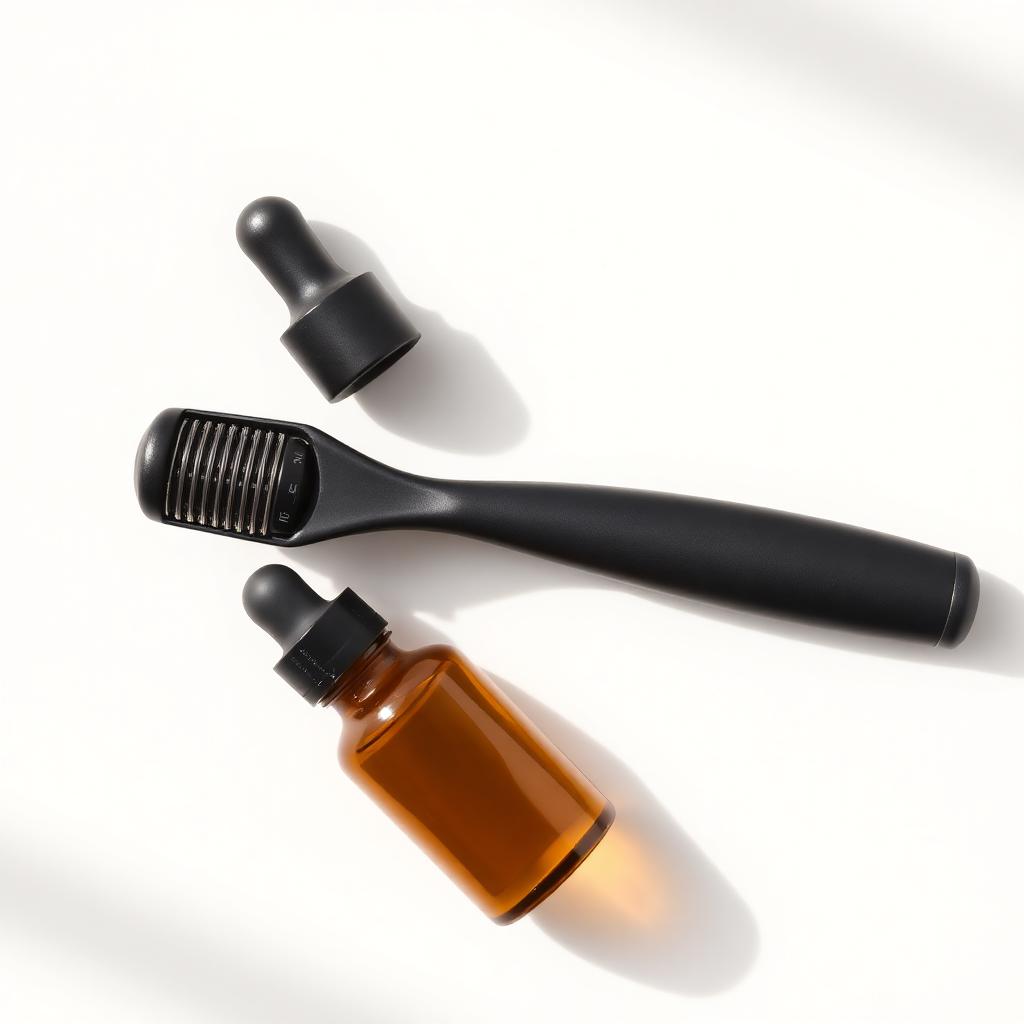
Quick Answer
Do not choose a home derma roller for beard or scalp growth by needle count, metal type, or a supposedly safe needle length. The FDA has not cleared microneedling devices to treat hair loss, and home needling can cause infection, scarring, irritation, and pigment changes.
I would first have unexplained beard patches or scalp thinning assessed by a dermatologist. If microneedling is being considered as part of professional treatment, discuss the diagnosis, evidence, device, risks, and aftercare rather than copying an online rolling and serum routine.
Start with the reason hair looks sparse
A naturally uneven beard is different from sudden round patches, inflamed skin, or progressive scalp thinning. Age, genetics, grooming, and several medical conditions can affect hair appearance. You cannot identify the cause merely from the shape of a gap in a photograph.
Seek assessment for abrupt hair loss, scaling, pustules, pain, broken hairs, or shiny scar-like skin. Some causes need treatment that has nothing to do with stimulating growth. Needling an infected or inflamed area may worsen the situation and delay appropriate care.
Pattern hair loss also should not be described as follicles inevitably disappearing at a particular visual stage. Diagnosis and treatment options depend on the individual. A roller advertisement cannot determine whether your follicles are present, responsive, or affected by a different disorder.
What the evidence does and does not show
Microneedling intentionally creates small skin injuries. Researchers have studied it for some hair-loss conditions, often alongside other treatments and under controlled conditions. That does not establish that any consumer roller grows beards or that every home protocol is equivalent to a clinical study.
Scalp research cannot simply be transferred to beard enhancement. The condition being treated, body site, device, depth, schedule, and combined medicines all matter. A positive result in one setting does not validate a generic twice-weekly recommendation for everyone.
FDA clearance is specific to the device and authorized use. Clearance for certain scars or wrinkles does not mean clearance for hair loss, beard filling, or delivery of a topical drug. Check the precise claim rather than accepting a seller's broad FDA wording.
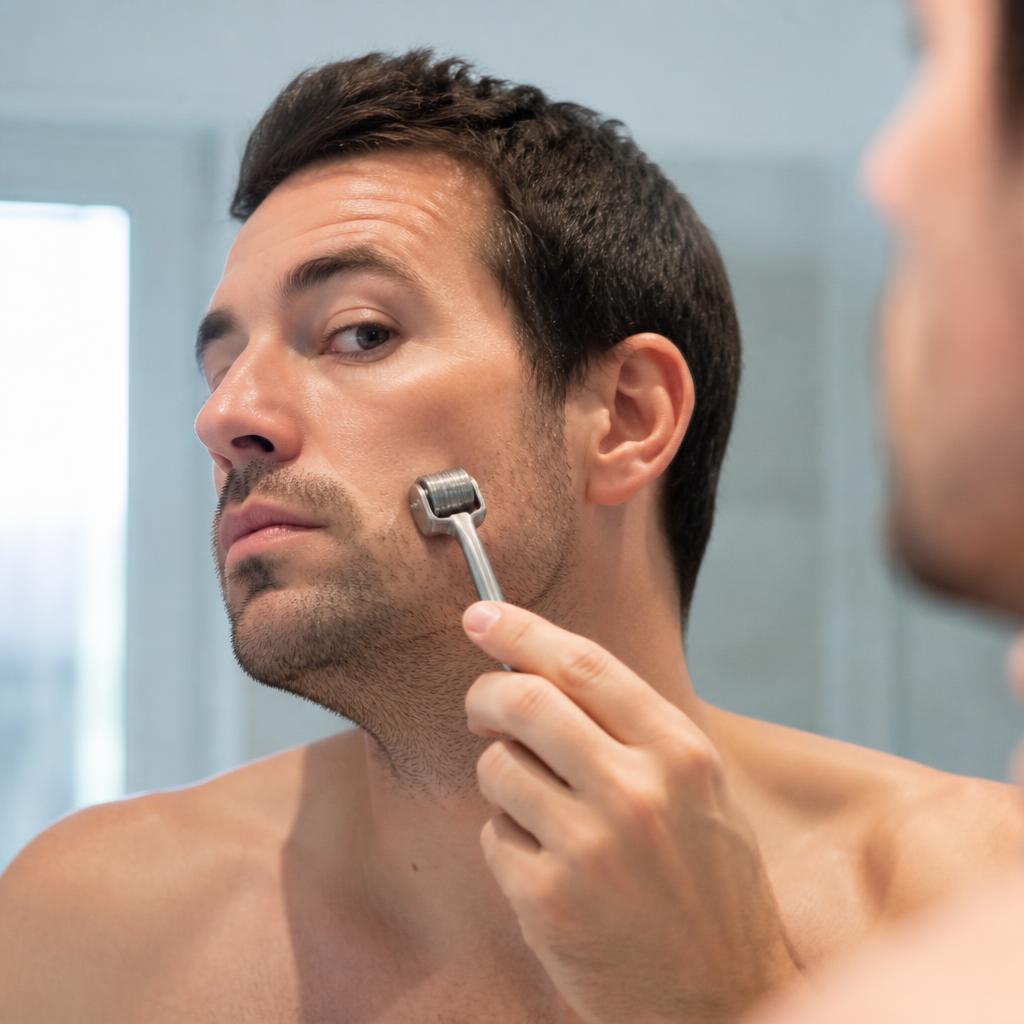
The retained caption illustrates a rolling pattern, but it should not be followed as a home treatment protocol. Repeated passes in different directions are not established as safe or effective for your skin. A dermatologist should determine whether any needling procedure is appropriate at all.
Why product specifications are not a safety plan
There is no universally safe home needle length for hair growth. Penetration depends on the device, pressure, skin site, angle, and technique as well as the printed length. A short needle is not a guarantee against injury or unintended skin penetration.
A large needle count does not prove uniform treatment or better results. Claims that one number reaches follicles precisely while another leaves ineffective gaps require evidence that ordinary listings rarely provide. More punctures can also mean more trauma rather than more benefit.
Titanium is not automatically superior to stainless steel for this purpose, and neither material establishes sterility or appropriate manufacturing quality. A shiny roller, premium price, or sealed plastic box cannot demonstrate that a device is suitable for penetrating living skin.
Cleaning is not the same as sterilization
An alcohol soak at home does not reliably turn a used roller into a sterile medical instrument. Debris, difficult-to-clean surfaces, damaged needles, and storage can all affect contamination risk. Do not treat a fixed soaking time as permission to reuse a skin-penetrating device indefinitely.
Never share a roller. Do not use a dropped, damaged, rusty, or visibly contaminated device. For professional procedures, ask how the provider uses sterile single-use components where required and prevents cross-contamination. Reusing a needle cartridge is not made acceptable by wiping it down.
If you already own a roller, store it safely away from children and others who could accidentally touch the needles. Follow disposal advice for sharp components. Do not put an exposed needle head loose into household waste where it can injure someone.
Do not use channels to deliver serums
FDA guidance says microneedling devices are not authorized for delivering cosmetics, topical medications, vitamins, or blood products into the skin. A product safe on intact skin may behave differently when placed into fresh punctures. Fragrance-free does not mean sterile or suitable for this use.
Do not immediately apply minoxidil, essential oils, peptides, vitamin serums, or numbing products to freshly needled skin on your own initiative. Increased penetration is not automatically beneficial; it can increase irritation or change exposure. Combining products requires a clinician's specific plan.
Minoxidil use depends on formulation, body site, and medical context. A scalp product's label does not establish a beard indication. Ask a clinician about appropriate evidence-based treatment rather than assuming a growth serum becomes more effective when rolled into the skin.
Questions to ask before professional treatment
Ask what diagnosis is being treated and whether microneedling is an established option or an off-label approach in that situation. Discuss realistic outcomes, alternatives, likely treatment duration, and the possibility of little improvement. Do not accept guaranteed regrowth dates.
Tell the provider about medicines, bleeding problems, immune suppression, diabetes, active skin disease, a tendency to form raised scars, and any history of cold sores. Suitability is individualized. Do not stop prescribed medicine simply because a generic checklist says it may matter.
Clarify aftercare in writing: which products to avoid, how to clean the area, sun protection, and whom to contact if symptoms develop. Professional guidance should address your skin and treatment rather than merely telling you to keep rolling lightly.
Recognize complications early
After any procedure, increasing redness, warmth, swelling, pus, or worsening pain needs medical advice. Fever, rapidly spreading symptoms, or significant illness warrants urgent assessment. Do not roll over an irritated area again to stimulate healing.
Pigment changes and scarring can last longer than temporary redness. People with darker skin can experience post-inflammatory discoloration, and no home setting removes that possibility. AAD specifically warns that home microneedling can cause injury and spread certain infections across the skin.
Radiofrequency microneedling is a separate energy-based procedure, not a stronger home roller. FDA has warned about serious reported complications with certain uses, including burns and nerve injury. Do not assume risks or results are interchangeable between these technologies.
FAQ
Can a roller fix beard gaps in eight weeks?
There is no reliable universal promise. Natural beard distribution and medical hair loss are different issues. A before-and-after image cannot separate treatment effects from hair length, lighting, grooming, or other therapies.
Is bleeding necessary for success?
No home user should aim for bleeding as a treatment endpoint. Bleeding indicates skin injury and is not proof that follicles have been stimulated. Stop experimenting and obtain advice if the skin has been injured.
What is the better first purchase?
For unexplained hair loss, an assessment is more useful than a needling kit. For ordinary beard grooming, gentle cleansing and appropriate trimming can improve appearance without puncturing skin or promising to create new follicles.
Bottom line
Do not select a home hair-growth roller from a specification checklist. Establish the diagnosis, consider treatments with relevant evidence, and discuss any procedure with a dermatologist. Clean-looking needles and a soothing serum do not remove the risks of skin penetration.