
Quick Answer
Choose a bikini trimmer that is labeled for the external area you want to groom, has a secure length guard and feels easy to control. A compact head and clear cleaning instructions matter more than brand lists or claims that a blade is hypoallergenic.
Leaving some hair is a reasonable way to reduce the need for close shaving. I would begin with the longest suitable guard, good lighting and a stable standing position. Do not assume waterproof means safe to use while charging or appropriate for every genital surface.
Set a realistic grooming goal
Pubic hair removal is optional. It is not necessary for cleanliness, and no style is medically required for ordinary hygiene. A trimmer shortens hair, while a foil shaver or razor may cut closer. Those are different results with different irritation risks.
If your main concern is bulk or hair catching in clothing, a guarded trim may be enough. Chasing a completely smooth result adds passes and closer blade contact. People prone to ingrown hairs may find that a little remaining length is more comfortable.
The AAD highlights that pubic grooming can cause cuts, burns and rashes. Tiny injuries may also make it easier for infections to enter skin. Rounded teeth, guards and waterproof housings reduce some practical problems but cannot eliminate injury.
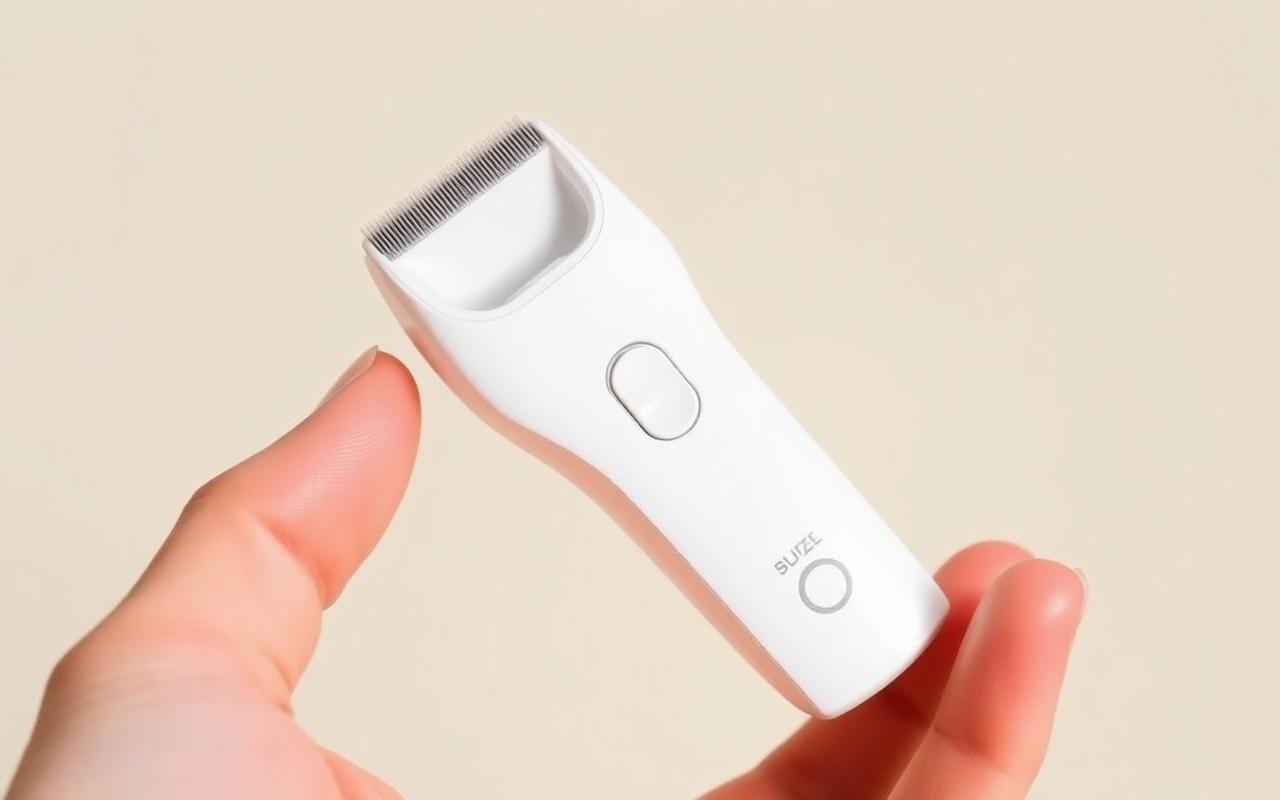
The pictured guard is useful, but neither a guard nor hypoallergenic wording guarantees protection. Inspect the guard before every session and keep moving blades away from loose folds and sensitive openings.
Features worth checking before buying
Intended body area
Read the manual, not just the product title. Bikini line may refer to hair-bearing skin outside the underwear edge rather than the entire vulva or perineum. Use only where the directions permit, and do not use a trimmer internally or on mucous membranes.
Secure guards and a manageable head
A guard should attach positively without wobbling or exposing damaged teeth. Longer settings give more margin while you learn the tool. There is no universally safest one-millimeter or three-millimeter length because hair, skin and trimmer designs vary.
A small head can improve visibility, but an awkward grip can cancel that advantage. Make sure the power switch is easy to operate and the handle stays secure in your hand. A tool that feels difficult to control is not a good match even if its specifications look impressive.
Clear wet-use and charging limits
Some trimmers work only on dry hair; others permit wet use. Follow those specific instructions. A water-resistance rating does not by itself establish that a device can be used in the shower, with shaving products or while plugged into a charger.
Check whether only the head is washable or the entire body is washable. Review charging requirements and replacement-head availability. Avoid relying on an online claim when it conflicts with the manual supplied with the device.
Prepare a safe place to groom
The AAD recommends standing while trimming and doing your own grooming rather than having a partner do it. Choose a stable, nonslip position with good lighting and a mirror if needed. If standing safely or seeing the area is difficult, do not improvise a risky balancing position.
Clean the external skin gently and inspect it first. Skip active rashes, sores, cuts, inflamed bumps or an unexplained lesion. If you have reduced sensation, poor healing or a condition that increases infection risk, ask a clinician about suitable grooming methods.
Remove distractions and give yourself enough time. Do not rush before exercise or an appointment. A warm shower is optional preparation when compatible with your device; it does not open pores or guarantee a quantified reduction in ingrown hairs.
A conservative trimming routine
- Read the device instructions and check the blade, guard and battery condition.
- Use dry or wet hair only as directed. Dry your hands and handle if needed for a secure grip.
- Attach the longest guard that will achieve a useful first reduction in length.
- Gently smooth the external skin so folds do not enter the cutting path. Keep fingers away from moving teeth.
- Use light, short passes, initially following hair growth where the tool allows. Do not press the head into skin.
- Stop periodically to check comfort and clear hair with the device switched off, according to the manual.
- Stop when the hair is comfortably shorter rather than repeatedly revisiting the same patch.
If the trimmer snags, switch it off before freeing the hair. Check for a clogged head, low battery, damaged guard or an unsuitable setting. Pulling the tool away while it is running can worsen an injury.
Aftercare without unnecessary products
Remove loose hair gently, rinse if appropriate and pat dry. Wear comfortable clothing that does not rub the area. A familiar fragrance-free moisturizer may help dry surrounding skin if suitable for that site, but no aftercare product is mandatory.
Avoid applying perfume, deodorant, strong acids or essential oils to freshly irritated skin. There is no universal thirty-minute waiting period after which every product becomes safe. Wait until the skin is comfortable and follow any stricter product directions.
Do not scrub or dig at developing bumps. If close grooming repeatedly causes trouble, allow more length next time. A shorter hair-removal interval is not automatically a better routine.
Cleaning, storage and replacement
Turn off and unplug the device before cleaning. Remove hair using the supplied method and rinse only parts designated washable. Follow instructions about blade oil, cleaners and drying. Do not assume an alcohol soak is appropriate for every motor housing or attachment.
Keep the trimmer personal rather than sharing it. Store clean, dry components in a protected place, and keep the charging equipment away from water. Do not put damp attachments into a sealed pouch.
Replace cutting parts according to the manufacturer and sooner if they are damaged or no longer work comfortably. A fixed six-month replacement rule does not suit every device, and home sharpening may damage blades not designed for it.
FAQ
Is wet trimming always gentler?
No. Some tools cut dry hair more effectively, and wet hair can behave differently. Use the method permitted by the device and stop if it pulls. Shower use should never override electrical-safety instructions.
Does a foil attachment prevent razor burn?
No. It may suit some people, but a closer finish can still irritate skin or contribute to bumps. Try less-close grooming if that keeps happening.
When should I get help for a grooming injury?
Seek care for a deep cut, bleeding that does not stop with gentle pressure, severe pain, spreading redness, pus or fever. An unexplained or persistent genital rash also needs proper assessment rather than repeated trimming.
Bottom line
Prioritize exact-site labeling, a secure guard, visibility and gentle passes. Hair removal is optional, and shorter is not always more comfortable. Follow wet-use and cleaning directions, keep the tool personal and stop when skin becomes irritated.