
Quick Answer
For dry skin beneath a beard, choose a fragrance-free conditioning product that your skin tolerates, and consider a gentle moisturizer rather than assuming oil is essential. Beard oil may soften hair and help normal or dry skin feel comfortable, but it does not treat every cause of itching or flakes.
I would start with a simple routine: gentle daily cleansing, careful drying, and a small amount of suitable moisturizer or oil worked through to the skin. Avoid buying on promises that a particular blend cannot clog pores, regulates sebum, or cures beard dandruff.
Decide whether the problem is dryness
Dry skin can feel tight, rough, or itchy, particularly after harsh cleansing or hot showers. However, flaking beneath facial hair can also reflect irritation, seborrheic dermatitis, eczema, or another condition. Appearance alone does not establish which problem you have.
A beard does not make the face stop producing sebum. Nor does passing a particular length automatically cause a predictable dry-skin phase. Skin type, weather, washing, shaving, and products all influence comfort beneath facial hair.
Check whether symptoms started after a new cleanser, fragrance, hair dye, wax, or oil. Simplifying the routine can help identify an irritant, but persistent redness, crusting, painful bumps, or hair loss needs medical assessment rather than endless cosmetic substitutions.
Oil and moisturizer are different tools
A beard oil is generally intended to condition hair and skin. Oils can help reduce water loss and improve feel, but an oil-only formula is not the same as a moisturizer containing water-binding and barrier-supporting ingredients. Neither is automatically superior for every beard.
The American Academy of Dermatology suggests beard oil for normal or dry skin, a beard conditioner for acne-prone skin, and a gentle moisturizer for sensitive skin. Its approach is based on skin needs, not a requirement that every man use the same carrier-oil blend.
A suitable facial moisturizer can reach the skin beneath a beard if applied thoughtfully in small amounts. It does not have to penetrate through the hair shaft. Part the beard with your fingers and distribute the product where it is needed.
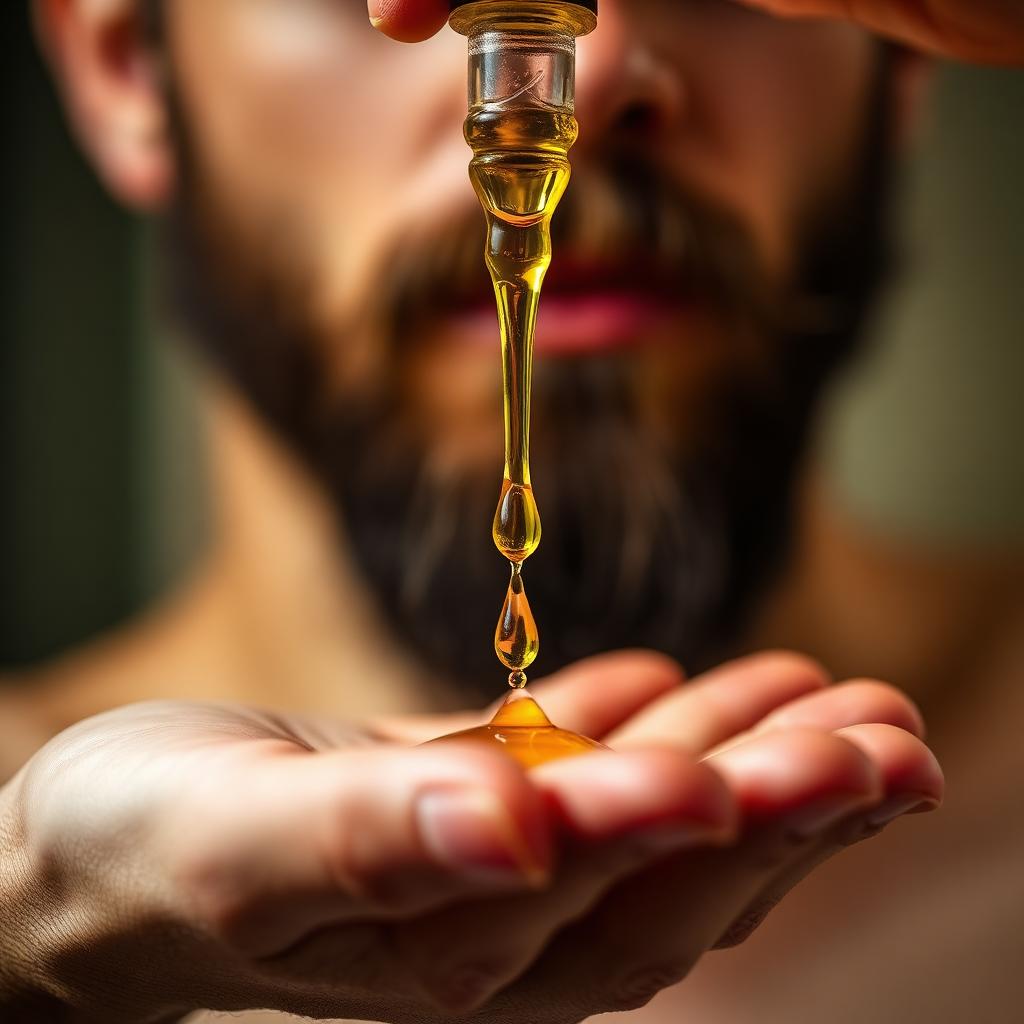
Dispensing a small amount into your palm can help control application. Follow the label directions and adjust conservatively to beard size, formulation, and skin comfort.
What to look for on the label
Fragrance-free when sensitivity is a concern
Fragrance can trigger irritation or allergic contact dermatitis in susceptible people. Fragrance-free is a useful starting point for dry or sensitive skin. An unscented product may still contain ingredients intended to mask odor, so read the label carefully.
Natural fragrance and essential oils are not automatically gentler than synthetic fragrance. A strong cooling or tingling sensation is not evidence that the product is nourishing the skin. Stop using anything that burns, stings persistently, or produces a rash.
A traceable, complete ingredient list
Jojoba, argan, squalane, and other emollients appear in many products, but no short list guarantees universal tolerance. Plant-derived ingredients can cause reactions too. People with known ingredient allergies should discuss uncertain products with a clinician rather than relying on hypoallergenic marketing.
Do not assume that mineral oil or dimethicone seals moisture out. These ingredients can be useful in skin-care formulations. Similarly, a single ingredient's reputation does not reliably predict how a finished product will behave on your face.
Look for clear intended use, manufacturer information, and sensible storage directions. More ingredients do not necessarily mean better care. A small bottle that you can use while it remains in good condition may be more practical than a large scented collection.
Claims that match a cosmetic product
Beard oil is not a proven way to make a patchy beard grow, treat infection, or cure inflammatory skin disease. Be cautious about products promising rapid regrowth or guaranteed dandruff removal. Those claims should not replace a diagnosis.
Noncomedogenic labeling can help guide acne-prone shoppers, but it is not a promise that breakouts are impossible. Individual response matters. If an oil consistently worsens bumps, stop using it even if the ingredient list looks fashionable.
Apply with less friction and less product
Wash your face and beard gently with a cleanser suited to your skin. Use lukewarm water, rinse well, and pat with a clean towel. Avoid vigorous scrubbing to remove flakes, since irritated skin may become more uncomfortable.
Apply a suitable moisturizer while the skin is still slightly damp. If using beard oil, follow the product's instructions and begin with a small amount. Spread it over clean fingertips or palms, then work gently through the beard to the skin.
Pores do not need to open for a product to work, and you do not need very hot water or heated oil. Warming a little product between your hands can make it easier to distribute, but it is a convenience, not a special absorption mechanism.
Use a clean comb or brush if it helps spread the remainder without tugging. Avoid repeated forceful strokes, particularly where the skin is sore or hair is tangled. Brush quality and comfortable handling matter more than choosing a specific animal-bristle material.
Adjust the routine to what happens next
If the beard looks greasy or transfers product onto clothes and pillows, use less or consider a lighter-feeling formulation. Adding more does not necessarily improve hydration. If the skin still feels dry, review cleansing and moisturizer choice rather than simply doubling the oil.
Frequency depends on the product, climate, and your skin. A fixed morning-and-evening oil schedule may be unnecessary. Reapply a suitable moisturizer when needed, and stop any routine that produces persistent irritation or worsening acne.
For shaving around the beard, use a gentle technique and avoid scraping inflamed skin. Broad-spectrum sunscreen remains important on exposed areas. Beard oil is not sunscreen unless the product is specifically labeled with appropriate sun protection.
Store it hygienically
Keep the cap closed and avoid touching a dropper directly to skin or dirty hair before returning it to the bottle. Store away from excessive heat and sunlight as directed. Do not mix water or kitchen ingredients into the bottle to change the texture.
Discard products that develop an unusual smell, visible contamination, or unexpected changes in appearance. Follow any expiration or after-opening guidance. Sharing bottles or leaving them open in a wet bathroom adds avoidable hygiene problems.
FAQ
How quickly should itching improve?
There is no guaranteed timeline because itching has different causes. Mild dryness may improve with consistent gentle care, but persistent symptoms deserve assessment. Do not wait through escalating redness or pain because a product promises results after a month.
Can beard oil treat dandruff?
Not reliably. Flaking can reflect a condition needing different care. A dermatologist can identify the cause and advise treatment that is appropriate for facial skin rather than recommending more oil by default.
Is face oil interchangeable with beard oil?
Some formulas overlap, but intended use, fragrance, and tolerance vary. Read the directions and keep products away from eyes and lips unless intended for those areas. The label matters more than the marketing category.
Bottom line
Choose gentle, fragrance-free care suited to your skin, not a supposedly perfect four-oil recipe. Reach the skin without rubbing hard, use modest amounts, and treat persistent flaking or irritation as a reason to investigate rather than apply more.