
Quick Answer
The best beard balm is one that gives your hair the amount of control you want without irritating the skin underneath. Start with a modest-hold formula, a clear ingredient list and a scent you can tolerate. For sensitive skin, fragrance-free is a better starting point than a heavily perfumed blend.
I would judge a balm by comfort, spreadability, appearance and ease of washing out, not by a required list of plant oils. Petrolatum and silicones are not automatically bad ingredients, and there is no universal beard length at which balm becomes essential.
Decide whether you need balm at all
Balm is mainly a styling and conditioning product. Waxes help hairs stay together, while oils, butters and other conditioning ingredients change slip and shine. The balance varies substantially among products, so the word balm does not promise a standardized hold.
A short beard that already lies comfortably may need only gentle cleansing and suitable moisturizer. A longer beard may benefit from balm, conditioner or oil, but none is mandatory just because the beard reaches a particular measurement. Choose the smallest routine that solves a real problem.
The American Academy of Dermatology emphasizes caring for the underlying skin, not only coating the visible hair. Dryness, acne, itch and beard dandruff may need different approaches. More wax is rarely the answer to a persistent rash.
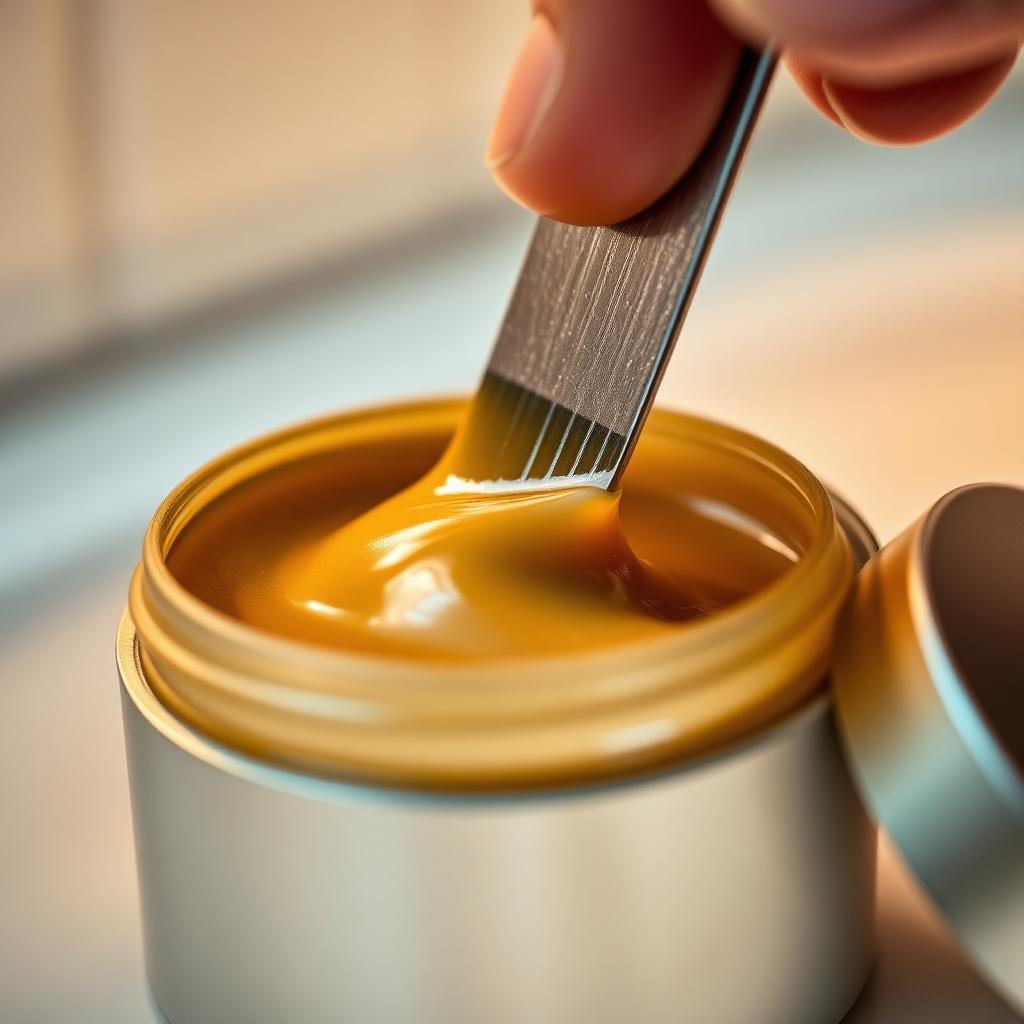
The amount pictured is an illustration, not a universal dose. Start smaller if your beard is short or fine, and follow the product directions rather than assuming everyone needs a dime-sized scoop.
Read ingredients without falling for myths
Waxes provide structure
Beeswax and plant waxes can help provide hold, but their names alone do not tell you how firm the finished balm will be. Ingredient lists usually do not disclose exact percentages. A supposed ideal wax percentage is not a useful shopping rule unless the manufacturer provides reliable formulation information.
Light hold can smooth stray hairs, while firmer products may help create a defined outline. Neither guarantees all-day control in every climate. A removable, comfortable finish is usually more useful than maximum stiffness.
Conditioners change feel and shine
Plant oils, butters, petrolatum and silicones can all have legitimate cosmetic roles. Silicones do not universally block later hydration, and petrolatum is not inherently dirty or harmful. The finished formula, amount used and your skin's response matter more than a natural-versus-synthetic label.
A rich blend may feel comfortable on dry hair but too heavy on a fine beard. Someone prone to acne may prefer a lighter product labeled non-comedogenic, recognizing that no label guarantees a breakout-free experience for every person.
Fragrance is optional
Essential oils are fragrance ingredients too and can cause irritation or allergy. Natural does not mean automatically safer. Unscented products may contain masking fragrance, so check for fragrance-free labeling and read the ingredient list if you react to scent.
Choose by practical details
Look for directions, a complete ingredient list, a responsible seller and packaging you can use cleanly. A tube can be convenient if you dislike putting fingers into a tin. A firm tin balm may be easier to dose with a clean spatula.
Consider removal before buying stronger hold. If a product needs repeated harsh washing to feel clean, it may not suit your daily routine. You should not have to choose between wax buildup and a sore, overwashed face.
Buy a smaller container first when possible. A large supply of a new scented formula is not good value if it causes itching. Changing one product at a time also makes reactions easier to identify.
Apply a small amount evenly
- Wash your hands and start with a clean beard. Follow the label on whether the hair should be dry or slightly damp.
- Comb out tangles gently. Do not force a brush through knots or inflamed skin.
- Take a small amount and soften it between clean fingertips or palms. There is no need to heat the container.
- Distribute through the hair lightly, then comb into shape without scraping the skin.
- Wait and assess the finish before adding more. Concentrate a second tiny amount only where extra control is needed.
A styling balm does not need to be packed into the roots to work. If the skin underneath needs moisturizer, choose one suited to your skin type. A heavy hair coating should not be assumed to treat eczema or another skin condition.
Care for the beard and the container
The AAD recommends daily washing of the face and beard with a gentle cleanser appropriate for the skin. Use lukewarm water and rinse thoroughly. Washing needs can also change with sweat, dirt and product buildup, so avoid rigid rules that leave your skin uncomfortable.
Clean your comb or brush regularly and let it dry. You do not need a specific wood species or animal-bristle brush to distribute balm. Smooth teeth and gentle handling matter more than a premium material claim.
Keep the container closed, clean and away from temperature extremes. Follow any storage instructions. There is no universal temperature at which all balms melt. Do not microwave a tin or add water to a product to repair its texture.
If the smell or color changes, discard it. A grainy texture can have more than one cause; ask the manufacturer rather than repeatedly heating or stirring a questionable product with unclean tools.
Troubleshoot the result
Greasy or flattened hair
Use less, apply farther from the roots or switch to a lighter formula. Adding powder or stronger cleanser to compensate creates more variables. Wash out the excess gently and reassess on another day.
White flakes or visible clumps
Check whether the balm was softened and distributed evenly. Incompatible layers of oil, balm and styling products can leave residue. Persistent flakes arising from the skin, especially with itch or redness, deserve evaluation rather than another styling purchase.
FAQ
Can I use balm every day?
Possibly, if the formula is comfortable and washes out with your normal routine. Stop if redness, swelling, acne or itching develops. More frequent use is not proof of better beard health.
Should I test a new balm?
Yes, particularly with reactive skin. The AAD suggests testing skin-care products on a small area twice daily for seven to ten days. A home test reduces uncertainty but cannot guarantee tolerance on every body area.
Will balm make my beard grow?
Conditioning can make existing hairs easier to manage. It does not establish that a balm creates new follicles or fills genetically sparse areas.
Bottom line
Choose comfortable hold, manageable shine and straightforward removal. Start with very little, keep tools clean and treat skin symptoms as skin symptoms. A useful balm fits your beard and routine without requiring ingredient myths or a complicated grooming ritual.