Quick Answer
UTV street legality depends entirely on your state. Western states like Arizona, Utah, Montana, Idaho, Wyoming, and South Dakota offer clear pathways to plate a properly equipped side-by-side. Midwest states like Ohio, Wisconsin, and Texas leave the decision to individual counties and towns. Coastal states like California, New York, and Pennsylvania effectively ban street use of factory UTVs entirely.
There is no federal law that makes a UTV street legal because UTVs are not certified to federal motor vehicle safety standards (FMVSS).
The three legal archetypes across the US
1. Open-pathway states (mostly West and Mountain West)
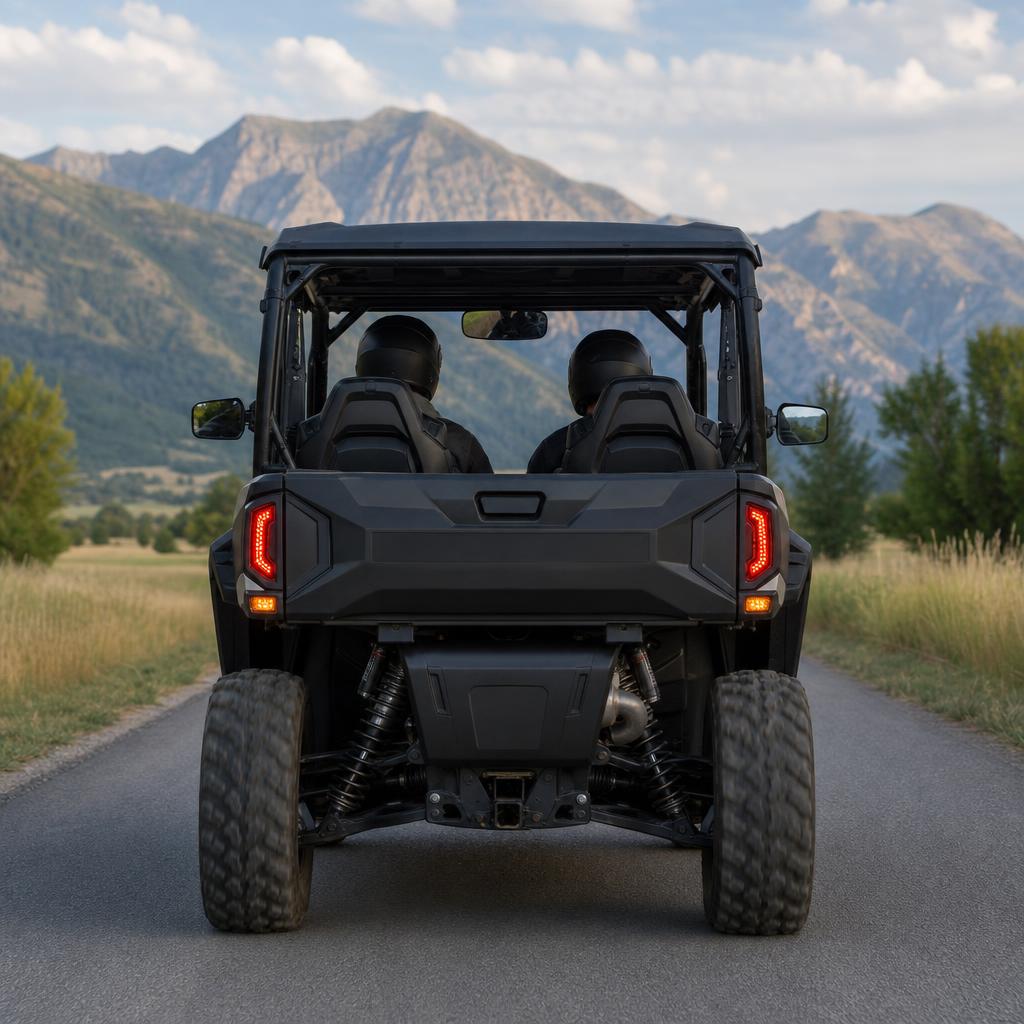
Arizona, Utah, Montana, Idaho, Wyoming, South Dakota, and a handful of others publish clear administrative pathways. Fit the required safety equipment, pay the registration fee, and the state issues an OHV or motorcycle license plate. Once plated, you can drive on most non-interstate roads.
Typical equipment checklist:
- DOT-approved tires (factory UTV tires stamped "For NHS" do not qualify)
- Front and rear turn signals with a dashboard indicator
- Headlights, tail lights, brake lights, and a lit license plate bracket
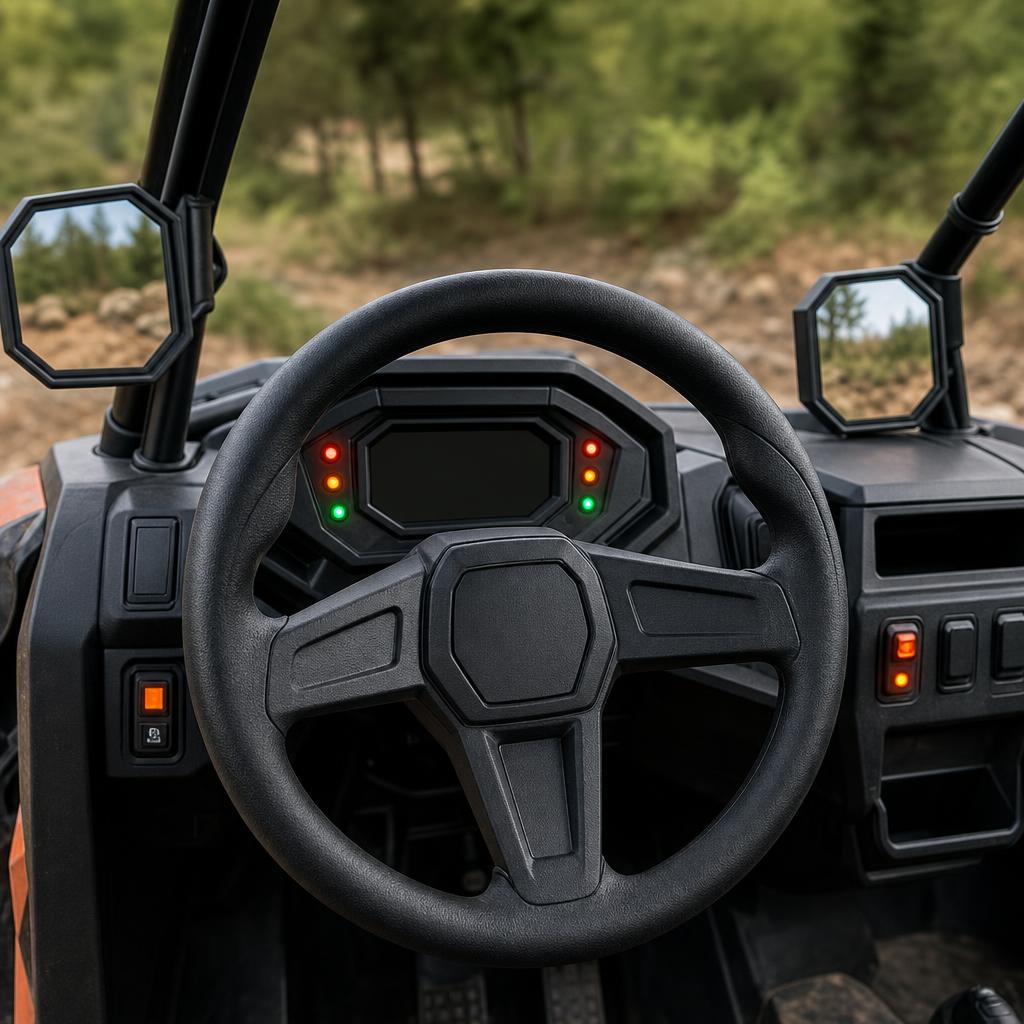
- Two mirrors (side mirrors or a wide rearview) and a functional horn
- Seat belts and, in some states, a windshield
2. Local-ordinance states (mostly Midwest and parts of the South)
Texas, Ohio, Wisconsin, Michigan, and Indiana leave the decision to individual county commissions and town councils. One county may open all secondary roads to UTV traffic while the neighboring county bans it outright. You are responsible for knowing the ordinance in each jurisdiction you cross. Get it wrong and you can be cited or have the machine impounded.
3. Strict-ban states (mostly the coasts)
California, New York, New Jersey, Pennsylvania, and Massachusetts do not offer any pathway to register a factory UTV for road use. The rationale, per state DMV guidance, is that UTVs lack crumple zones, laminated safety glass, and multi-stage airbags required for mixed passenger-car traffic. In these states, UTVs are strictly off-highway vehicles restricted to private property or designated OHV parks.
The Montana LLC loophole (and why it is risky)
Some riders in strict states use online title services to register their UTV under a Montana LLC shell company, exploiting Montana's lenient out-of-state mail-in registration. That gets you a metal plate, but it does not legalize on-road use in your home state.
Legal warning: Police in California, New York, and Pennsylvania are well aware of Montana LLC plates on UTVs. Getting pulled over on public asphalt in a banned state with one of these plates can result in citations for operating an unregistered vehicle in your home state, plus liability for evaded sales tax.
Comparison at a glance
| Category | Example states | What is required |
|---|---|---|
| Open pathway | AZ, UT, MT, ID, WY, SD | Safety kit + state OHV / motorcycle plate |
| Local ordinance | TX, OH, WI, MI, IN | Depends on county and city; verify every jurisdiction |
| Strict ban | CA, NY, NJ, PA, MA | No street use of factory UTVs |
Frequently asked questions about UTV street legality
Can I drive a plated UTV on interstate highways?
Almost never. Even in open-pathway states, UTVs are typically restricted to roads with posted speed limits below 55 mph. Interstates and most divided highways stay off limits.
Do I need a motorcycle endorsement to drive a plated UTV?
In most open-pathway states a standard driver's license is enough. A few states require an OHV safety course completion card. Check your state motor vehicle agency for specifics.
What about insurance?
Any UTV on public roads should carry at least liability insurance. Most major powersports insurers (Progressive, Geico, State Farm) offer street-legal UTV policies in open-pathway states. Insurance is often mandatory for registration.
State-by-state examples that shape the real picture
The three legal archetypes explain most of the country, but a few specific state examples show how much the details matter.
Arizona: full pathway
Arizona treats compliant UTVs as street-legal ATVs. Once you install turn signals, DOT tires, mirrors, a horn, and a lit plate bracket, you can register the vehicle with ADOT and drive it on any non-interstate road with a posted speed limit under 55 mph. Insurance and a valid driver's license are required.
Utah: statewide OHV plating
Utah under Title 41 Chapter 22 provides a full statewide OHV registration pathway that allows compliant UTVs on most public roads. Enforcement is consistent across counties, which makes trip planning simple.
Texas: county-by-county
Texas leaves the choice to individual counties. Some rural counties open all county-maintained roads to UTV traffic while urban counties like Travis and Harris ban it outright. Verify your county before assuming a road is legal.
California: no pathway
California DMV does not offer a registration pathway for factory UTVs on public roads. They remain OHVs limited to private property and designated OHV parks like Ocotillo Wells or Hungry Valley.
Compliance details even open-pathway riders miss
Even in open-pathway states, a plated UTV is not a car. Most states restrict it from limited-access highways, and many require the driver to have completed an OHV safety course. Some states also require a windshield or an eye-protection alternative like DOT goggles.
Kids and passengers
Passenger age limits vary widely. In most states children under 16 cannot drive a plated UTV on public roads even with an adult present. Passenger seat belts must be used exactly as configured by the factory.
Alcohol laws still apply
A plated UTV on a public road is a motor vehicle for the purposes of DUI and open container laws. Do not treat it like a golf cart at a campsite once you cross onto pavement.
Bottom line
If you live in the Mountain West or interior West, street-legal conversion is a straightforward equipment and paperwork job. If you live on the coasts, keep the machine on a trailer until the tires touch dirt.