Quick Answer
The vivid aurora borealis display that lit up large parts of North America during the weekend of May 16 and 17, 2026 was driven by a severe geomagnetic storm. A powerful coronal mass ejection from the Sun struck Earth's magnetic field, pushing the Kp index past 5 and expanding the auroral oval far enough south to be visible from northern US states.
It is part of a broader uptick in space weather as the Sun approaches the peak of its current 11 year solar cycle in late 2026. Expect more displays like this in the coming months.
What actually causes the aurora?
The northern lights are not a weather phenomenon in the Earth atmosphere sense. They are space weather. The Sun constantly throws off solar wind, and from time to time it launches much larger eruptions called coronal mass ejections, or CMEs. These are gigantic clouds of magnetized plasma traveling at millions of miles per hour.
When a CME slams into Earth's magnetic field, it pushes high energy particles down along the magnetic field lines toward the polar regions. Those particles smash into oxygen and nitrogen molecules in the upper atmosphere, around 60 to 200 miles up. Oxygen emits the famous green glow and, at higher altitudes, deep red. Nitrogen produces the purples and blues. That is the entire light show, in one paragraph.
Why was the May 2026 display visible so far south?
This is the part that surprised people. Auroras are usually a far north phenomenon. They sit inside the auroral oval, a ring of light centered on the magnetic pole that typically only reaches places like Alaska, the Yukon, Iceland and northern Scandinavia.
The strength of a geomagnetic storm is measured on the Kp scale, from 0 to 9. A quiet night sits at Kp 2 or 3. During the weekend of May 16, the NOAA Space Weather Prediction Center recorded Kp values that climbed past 5 and held there for hours, classifying the event as a severe G3 geomagnetic storm.
When Kp jumps that high, the auroral oval physically expands south. Reports came in from Washington, Idaho, Montana, North Dakota, Minnesota, Wisconsin, Michigan, New York and parts of New England. Some of the best images of the weekend were captured by hobbyist photographers in the upper Midwest who simply drove ten minutes outside their towns to escape the streetlights.
What I noticed in the photos
Two things stood out to me when I scrolled through the weekend's images.
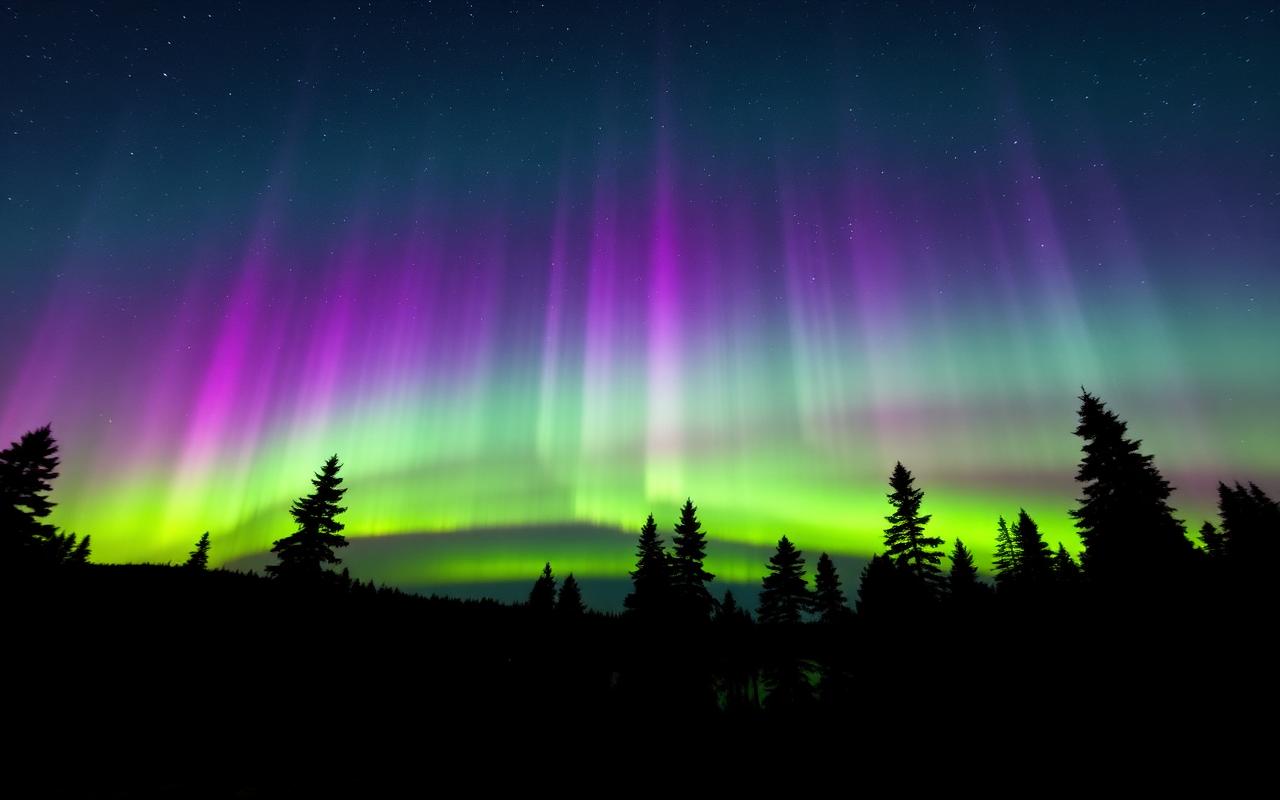
First, the color depth. A lot of these shots show vivid magenta and pink columns alongside the classic green. That pink color is a sign that the storm pushed energetic particles unusually deep into the atmosphere, exciting nitrogen at lower altitudes than a typical aurora. You only see that in stronger storms.
Second, how far south some of the photos came from. I saw confirmed naked eye sightings reported from northern Iowa, Nebraska and even the Pacific Northwest, hundreds of miles south of where the lights normally appear. That is the auroral oval working in real time.
The clear sky lottery
You can have a perfect geomagnetic storm and still see absolutely nothing if your sky is overcast. The May 16 to 17 weekend got lucky. A large high pressure system parked over the northern half of the United States and southern Canada delivered clear skies through both nights, which is why so many people across so many time zones managed to see the lights.
That part is not science you can plan for. It is just good timing.
What this means for the rest of 2026
The Sun runs on an 11 year activity cycle, swinging between a solar minimum (quiet, few sunspots) and a solar maximum (lots of sunspots, frequent flares and CMEs). NASA and NOAA scientists currently expect the present cycle, known as Solar Cycle 25, to reach its peak in late 2026.
In practical terms, that means the kind of severe geomagnetic storm that produced this weekend's display is going to become more frequent over the next year. We are not done. There will be more nights where you check your phone before bed, see a Kp 6 alert, and have a real shot at watching the sky glow from your own backyard.
How to actually see the next one
A few simple habits go a long way:
- Bookmark the NOAA Aurora Dashboard. It updates the 30 minute forecast in close to real time.
- Install a space weather alert app. SpaceWeatherLive and My Aurora Forecast are both reliable and free.
- Find a viewing spot ahead of time that is at least 30 minutes from major light pollution and has a clear view to the north.
- Use a modern phone camera in night mode, with a 3 to 10 second exposure. Phones often pick up aurora colors before your eyes do.
- Watch the Kp index. Anything Kp 5 or higher gives you a real chance from the northern US.
The takeaway
This weekend's aurora was not a fluke. It was a textbook case of a strong CME striking Earth, the auroral oval ballooning south, and clear skies handing millions of people a rare front row seat. With solar maximum still ramping up through the end of 2026, the smart move is to set up the alerts now. The next show is probably closer than you think.
Frequently asked questions
What caused the May 2026 aurora over North America?
A coronal mass ejection from the Sun produced a severe geomagnetic storm, pushing the auroral oval far enough south to be visible from northern US states.
How far south was it visible?
Sightings were reported from states including Washington, Idaho, Minnesota, Michigan and parts of New England.
Will there be more auroras in 2026?
Yes. The Sun is approaching the peak of Solar Cycle 25 in late 2026, which means more frequent geomagnetic storms and more chances to see the lights.