Quick Answer
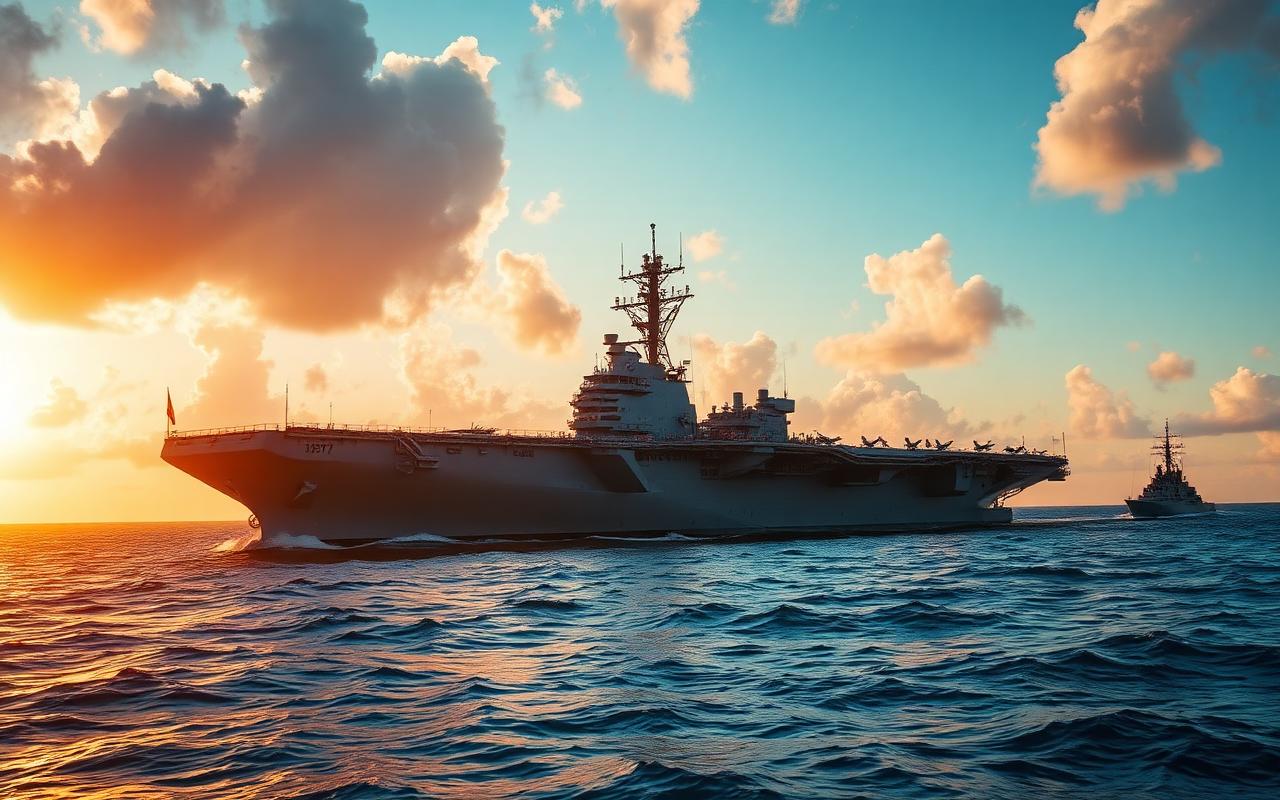
The USS Nimitz (CVN 68) is operating in the US Southern Command area of responsibility as the flagship of Southern Seas 2026, the 11th iteration of a US 4th Fleet deployment that has run since 2007.
The Nimitz Carrier Strike Group, which includes the guided missile destroyer USS Gridley (DDG 101) and Carrier Air Wing 17, is circumnavigating South America and operating across the Caribbean Sea and the Atlantic Ocean.
The stated mission is regional stability, counter threat coordination, and deeper defence partnerships with countries including Brazil, Argentina, Chile, Colombia, Peru, Mexico, Panama, and Jamaica.
What Southern Seas 2026 Actually Is
Southern Seas is a recurring US 4th Fleet deployment program that sends US Navy assets through the Caribbean and around South America to train with partner navies, conduct port visits, and rehearse multinational maritime operations. It has been running since 2007 and is one of the longest standing engagement programs in the Western Hemisphere.
The 2026 edition is the biggest in years because the flagship is a Nimitz class nuclear powered aircraft carrier rather than a single cruiser or destroyer. That changes the entire profile of the deployment. A carrier strike group brings fixed wing airpower, long range surveillance, command and control capacity, and roughly 5,000 personnel into the region for sustained operations.
The Strike Group Composition
- USS Nimitz (CVN 68): the flagship, a nuclear powered aircraft carrier.
- USS Gridley (DDG 101): Arleigh Burke class guided missile destroyer providing air defence and surface warfare capability.
- Carrier Air Wing 17: the embarked air wing, including F/A 18 Super Hornets, EA 18G Growlers for electronic warfare, and E 2 Hawkeye early warning aircraft.
- Carrier Strike Group 11 staff and Destroyer Squadron 9: the tactical command element coordinating the deployment.
Geopolitical Context: Why Now
Three pressures shape why a full carrier strike group is in the Caribbean in 2026 rather than the more usual one or two surface combatants.
Transnational criminal threats. The Caribbean basin remains a primary corridor for narcotics trafficking, illicit fuel movements, and human smuggling. A carrier presence gives US Naval Forces Southern Command and partner countries a visible, persistent maritime platform from which to coordinate counter trafficking operations.
Extra hemispheric competition. US defence planners have been increasingly vocal about Chinese and Russian outreach into Latin America, ranging from port concessions to military to military exchanges. A Nimitz class carrier conducting passing exercises with allied navies is, on its own, a strategic signal about which power is willing to maintain a sustained physical presence in the region.
Hemispheric alliance building. Many South American navies operate diesel electric submarines, modern frigates, and increasingly capable air assets. Joint exercises let those forces interoperate with US carrier operations, which is hard to rehearse any other way.
The Brazilian Navy Exercises
The first major operational milestone came on May 12 and 13, 2026, when the Nimitz Carrier Strike Group conducted passing exercises with the Brazilian Navy in the South Atlantic. The participating Brazilian assets included:
- BNS Defensora (F 41), a Niteroi class frigate.
- BNS Barroso (V 34), an Inhauma class corvette.
- BNS Humaita (S 41), a Riachuelo class diesel electric attack submarine.
The exercises focused on anti submarine warfare, tactical fleet communication, and coordinated air defence simulations. The presence of a modern Brazilian submarine in the exercise is significant. Submarine integration is one of the hardest skills for a carrier strike group to maintain, and the chance to rehearse against a non US allied submarine in Atlantic waters is exactly the kind of training the Navy cannot replicate at home.
Diplomatic Footprint
The Nimitz is scheduled to host senior defence officials, civilian policymakers, and military commanders from Argentina, Chile, Colombia, Ecuador, Peru, Mexico, El Salvador, Guatemala, and Uruguay during its deployment.
Port visits include Brazil, Chile, Panama, and Jamaica. The Rio de Janeiro stop drew a high level Brazilian delegation including Deputy Minister of Defence Joel Rodriguez, Brazilian Navy Commander Adm. Marcos Sampaio Olsen, and Army Commander Gen. Thomas Miguel Mine Ribeiro Pavia.
These visits are not ceremonial filler. They feed directly into bilateral defence agreements, training exchanges, and equipment sales decisions in the years that follow. A carrier port visit is, in practical terms, one of the most powerful diplomatic instruments the US can deploy short of a treaty negotiation.
What the 4th Fleet Commander Said
Rear Adm. Carlos Sardiello, commander of the US 4th Fleet, framed the deployment as a demonstration of "unwavering commitment" to a secure and stable Western Hemisphere, focused on strengthening maritime partnerships and countering shared threats.
The phrasing is deliberate. "Shared threats" is the diplomatic language used to talk about narcotics trafficking, illegal fishing, and gray zone activity without explicitly naming any single state competitor. It keeps the deployment legible to partner countries that may not want to publicly align with US framing of great power competition.
Subject Matter Expert Exchanges
One of the less visible but most operationally important elements of Southern Seas 2026 is the Subject Matter Expert Exchange program, or SMEE. Partner nation officers and enlisted personnel embark directly on US Navy ships to observe and exchange tactical doctrines, communication frameworks, and logistics protocols.
This is how interoperability actually gets built. A Chilean surface warfare officer who has spent a week on the Nimitz understands US carrier operations in a way no briefing can replicate. When the next multinational exercise happens, that officer is the bridge between two fleets that would otherwise talk past each other.
What the Deployment Does Not Mean
It is worth being clear about what Southern Seas 2026 is not. It is not a combat deployment. It is not a response to a specific conflict in the region. It is not an indication that the US Navy is moving carrier presence away from the Indo Pacific or the Mediterranean in any structural way.
It is a planned, programmed engagement deployment that happens to be using a larger asset than usual. The strategic message is real, but the operational tempo is closer to training and diplomacy than to crisis response.
The Takeaway
The USS Nimitz is in the Caribbean and Atlantic as the flagship of Southern Seas 2026, the 11th iteration of a long running US 4th Fleet engagement program. The deployment combines counter trafficking signalling, alliance maintenance with South American navies, and a visible response to growing extra hemispheric competition in the Americas. Expect more port visits, more bilateral exercises, and a steady diplomatic schedule through the rest of the deployment window.