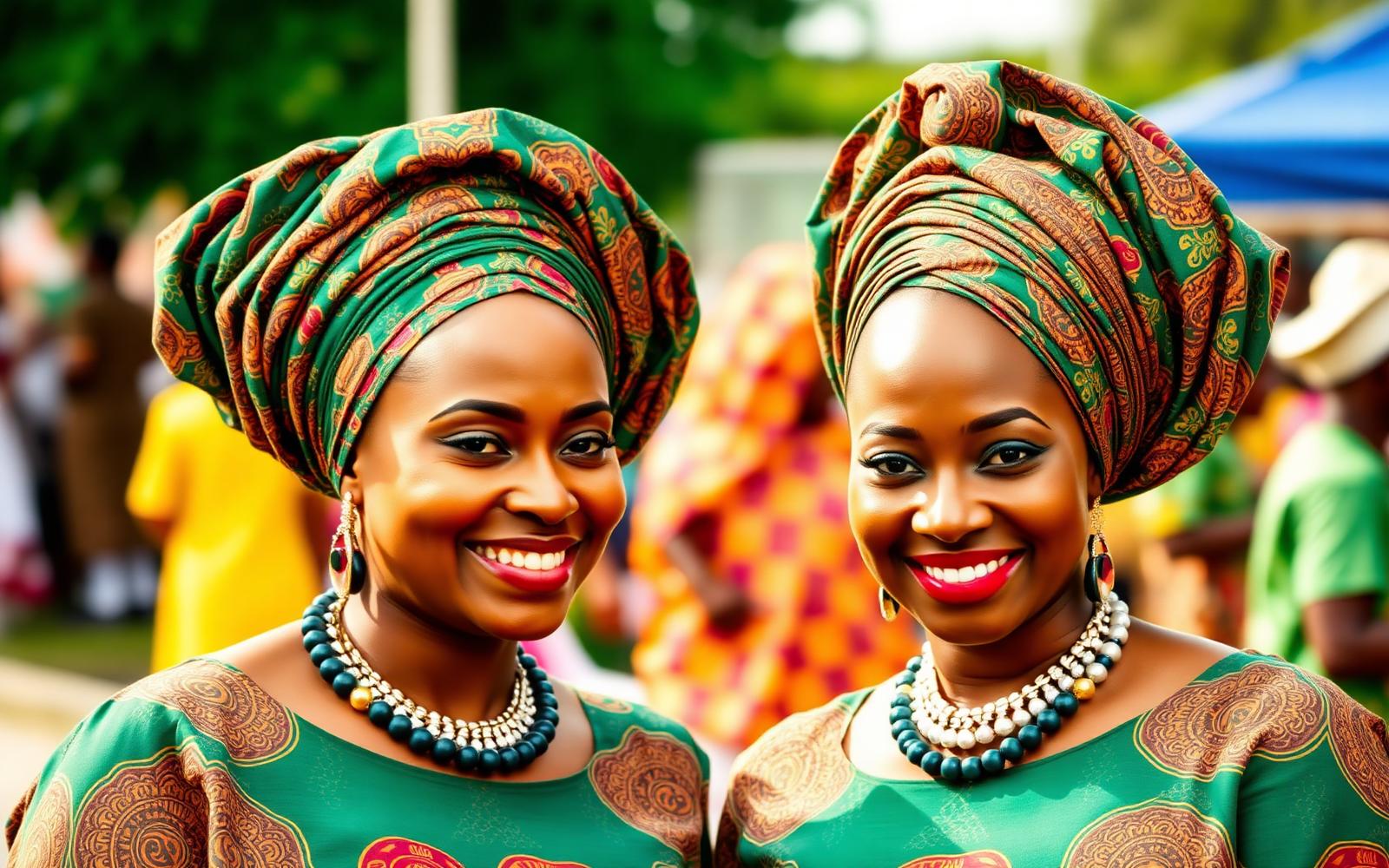
Quick Answer
Igbo-Ora is a town in Oyo State, southwestern Nigeria, that is widely described as having one of the highest rates of twin births in the world, often quoted in the local press as around 50 sets of twins per 1,000 live births, against a global average closer to 12. The reasons are not fully settled, but researchers point to a combination of Yoruba genetics, a diet rich in cassava and yam, and a culture in which twins are celebrated rather than treated as unusual. The town now hosts an annual World Twins Festival that draws twins and visitors from across the globe.
The twin capital claim, in context
The "twin capital of the world" label is a press shorthand, not a strict scientific ranking. Several studies and reporting trips going back to the 1970s have documented unusually high twinning rates among the Yoruba people of southwestern Nigeria. Igbo-Ora became the popular face of the phenomenon because local registers, hospital records, and visible street life all show large numbers of twin sets in a relatively small town.
Exact figures vary by source and decade, but every credible report agrees on two things: twin birth rates in southwestern Nigeria are unusually high, and Igbo-Ora sits at the upper end of that range.
Why twin rates are so high in southwestern Nigeria
Researchers have explored several plausible contributors, and the honest answer is that the high rate is probably a combination of factors rather than a single cause.
Genetics
The Yoruba have one of the highest documented rates of hyperovulation, the tendency to release more than one egg in a cycle, in any population that has been studied. Hyperovulation drives non identical (dizygotic) twin rates in particular, and dizygotic twinning is heritable on the mother's side.
Diet
A widely repeated hypothesis links high twin rates to a local diet rich in certain varieties of cassava and yam, especially the white yam. These tubers contain plant chemicals (phytoestrogens) that some researchers have suggested may influence hormonal patterns related to ovulation. The hypothesis is not universally accepted, but it has appeared in mainstream coverage of Igbo-Ora for decades.
Maternal age and family size
Dizygotic twinning rises with maternal age up to the late thirties, and historically Yoruba families have tended to have more children over a longer reproductive window than in many wealthier countries, which mathematically increases the chance of at least one twin birth per family.
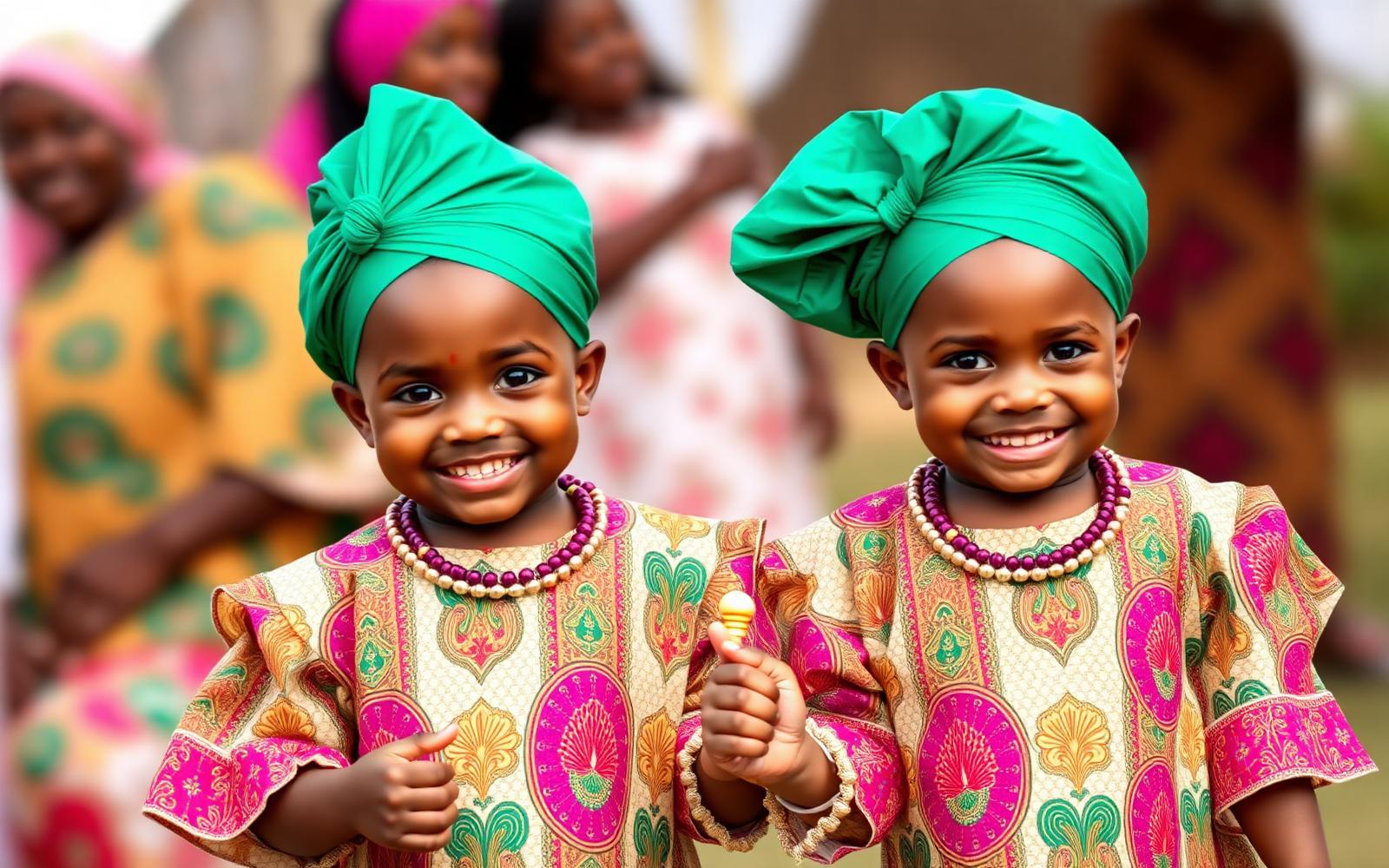
The Yoruba names Taiwo and Kehinde
Twin culture in Yoruba society is woven directly into naming. The first born twin is traditionally named Taiwo, often interpreted as "the one who tastes the world first". The second born is Kehinde, "the one who comes after". The third child following a set of twins receives the name Idowu, and the next, Alaba. These are not nicknames, they are formal names that appear on birth records and identity documents across the region.
This is one of the reasons twins are so visible in southwestern Nigerian life: not only are they numerous, they are named in a way that makes them immediately identifiable in any classroom register, workplace, or family gathering.
The Igbo-Ora World Twins Festival
For more than a decade, Igbo-Ora has hosted an annual festival that gathers hundreds of twin pairs from across Nigeria and, increasingly, from other countries. The festival features parades of twins in matching aso ebi attire, music, food, and academic talks on the science of twin births. It has become a tourism event for Oyo State and a source of community pride for residents.
The festival is also useful scientifically. Researchers studying twinning gain a rare opportunity to interview large numbers of twin families in a single location, often across multiple generations.
Twins in Yoruba religion and family life
Twins, ibeji in Yoruba, occupy a special spiritual position in traditional belief. They are seen as carrying a powerful shared soul, and the loss of one twin in infancy is traditionally marked by the carving of a small wooden ere ibeji figure to represent the missing child. These figures are now also recognised as significant works of African art and are held in major museum collections worldwide.
In day to day family life, twins are celebrated with special songs, special meals (often featuring beans, a food associated with ibeji), and an expectation of close lifelong bond between the siblings. Far from being treated as a complication, multiple births are widely welcomed.
What the science still does not nail down
The exact contribution of diet versus genetics is still debated. Some researchers argue the diet hypothesis is overstated and that the genetic predisposition to hyperovulation explains most of the difference between Yoruba twin rates and the global average. Others maintain that diet plays a real, if smaller, supporting role. The most likely answer is "both, with genetics as the bigger lever", but the studies needed to fully separate the two are difficult to run.
The takeaway
Igbo-Ora's reputation as a twin capital is built on real, measurable, decades long demographics, layered on top of a culture that names, celebrates, and centres twins in family life. The biology is partly genetic and possibly partly dietary, the culture is unambiguously rich, and the result is a small Nigerian town where it is genuinely common to see matching faces walking together down the same street.